

Maintaining a functional workspace for children starts with a structured post-study reset. Organising a desk tidy is not merely an aesthetic task; it preserves the physical integrity of writing instruments, prevents ink evaporation, and minimises the cognitive load caused by visual clutter.
The Science of Writing Instrument Preservation
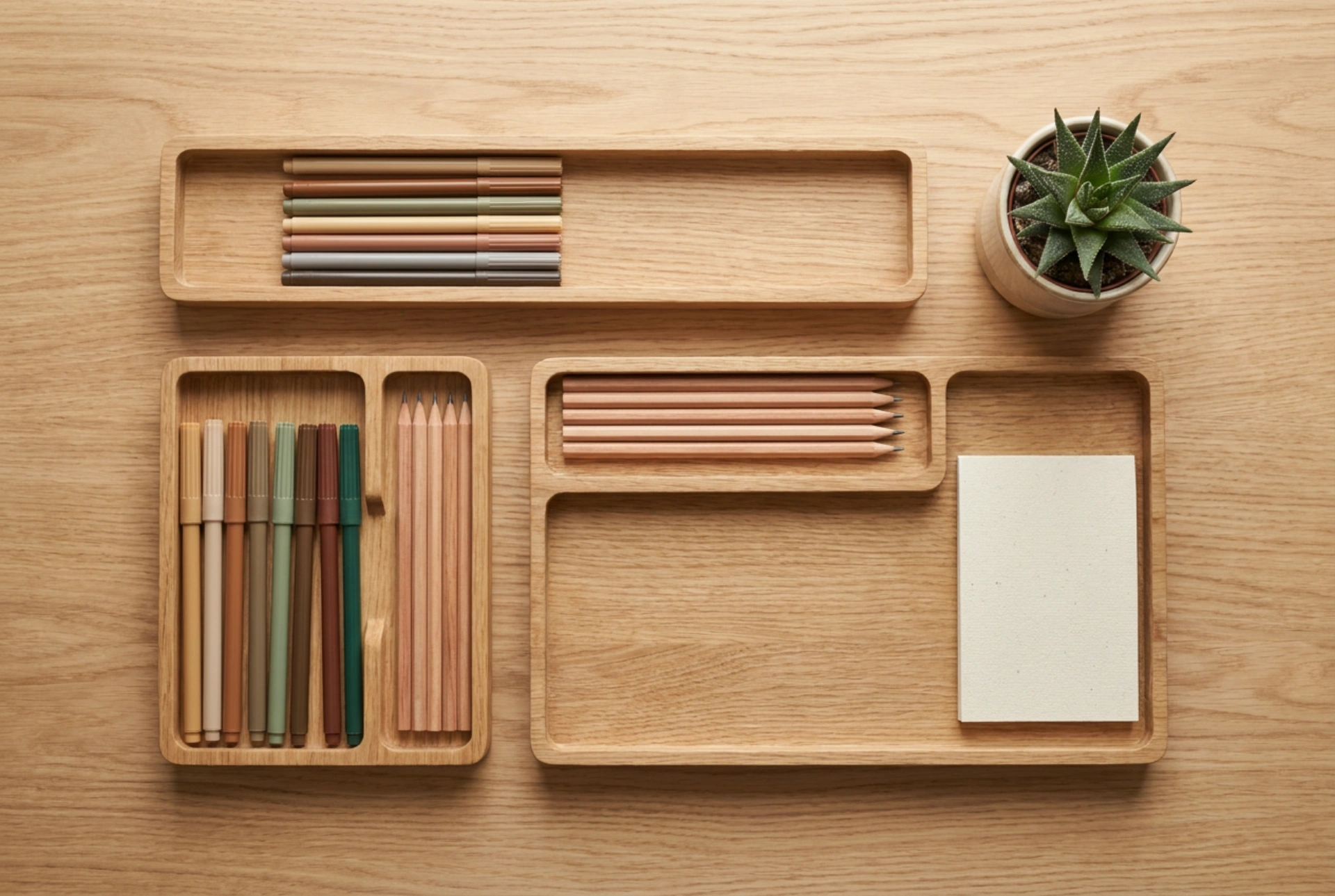
To understand why a desk organiser must be structured in a specific way, we must examine the physical properties of the tools it holds. Felt-tip pens and markers rely on capillary action, where liquid ink flows through a porous fibrous bundle. Storing these pens upright with the caps facing upwards can cause the solvent to pool at the bottom, leading to a dry tip during the next use. Conversely, storing them cap-down can cause ink leakage if the atmospheric pressure or temperature shifts. The optimal position for double-ended markers is horizontal, which maintains equal ink distribution to both tips. When organising a desk tidy, ensure markers are placed horizontally in shallow trays rather than vertically in cups.
Graphite pencils present a different physical challenge. The core of a pencil is a mixture of clay and graphite, which is highly brittle. Dropping a pencil or tossing it carelessly into a ceramic cup causes micro-fractures along the internal core. When the child next sharpens the pencil, the lead will repeatedly break. To mitigate this impact, line the bottom of vertical pen cups with a soft material, such as a disc of felt or cork. This absorbs the kinetic energy when pencils are dropped in, protecting the graphite core from shattering.
Categorisation and Ergonomic Zones
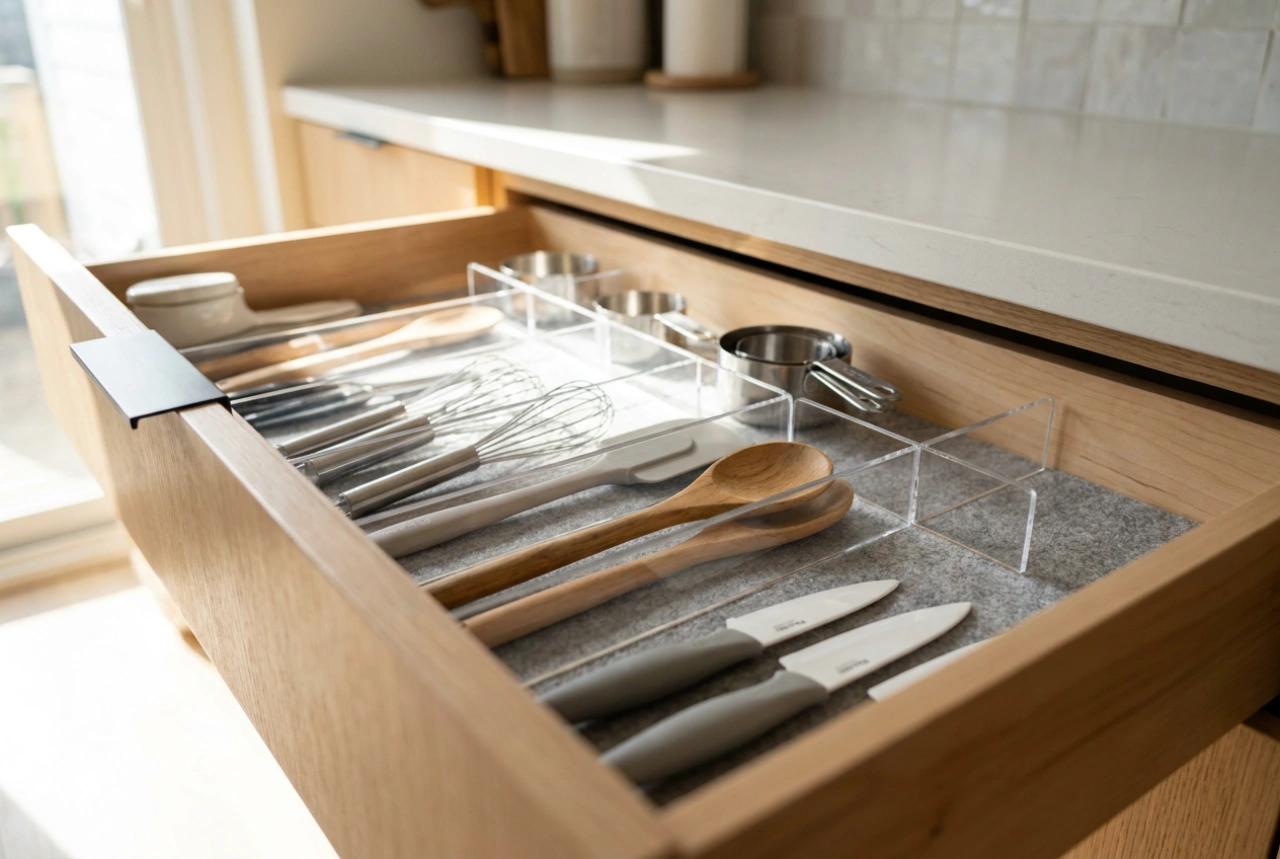
An efficient workspace relies on physical ergonomics. Items should be grouped based on the frequency and sequence of their use. The desk organiser should be divided into three distinct zones:
- The Primary Zone: This area should hold tools used in almost every session, such as a primary writing pencil, an eraser, and a blue or black pen. These must be easily accessible to the child's dominant hand without requiring them to lean forward or stretch.
- The Secondary Zone: This contains coloured pencils, highlighters, and rulers. These are placed slightly further back or in outer compartments of the organiser, grouped by type to reduce searching time.
- The Tertiary Zone: Tools that require supervision or occasional use, such as scissors, liquid glue, or compasses, should be kept in a separate drawer or a closed compartment of the organiser to prevent accidental injuries and keep the active workspace clean.
Cleaning and Material Maintenance
Desk tidies accumulate a mixture of graphite dust, wax residue from crayons, paper fibres, and skin oils. The cleaning method depends entirely on the material of the organiser:
- Plastic Organisers: Synthetic polymers easily build up static electricity, which attracts airborne dust. To clean them, wipe the surface with a microfibre cloth dampened with water and a single drop of liquid dish soap. To neutralise the static charge, wipe the dry surface with a cloth lightly dampened with diluted fabric softener.
- Wooden Organisers: Wood is porous and can swell if exposed to excess moisture. Wipe wooden desk tidies with a dry or very lightly damp cloth. For stubborn ink stains, a cotton swab dipped in a small amount of isopropyl alcohol can dissolve the ink pigment, but it should be tested on an inconspicuous area first to ensure it does not strip the protective varnish.
- Metal Organisers: Mesh or solid metal holders can collect grime in the corners. Use a soft-bristled brush, like an old toothbrush, to dislodge graphite dust from the joints and mesh holes.
The Post-Lesson Reset Routine
Teaching a child to reset their workspace requires a repeatable, low-friction sequence. Establish an end-of-study ritual that takes less than two minutes:
First, perform the "cap click" test. Every felt-tip pen and marker must be checked to ensure the cap is audibly clicked into place, sealing the airtight chamber that prevents solvent evaporation. Second, return all pencils to their felt-lined cups with the sharpened tips pointing upwards; this prevents the graphite from transferring to the bottom of the container and staining other tools. Finally, wipe away any eraser debris using a small hand brush or dry cloth. Clearing the physical surface signals to the brain that the cognitive task is complete, allowing the child to transition smoothly into rest or play.