

Wetting upholstery too deeply damages the internal polyurethane foam and creates a breeding ground for mould. Mastering the dry-foam technique and understanding capillary action allows for effective spot and surface cleaning without saturating the furniture.
The Physics of Wetting and Capillary Action
When liquid is applied to woven textile upholstery, it does not merely sit on the surface; it is drawn into the gaps between the fibres by capillary action. The rate and depth of this penetration depend on the surface tension of the liquid and the porosity of the material. Synthetic fibres like polyester are hydrophobic, meaning they resist water absorption, whereas natural fibres like cotton or linen are highly hydrophilic and draw moisture deep into their core.
If moisture penetrates past the outer fabric cover, it reaches the underlying polyurethane foam or dacron wrap. Polyurethane foam acts like a dense sponge, trapping water in its cellular structure where airflow is extremely restricted. This trapped moisture can take days to evaporate, leading to structural degradation of the adhesive bonds, rusting of internal metal springs, and the rapid colonisation of mould and mildew. To clean safely, you must restrict the liquid to the outermost layer of the fabric, ensuring it evaporates before it can sink into the sub-structure.
The Chemistry of Dry Foam Emulsification
To clean upholstery without soaking, you must alter the physical state of your cleaning agent. Directly spraying a liquid detergent onto the fabric lowers its surface tension, causing it to penetrate the weave instantly. Instead, the solution must be agitated into a thick, dry foam before application. By whipping a mixture of warm water and a neutral surfactant (such as a specialised upholstery shampoo or a mild, dye-free dishwashing liquid) in a bowl, you trap air within the liquid structure, creating dense micro-bubbles.
This foam contains minimal water but boasts a massive surface area of active surfactant molecules. When applied to the sofa, these molecules surround and emulsify oily residues and bound dust. The hydrophobic tails of the surfactant attach to the grease, while the hydrophilic heads face outwards, suspending the soil within the foam bubble structure. Because the water is bound within the thin walls of the bubbles, it remains on the surface of the textile, preventing deep penetration into the cushion core.
The Step-by-Step Low-Moisture Cleaning Protocol
Before introducing any moisture, dry extraction is critical. Use an upholstery attachment with a brush strip to vacuum the entire surface thoroughly. This removes loose dust, skin flakes, and pet dander. Skipping this step turns dry particulate soil into liquid mud once moisture is introduced, which then stains the fibres permanently.
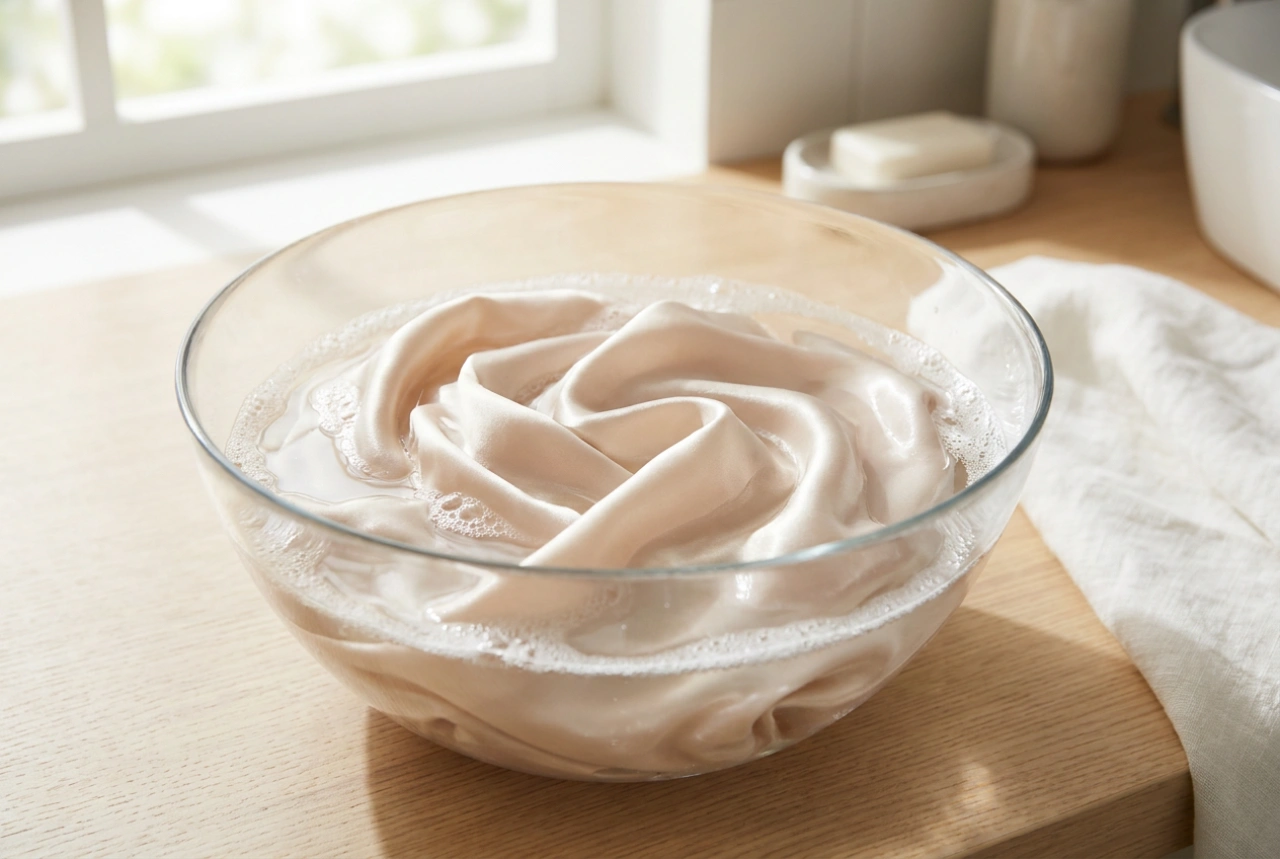
- Prepare the Foam: Dissolve one part neutral surfactant in ten parts warm water (approximately 40°C). Agitate the mixture vigorously with a clean sponge or whisk until a dense, dry foam forms on top. The foam should resemble shaving cream.
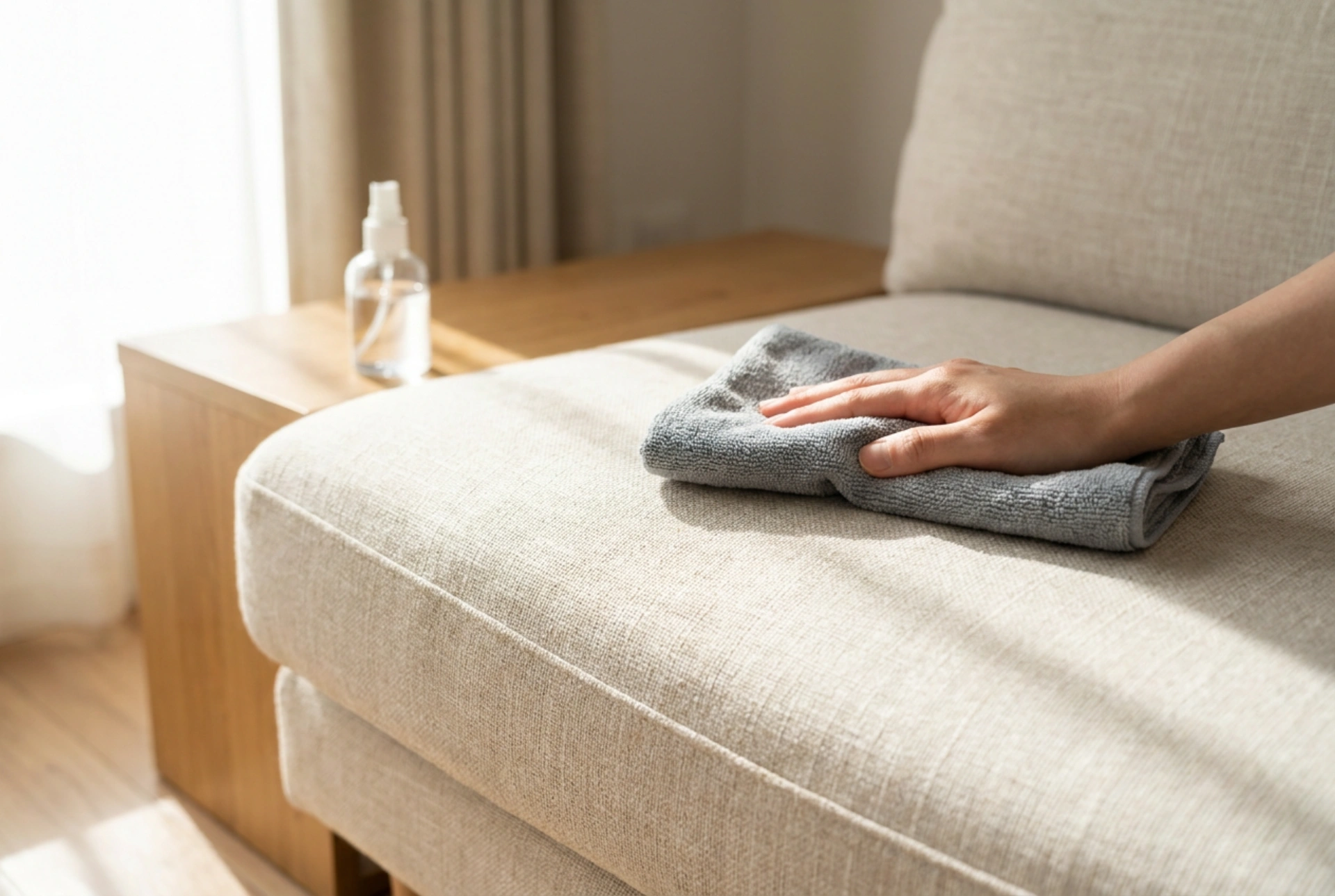
- Application: Scoop only the dry foam onto a soft-bristled upholstery brush or a clean microfibre cloth. Gently work the foam into the fabric in light, overlapping circular motions. Avoid pressing down heavily, as mechanical pressure forces the foam into the deeper layers of the textile.
- Dabbing and Extraction: Immediately follow the foaming step with a dry, white microfibre cloth. Press the cloth firmly against the treated area to transfer the dirt-laden foam from the upholstery to the cloth. Do not rub side-to-side, as this can cause fibre distortion, pilling, and push the dirt back into the weave.
- Rinse and Neutralise: Dampen a separate microfibre cloth with clean, cold water and wring it out completely until it is barely damp. Wipe the area gently to remove any surfactant residues, which could otherwise attract fresh dust over time.
Managing Drying Times and Fibre Alignment
Once the extraction is complete, managing the evaporation rate determines the success of the process. Maximise the airflow in the room by opening windows or using a directional fan aimed at the cleaned area. Keep the ambient temperature moderate; high heat can warp synthetic fibres and cause natural materials like wool or linen to shrink unevenly.
For napped fabrics such as velvet, chenille, or microfibre, the pile must be realigned while it is still slightly damp. Use a clean, dry, soft-bristled brush to gently comb the fibres in their natural direction. This prevents the pile from drying in distorted shapes, ensuring the sofa retains its soft, uniform texture and original lustre once completely dry.