

Achieving crystal-clear, streak-free windows relies not on heavily marketed commercial spray formulas, but on understanding the basic physics of evaporation and the chemistry of glass contaminants. By controlling water quality, surface tension, and evaporation rates, you can permanently eliminate the haze that traditional wiping methods leave behind.
The Chemistry of Window Contamination and Water Quality
To clean glass effectively, you must first understand what causes streaks. Streaks are primarily composed of two substances: undissolved mineral deposits left behind by evaporated water, and oily surfactant residues from previous cleaning products. Tap water contains dissolved minerals such as calcium carbonate and magnesium. When tap water evaporates from a glass surface, these minerals stay behind, forming tiny, light-scattering crystals.
To prevent this, professional-grade cleaning begins with demineralised or distilled water. Because distilled water has been stripped of its ions, it acts as a highly hungry solvent, pulling dirt and minerals off the glass. Furthermore, when distilled water evaporates, it leaves absolutely zero physical residue, eliminating the primary source of drying marks.
The Ideal Solvent Formula: Acids and Volatile Alcohols
An effective glass cleaner must dissolve both inorganic dust and organic oils (such as skin oils, pollen, and smog residues) without leaving a film. A highly effective, non-toxic solution can be prepared using basic household chemistry:
- Acetic Acid (White Vinegar): A mild acid (around 5% concentration) that breaks the chemical bonds of alkaline mineral build-ups and neutralises light salt deposits.
- Isopropyl Alcohol (Rubbing Alcohol): A volatile solvent that dissolves non-polar lipids and oils. Crucially, isopropyl alcohol lowers the boiling point of the overall solution, accelerating the evaporation rate so the liquid dries quickly and evenly before gravity can cause runs.
Avoid heavy dish soaps or commercial detergents. These contain complex surfactant molecules designed to suspend grease in large volumes of rinsing water. On a window, they leave a micro-thin, sticky polymeric film that not only streaks during cleaning but actively attracts atmospheric dust afterward.
Mechanical Action: The Physics of Microfiber and Squeegees
Wiping technique dictates whether contaminants are suspended and removed or simply smeared across the pane. Traditional paper towels or cotton cloths are made of flat, natural fibres that saturate quickly and shed lint. Instead, use split-weave synthetic microfiber cloths.
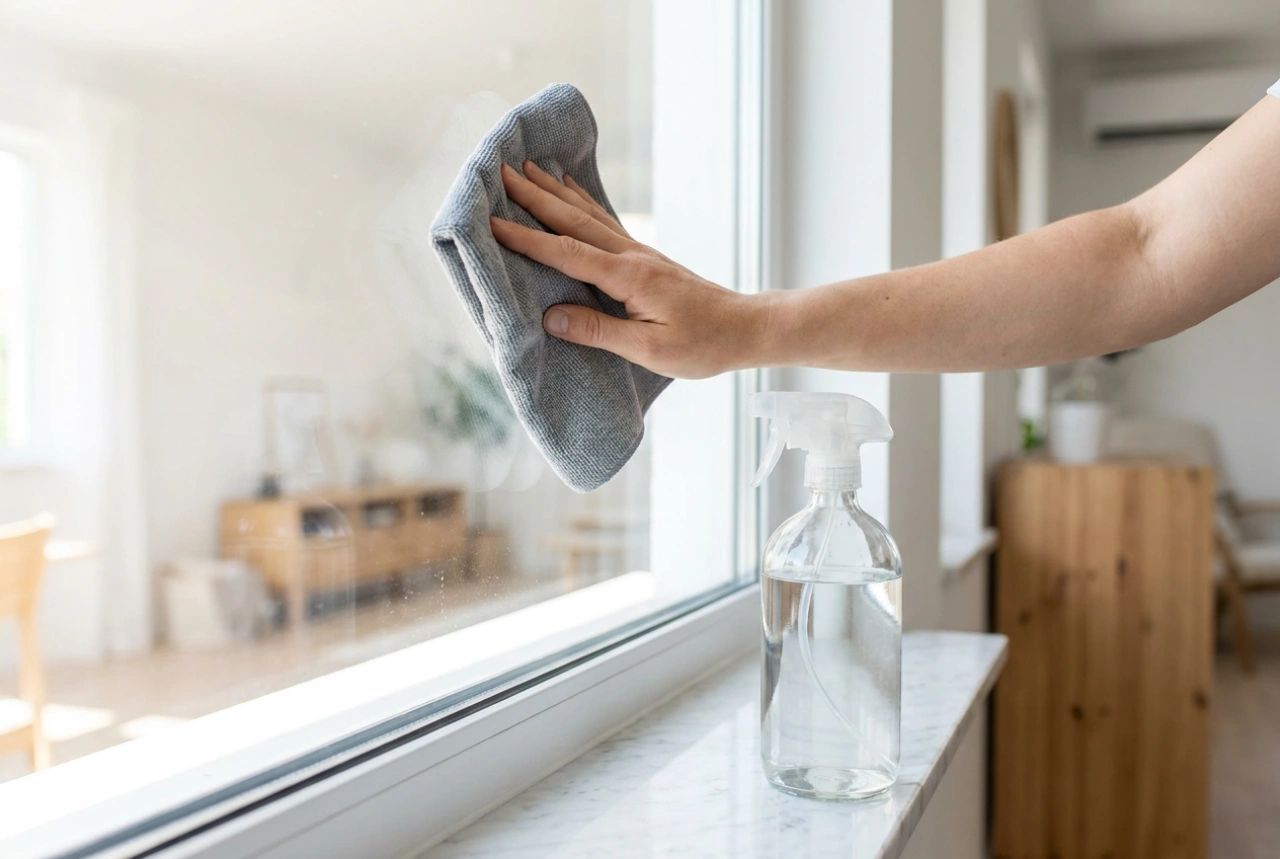
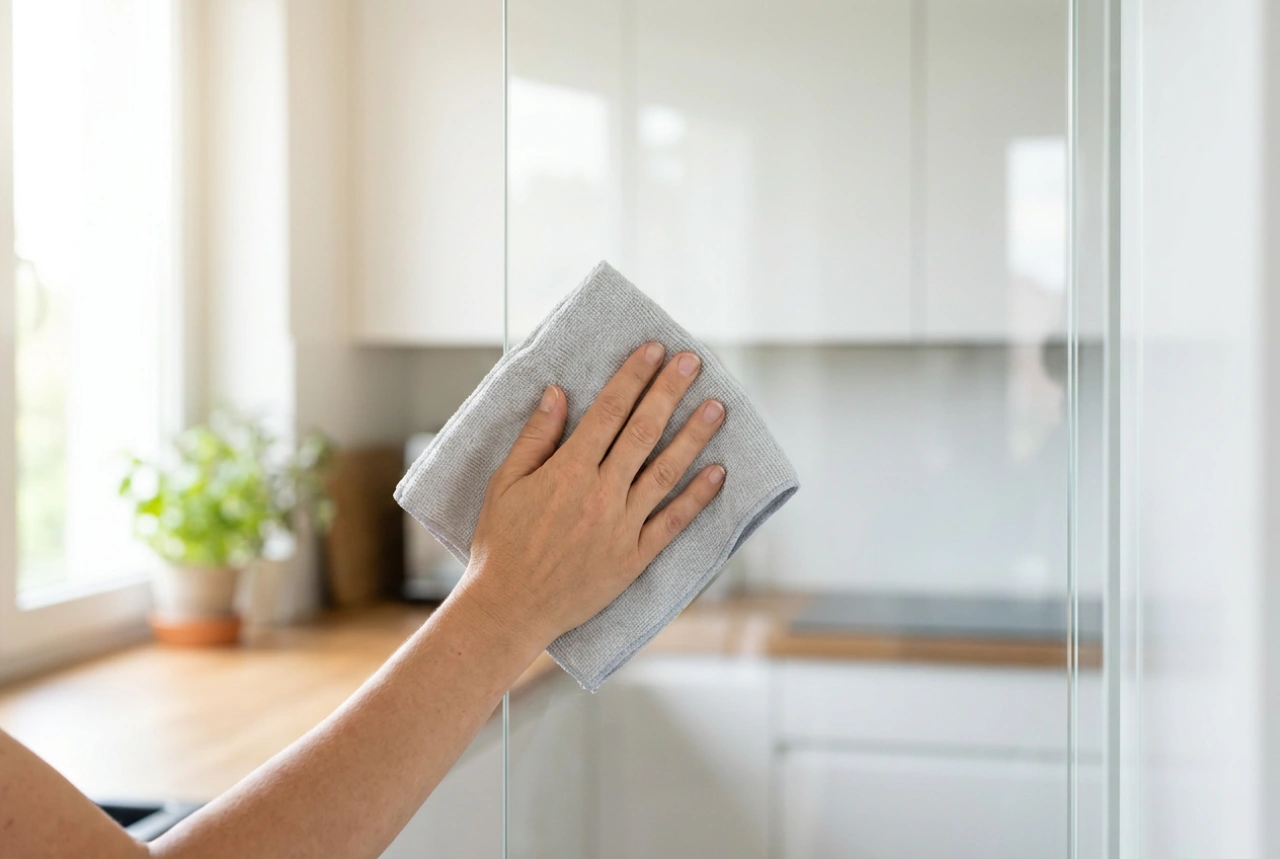
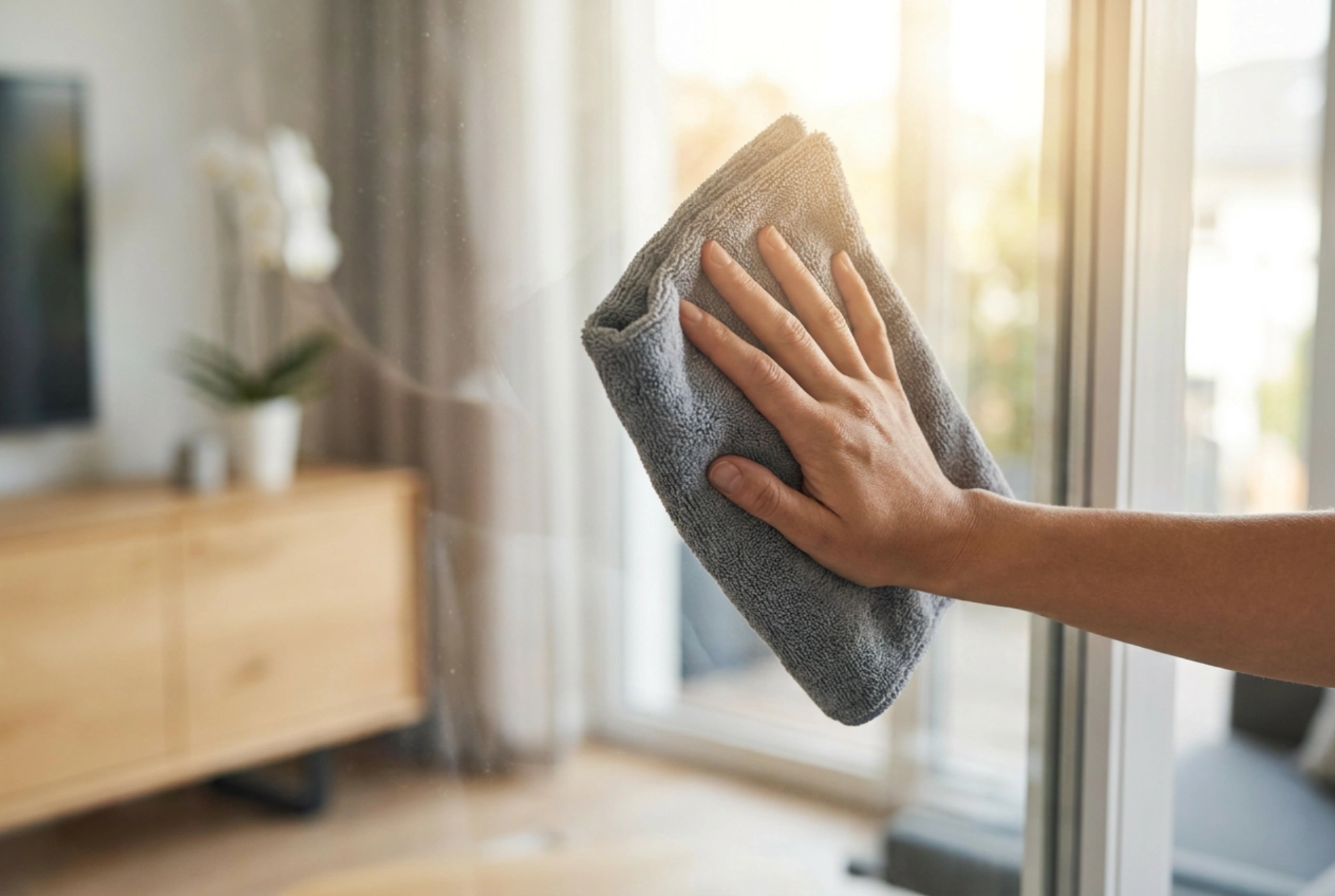
Split microfiber features polyester and polyamide threads split at a microscopic level. This structure creates millions of tiny hooks and channels that use capillary action to lift, trap, and lock away oils and moisture rather than pushing them around. Use one damp microfiber cloth to apply the solution and break mechanical bonds, followed immediately by a dry, tight-weave waffle microfiber cloth to polish.
For large glass panes, a high-quality squeegee with a sharp silicone blade is the most efficient tool. The key is maintaining a wet edge. The professional S-pattern technique involves starting in a top corner, pulling the blade horizontally, and then looping down in a continuous "S" sweep without lifting the squeegee from the glass. This prevents dry lines from forming. Wipe the blade dry with a lint-free cloth after every single pass to avoid transferring water back to the dry sections.
Thermal Dynamics: Why Timing Matters
Even the perfect chemical solution and tool kit will fail if applied under the wrong environmental conditions. Direct sunlight or warm wind heats the glass surface. This thermal energy causes the water in your cleaning solution to evaporate almost instantly upon contact. When evaporation occurs too rapidly, the dissolved soils are redeposited onto the glass before they can be physically wiped away or squeegeed off.
Always clean windows on an overcast day, in the early morning, or in the late evening when the glass is cool to the touch. This prolongs the dwell time of the solvent, allowing it to chemically break down grime, and gives you ample time to dry the surface mechanically.
The Step-by-Step Order of Operations
- Frame Dusting: Always clean window frames, tracks, and sills first. If you skip this, wind or wet cloths will drag frame dirt onto your clean glass, creating muddy streaks at the borders.
- Pre-Washing: For heavily soiled exterior windows, pre-rinse with plain water to remove abrasive grit that could scratch the glass during wiping.
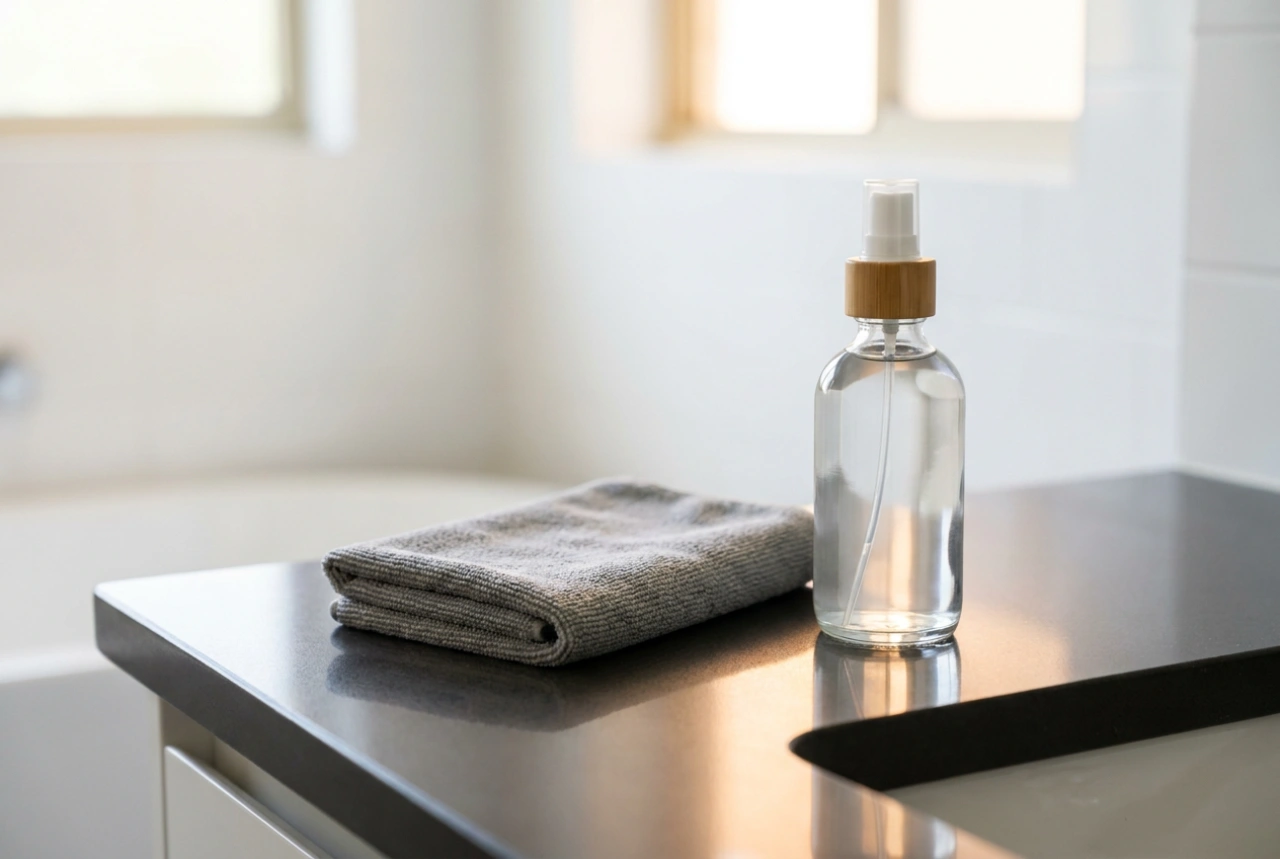
- Application and Agitation: Mist your distilled water and alcohol solution lightly. Agitate the surface using a microfiber cloth in circular motions to break surface tension.
- Drying: Immediately squeegee using the S-glide technique or polish dry with a waffle-weave microfiber using straight, overlapping horizontal strokes, followed by vertical strokes.