

Maximising the efficiency of a compact built-in dishwasher requires more than just cramming dishes into the racks; it demands an understanding of fluid dynamics, water spray patterns, and thermal distribution. Proper loading ensures that every surface receives optimal mechanical force and chemical exposure for a spotless clean.
The Physics of Spray Patterns and Water Shadows
Built-in compact dishwashers, typically measuring 45 cm in width, operate with a smaller volumetric capacity, making spatial organisation critical. The primary cleaning force comes from rotating spray arms positioned at the bottom of the tub and directly beneath the upper rack. Water is projected through angled nozzles, creating a high-pressure upward spray pattern that relies on rotational torque.
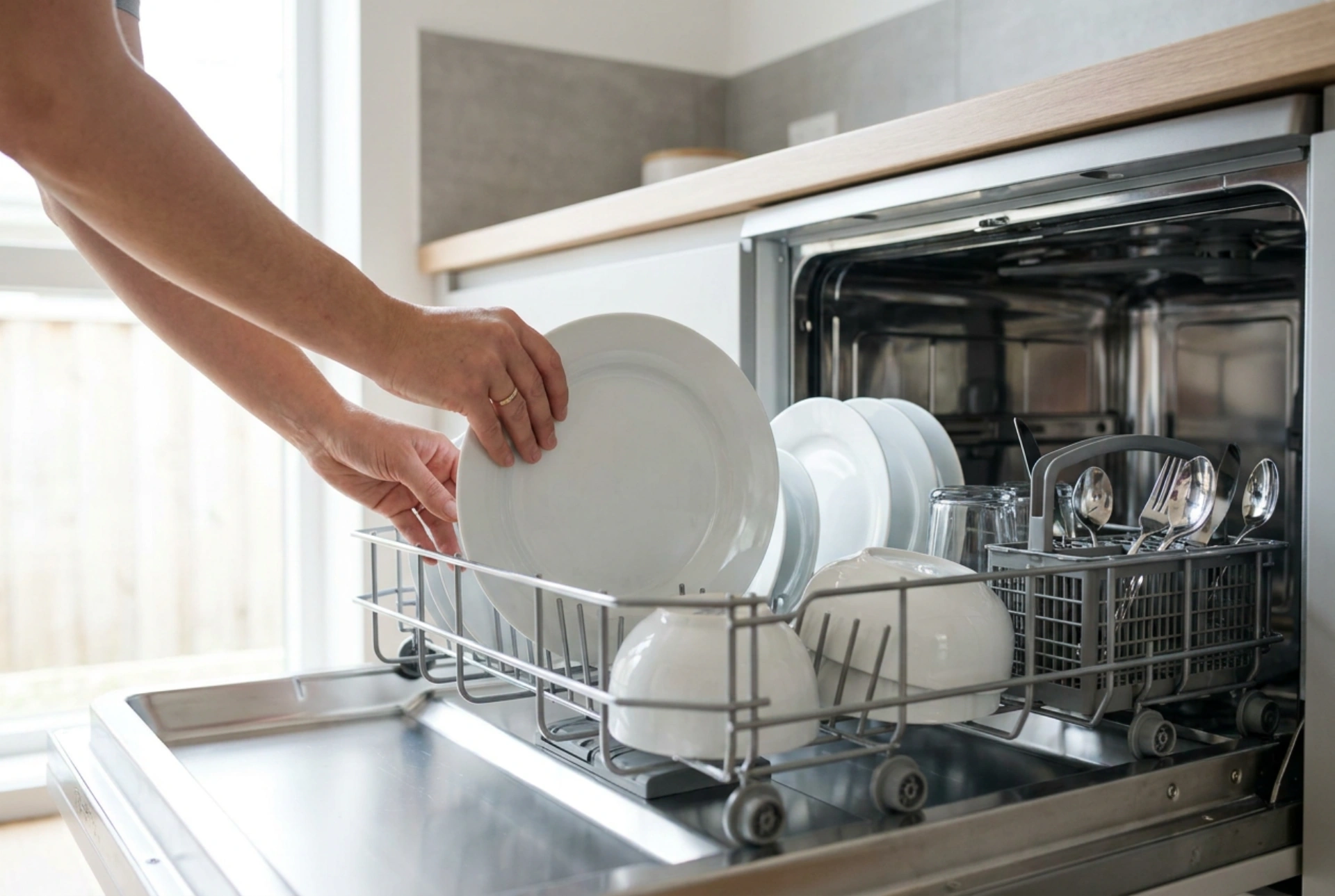
When dishes are placed too close together or overlap, they create a phenomenon known as a "water shadow". This occurs when a larger item blocks the direct trajectory of the water jet, preventing it from reaching adjacent surfaces. To avoid this, plates must be loaded facing the centre of the rack, aligned with the rotation axis of the spray arm. This orientation ensures that the high-velocity water droplets strike the dirty surfaces at an optimal angle of incidence, effectively dislodging soil particles.
Temperature Distribution and Material Sensitivity
The heating element in a compact dishwasher is located at the base of the machine, heating the water as it circulates. This creates a distinct thermal gradient within the tub. The lower rack experiences higher direct thermal energy and stronger mechanical water pressure, making it the ideal zone for heavily soiled items such as pots, pans, and sturdy ceramic plates.
Conversely, the upper rack experiences slightly lower direct heat, making it safer for delicate items. Materials such as polymers and thin glassware should always be placed on top. Plastics have a lower thermal tolerance and a higher coefficient of thermal expansion than ceramics or metals; exposing them to the intense heat near the bottom element can lead to warping. Furthermore, because plastics have a low thermal mass, they cool down rapidly, which affects how water evaporates from their surfaces.
Optimising Geometry: Angle, Orientation, and Spacing
To achieve spotless drying and prevent water spots, the geometry of how dishes are angled is paramount. Water has a high surface tension, causing it to pool on flat, horizontal surfaces. When water pools and evaporates, it leaves behind dissolved minerals, resulting in unsightly white calcium carbonate deposits.
- Bowls and Cups: These must always be loaded at an angle, never completely flat or upside down without a tilt. A slight incline allows gravity to overcome the surface tension of the water, forcing it to slide off the concave base.
- Cutlery Placement: To prevent "nesting"—where spoons or forks rest nested together, blocking water access—mix spoons, forks, and knives in the basket. Place some handles up and some down. However, for safety, sharp blades must always point downward to avoid puncture injuries during unloading.
- Glassware: Secure glasses between the tines rather than forcing them over them. Glass-to-metal contact under high-vibration washing cycles can cause micro-fractures, eventually leading to structural failure or cloudiness.
The Drying Phase: Condensation and Latent Heat
Modern compact built-in dishwashers often utilise condensation drying rather than active hot-air blowers. This process relies on basic thermodynamics. During the final rinse, the water temperature is raised significantly, heating the ceramic and metal dishes. The stainless steel walls of the dishwasher tub, being in contact with the cooler external cabinetry, cool down much faster than the dense dishes.
This temperature differential causes moisture to evaporate from the hot dishes and condense onto the cooler steel walls, eventually trickling down to the drain. To facilitate this process, avoid blocking the walls with large baking sheets or cutting boards placed on the outer edges of the racks, as this disrupts the natural convection currents required for efficient moisture transfer.