

Proper shoe maintenance prevents fabric degradation, glue dissolution, and structural warping. Understanding the physical and chemical properties of each shoe material determines whether to use mechanical washing or gentle manual restoration.
The Chemistry of Shoe Adhesives and Water Temperature
Most modern footwear relies on thermoplastic polyurethane (TPU) or hot-melt adhesives to bond the upper material to the midsole and outsole. These adhesives are highly sensitive to thermal energy. When exposed to temperatures exceeding 30 degrees Celsius, the polymer chains within the glue begin to vibrate rapidly, weakening the intermolecular bonds. This process, known as thermal softening, leads to delamination—the physical separation of the sole from the shoe body.
Mechanical agitation in a washing machine accelerates this failure. As the shoe strikes the drum, shear stress is applied to the heat-softened adhesive joints. Therefore, maintaining low temperatures is not just about preventing fabric shrinkage; it is a critical measure to preserve the structural integrity of the shoe's construction.
Washing Canvas and Synthetic Mesh in the Machine
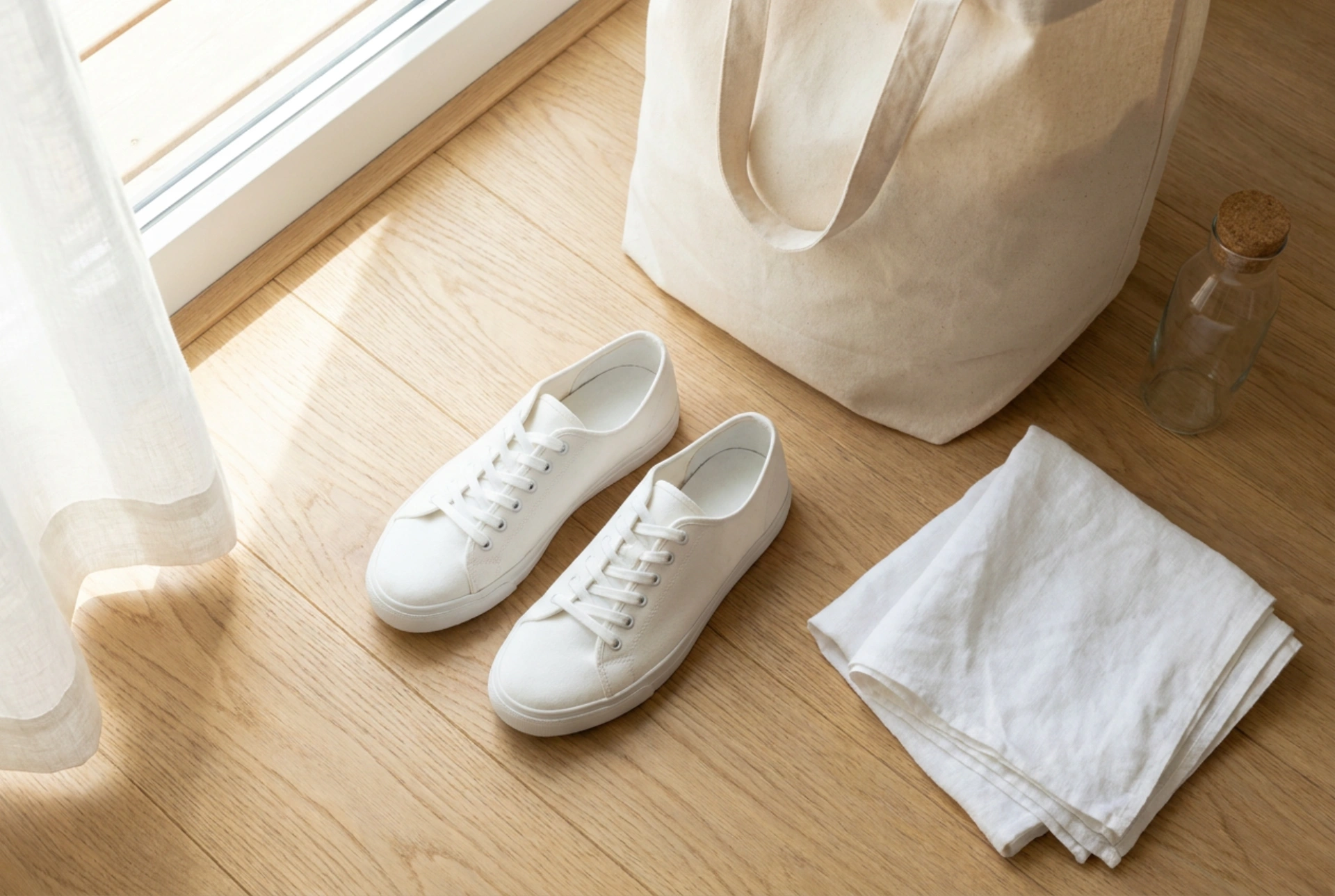
Canvas (woven cotton) and synthetic nylon mesh are resilient enough to withstand mechanical washing, provided you mitigate kinetic impact and chemical degradation. Before placing these shoes in the drum, you must prepare them to prevent mechanical stress.
- Remove Laces and Insoles: Wash laces separately to ensure the eyelets are fully cleaned. Remove insoles to expose the footbed, where organic salts and sweat accumulate. Insoles should be hand-washed to preserve their cushioning foam, which can collapse under machine pressure.
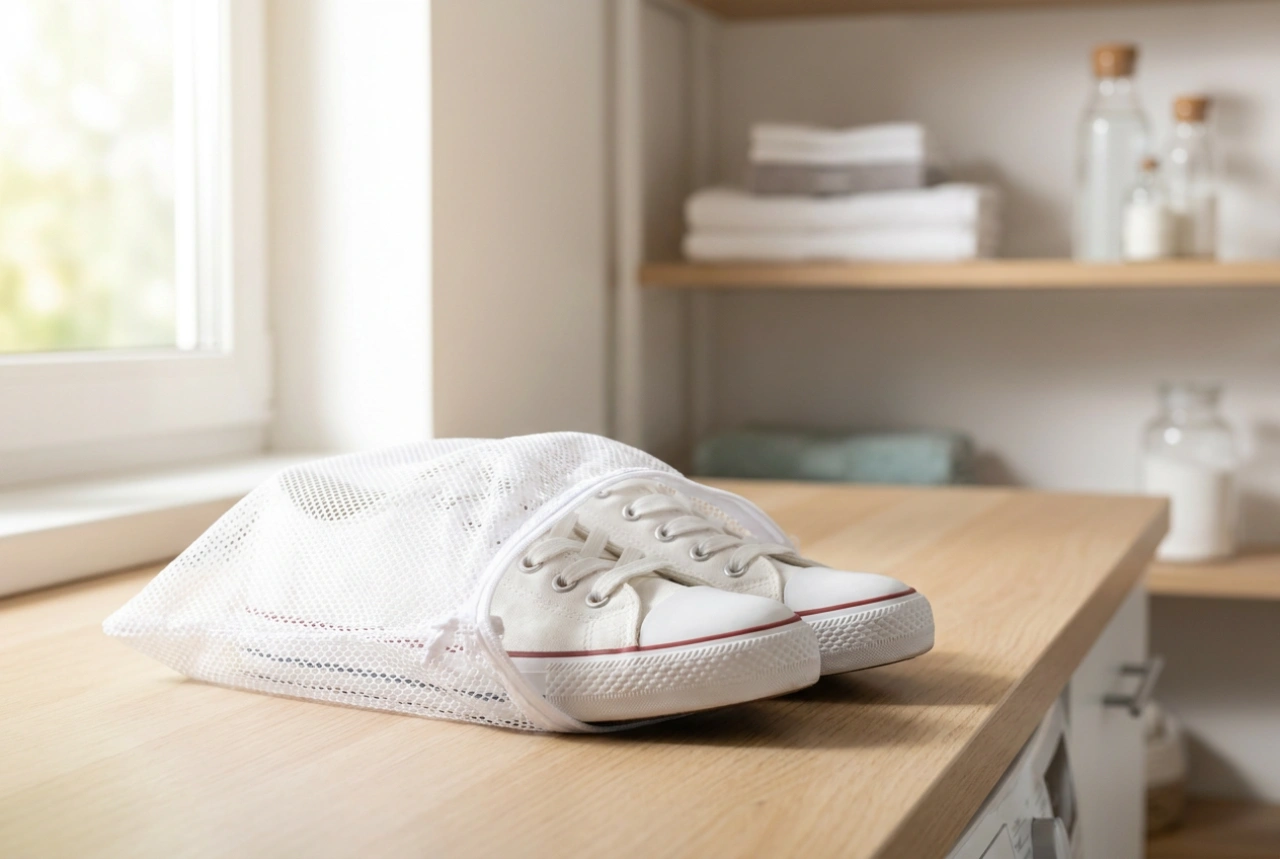
- Use a Buffer: Always place shoes inside a dedicated mesh laundry bag. To balance the washing machine drum and absorb kinetic energy, wash the shoes alongside three to four light-colored towels. This prevents the shoes from violently striking the metal drum during the cycle.
- Detergent Chemistry: Use a mild liquid surfactant. Avoid powder detergents, as undissolved grains can lodge inside synthetic mesh pores, causing friction and wearing down the fibers from the inside out. Never use fabric softeners; they deposit a hydrophobic silicone layer over synthetic fibers, locking in odor-causing bacteria and reducing breathability.
- Cycle Settings: Select a delicate or wool cycle with a maximum temperature of 30 degrees Celsius. Set the spin speed to the lowest possible setting (no more than 400 RPM) or disable it entirely to avoid structural deformation from centrifugal force.
The Manual Protocol for Leather and Suede
Animal hides, including smooth leather and napped suede, must never be submerged in water or machine washed. Water penetrates the porous structure of leather, displacing the natural oils (lipids) that keep the protein fibers flexible. As the water evaporates, it pulls these essential oils out, causing the collagen fibers to stick together, which leads to stiffness, warping, and cracking.
For smooth leather, use a highly controlled damp cleaning method. Mix a few drops of a neutral-pH surfactant with lukewarm water. Dampen a microfibre cloth, wring it out completely, and wipe the surface using circular motions. This mechanical lifting action removes surface dirt without saturating the leather. Once dry, apply a lipid-rich conditioner to restore flexibility to the fibers.
Suede and nubuck require a dry cleaning methodology due to their open, fibrous nap. Liquid causes these delicate fibers to clump together permanently. Use a stiff crepe brush to physically dislodge dust particles, brushing consistently in one direction. For localized stains, apply mechanical friction using a clean rubber eraser to lift the particles out of the nap without chemical solvents.
Drying Physics: Evaporation and Structural Integrity
The drying phase is where many shoes suffer irreversible damage. Tumble dryers expose footwear to high-frequency impacts and intense thermal energy, warping synthetic stabilizers and shrinking soles. Natural, controlled evaporation is the only safe method.
To accelerate drying without heat, utilize capillary action. Stuff the interior of the shoes with clean, unprinted white paper towels. The paper acts as a wick, drawing moisture out of the inner lining. Avoid newspaper, as the acidic inks can migrate into the shoe lining. Replace the damp paper every few hours. Position the shoes in a room with active air circulation, away from direct sunlight (which contains UV radiation that degrades white polymers and fades pigments) and heating vents, which dry the materials unevenly and cause warping.