

Sharing a single large wardrobe among multiple family members requires a systematic approach based on ergonomic principles, frequency of use, and fabric preservation. Implementing a structured spatial division prevents daily friction and protects your textile investments from premature wear.
The Physics of Wardrobe Microclimates and Weight Distribution
Before allocating shelves, it is essential to understand the physical environment inside an enclosed wardrobe. Air circulation is often limited, which can lead to micro-pockets of humidity, especially near external walls. Moisture naturally rises with warm air, meaning the highest shelves can sometimes trap warm, stagnant air, while the lowest zones remain cooler and more prone to dampness. To protect natural fibres like wool and silk, store them in the middle-to-high active zones where airflow is relatively consistent. Heavier textiles, such as denim, winter coats, and stored bedding, should always reside on the lowest shelves or base drawers to lower the structural centre of gravity and prevent shelving unit bowing.
Vertical Zoning and Ergonomic Accessibility
An efficient family wardrobe relies on strict vertical zoning based on the heights and physical capabilities of its users. Dividing the wardrobe vertically minimises reaching strain and ensures each family member can maintain their own section independently.
- The Active Zone (Eye to Hip Level): This is the prime real estate of the wardrobe, reserved for daily wear such as shirts, trousers, and activewear. Allocate this zone to adults for their working wardrobe.
- The Passive Zone (Above Eye Level): Accessible only with effort or a step stool, this area should hold off-season garments, spare linens, or infrequently used travel gear.
- The Lower Accessible Zone (Below Hip Level): This is the optimal region for children's clothing. Placing their daily garments within their natural reach promotes autonomy and reduces the likelihood of them pulling down entire stacks of folded clothes from higher shelves.
Categorisation by Fabric Mechanics
Different textile fibres react uniquely to gravity and tension. Understanding these material properties dictates whether garments should be hung or folded, which heavily influences how you partition the wardrobe space.
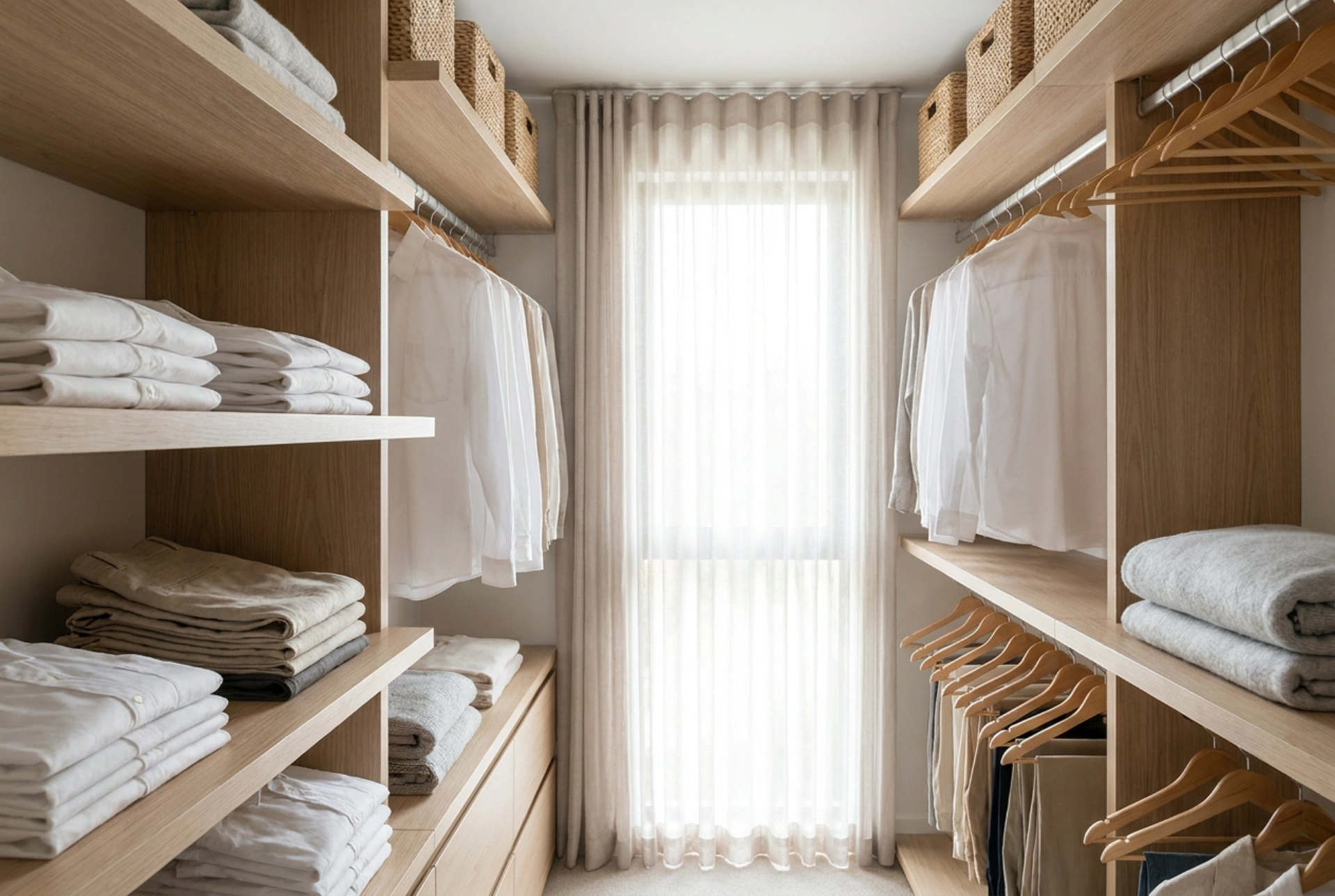
Knitted fabrics, such as wool, cashmere, and heavy cotton knits, possess high elasticity. If hung on hangers, the gravitational pull exerts continuous stress on the shoulder seams, leading to permanent distortion of the garment's shape. These items must be folded flat on shelves or inside breathable cotton storage bins. Conversely, woven fabrics like linen, silk, and structured cotton shirts have low elasticity and are highly susceptible to creasing. These garments require hanging space. Use smooth wood or non-slip textured hangers that match the natural slope of the human shoulder to distribute weight evenly and prevent fabric stretching.
Establishing Visual and Physical Boundaries
When multiple people share one large space, visual boundaries prevent overlapping clutter. Avoid using permanent wooden partitions, which limit future flexibility. Instead, implement tension rods, sliding shelf dividers, and modular containers made of breathable linen or felt. Assigning specific shelf divider positions for each family member creates a clear psychological boundary. Furthermore, standardising hanger directions (e.g., all hooks facing inward) and implementing a consistent folding method, such as vertical file folding in drawers, maximises density while ensuring every item remains fully visible without disturbing the surrounding layers.