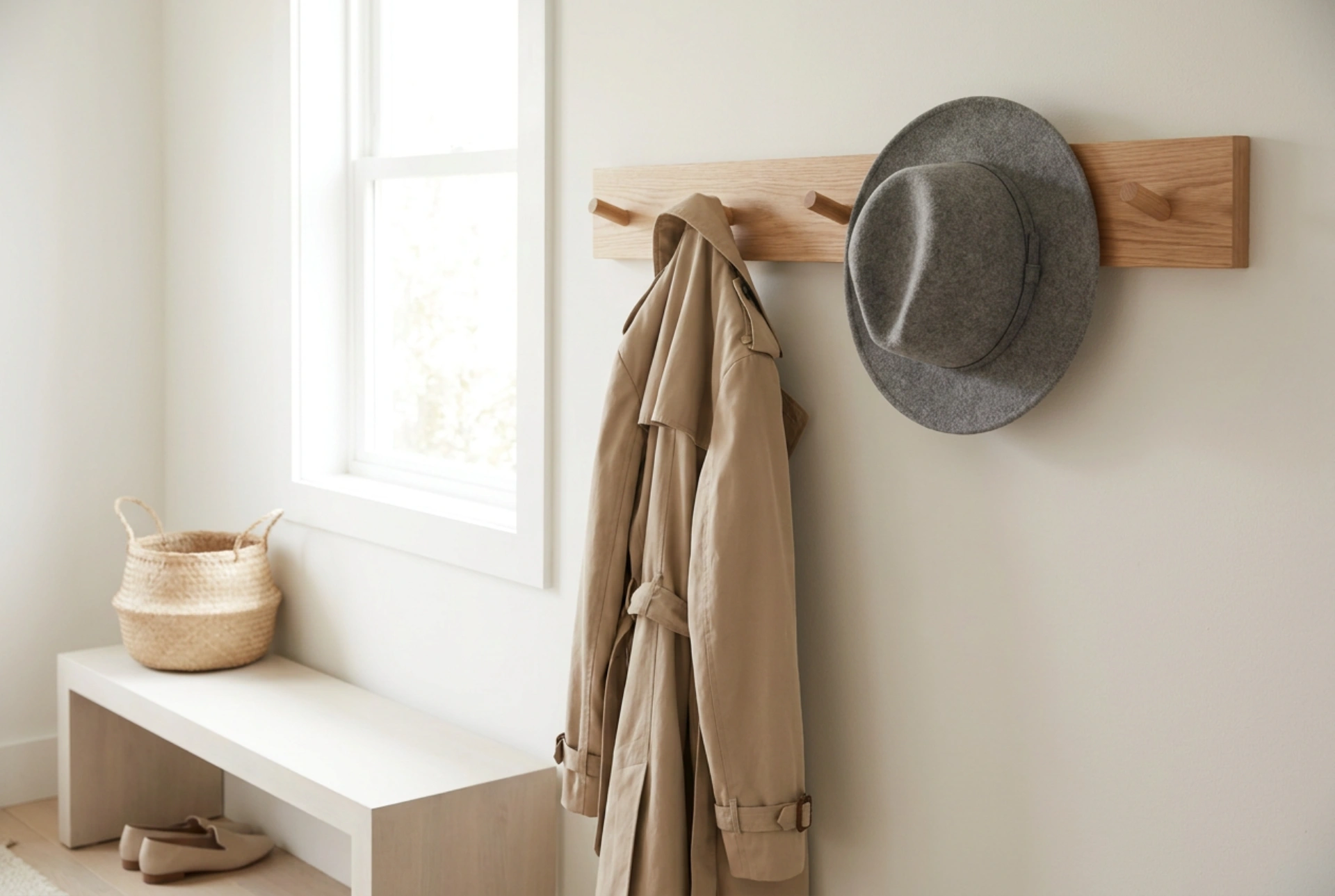


Optimising a hallway requires a strategic approach to vertical storage, where a wall-mounted coat rack serves as the primary tool for managing daily traffic and seasonal outerwear. By understanding the physics of wall fastening, material properties, and ergonomic spacing, you can transform a chaotic entry point into an efficient, streamlined system.
The Engineering of Wall Mounting: Load and Substrates
Installing a wall-mounted coat rack is an engineering task that must account for shear force and tension. When multiple heavy winter coats are hung on a rack, they exert a downward gravitational force (shear) and a forward pulling force (tension) on the mounting screws. The durability of your installation depends entirely on matching the fastening hardware to the specific wall substrate in your home.
Drywall and Stud Alignment
For drywall (gypsum board), standard wood screws will quickly pull out under load because the gypsum core lacks structural integrity. Whenever possible, locate the wooden studs behind the plasterboard using a stud finder and drive the mounting screws directly into them. If stud alignment is not possible, you must use heavy-duty toggle bolts or metal self-drilling plasterboard anchors. Toggle bolts spread the load over a larger surface area behind the drywall panel, significantly increasing the weight capacity.
Solid Brick and Concrete Walls
For solid masonry walls, such as brick, stone, or concrete, expansion plugs made of high-density polyethylene are required. When the metal screw is driven into the plastic plug, it forces the sleeve to expand against the walls of the pre-drilled hole, creating immense friction that resists pull-out forces. It is critical to use a masonry drill bit of the exact diameter specified for the plug; a hole that is even slightly too large will cause the anchor to spin and eventually fail.
Material Science of Racks and Hooks
The materials of both the mounting backplate and the hooks influence their longevity and how they interact with damp clothing. Hallways are high-humidity transitional zones exposed to wet garments and outdoor moisture, making material choice paramount.
- Solid Hardwoods: Racks made from oak, ash, or beech are highly durable. Hardwoods possess dense grain structures that resist warping when exposed to wet coats. Ensure the wood is sealed with a hydrophobic polyurethane or water-resistant oil coating to prevent water spots, mould growth, and timber rot.
- Metals and Alloys: Hooks should be composed of corrosion-resistant materials such as powder-coated steel, stainless steel, or anodised aluminium. Unprotected iron or cheap zinc alloys can rust when in contact with wet raincoats, leaving permanent iron oxide stains on both the wall and your garments.
Ergonomics, Spacing, and Convection
For a wall-mounted rack to function efficiently, it must be installed at heights that facilitate easy reach while preventing clothes from dragging on the floor or piling up. The standard mounting height for adult access is between 170 and 180 centimetres from the finished floor level.
Facilitating Airflow and Drying
To prevent clutter and promote the rapid drying of damp outerwear, hook spacing is critical. Hooks should be spaced at least 15 to 20 centimetres apart. This distance allows air to circulate between hanging garments, accelerating evaporation through natural convection. When clothes are packed too tightly, moisture becomes trapped in the fabric layers, leading to musty odours, mildew, and fibre degradation. If space is limited, consider a staggered hook arrangement to double the storage density without restricting airflow.
Systematic Organisation and Weight Management
A wall rack should serve as an active transit zone rather than a permanent storage solution. Overloading a rack compromises the wall anchors and stretches the collars of your coats. Implementing a strict seasonal rotation ensures the rack remains functional and visually clear.
Reserve the hooks exclusively for outerwear currently in use. Off-season coats should be cleaned, dried, and stored in secondary wardrobes. When hanging items, place heavier wool coats on sturdy, wide-contoured hooks to distribute the fabric weight evenly and prevent shoulder stretching, while reserving smaller secondary hooks for lightweight hats, dog leads, or umbrellas.