

A clogged shower tray drain is usually caused by an accumulation of hair, sebum, and soap scum that bind together into a water-resistant barrier inside the strainer. Understanding the physical mechanics of low-profile drainage and the chemistry of bathroom residues allows you to restore full water flow safely without damaging delicate seals or plastic pipework.
The Mechanics of Low-Profile Shower Drains
Modern shower trays, especially slimline or walk-in designs, rely on low-profile waste traps. Because space beneath the tray is extremely limited, these traps have a shallow water seal and narrow chambers. Unlike deep sink siphons, they have very little tolerance for debris. The drain strainer, or hair catcher, acts as the primary defense mechanism. When hair passes through, it catches on the support struts, creating a physical mesh. This mesh then filters out soap particles and skin cells, rapidly reducing the open surface area of the strainer and causing water to pool around your feet.
The Chemistry of Soap Scum and Scale
The sticky, grey residue that coats the strainer is not just dirt; it is a chemical compound known as lime soap or calcium stearate. This forms when the fatty acids in soaps and shampoos react with the calcium and magnesium ions present in hard water. This substance is highly hydrophobic, meaning it repels water and clings tenaciously to plastic surfaces. To dissolve this bond without using highly corrosive, exothermic drain cleaners—which can melt thin-walled PVC pipes and degrade rubber gaskets—you must use a targeted chemical approach. Mild acids, such as a warm citric acid solution, break down the calcium bonds, converting the insoluble lime soap into water-soluble salts. Combining this with a surfactant, such as standard washing-up liquid, allows the greasy binder to be emulsified and rinsed away easily.
Step-by-Step Cleaning and Maintenance Protocol
To clean the strainer effectively and preserve the integrity of the siphon assembly, follow this structured procedure:
Extraction and Initial Inspection
Carefully remove the outer chrome or matte cover. Most covers lift straight up or require a slight counter-clockwise turn. Once exposed, lift out the inner strainer cup or cylinder. Avoid using sharp metal tools like screwdrivers to pry it out, as they can scratch the tray or crack the plastic rim.Mechanical Hair Removal
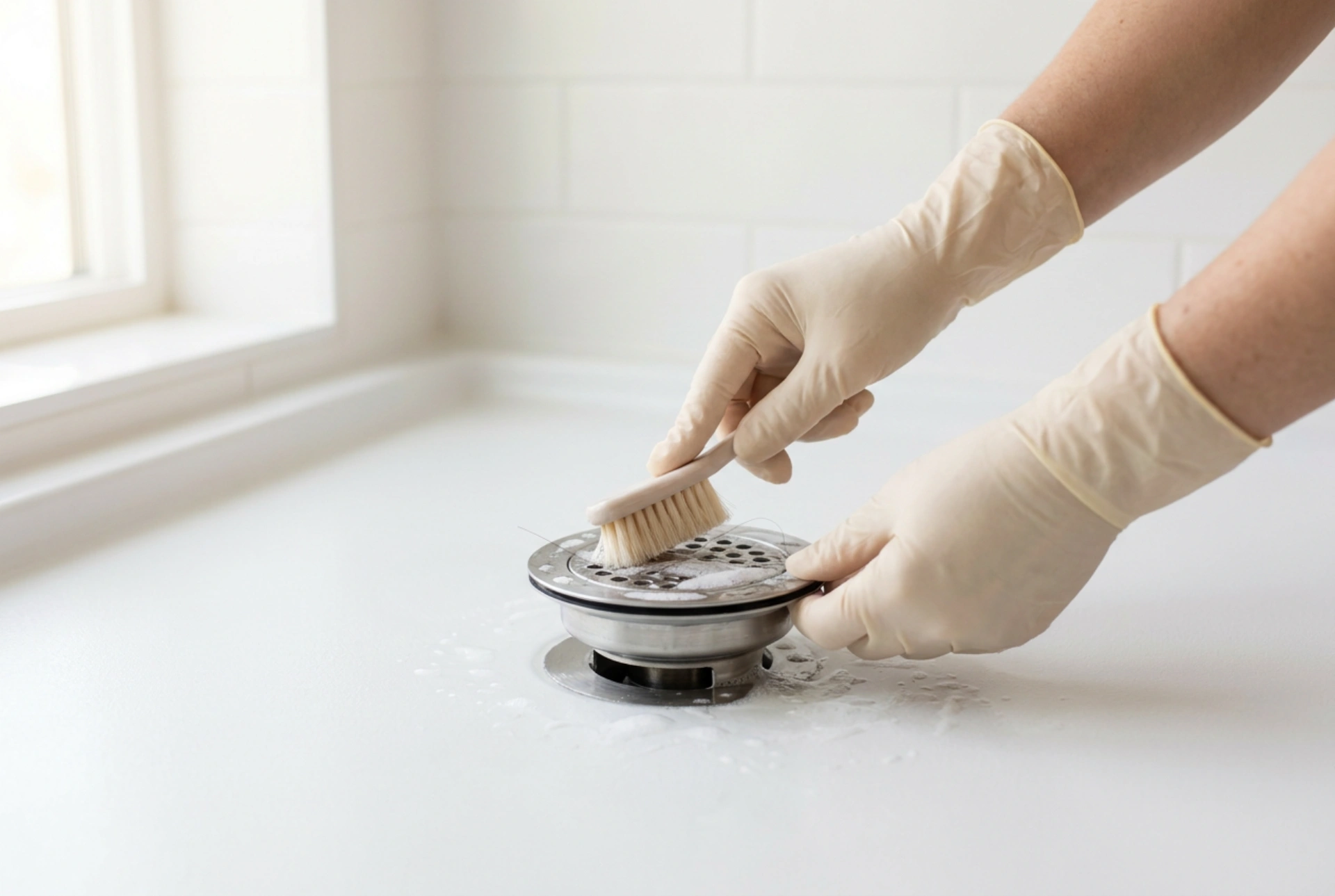
Before applying any liquids, remove the accumulated hair mass manually. Wearing protective gloves, use a pair of tweezers or a small utility brush to pull the hair bundle straight up. Do not push it further down into the trap, as retrieving it from the horizontal run of the waste pipe is significantly more difficult.The Acid-Surfactant Soak
Prepare a solution of warm water (approximately 40°C to 50°C—never boiling, to protect the PVC seals), two tablespoons of citric acid powder, and a few drops of dish soap. Submerge the strainer in this mixture for 15 minutes. The acid dissolves the mineral scale while the surfactant breaks down the organic oils.Detailing the Apertures
Using a soft-bristled brush, scrub both the interior and exterior surfaces of the strainer. Pay close attention to the small perimeter slots and holes. If these holes remain partially blocked by a thin film of grease, the surface tension of the water will prevent it from draining efficiently, even if the main chamber is clear.Reassembly and Water Seal Check
Rinse the cleaned strainer in cold water and slide it back into the trap housing. Ensure it seats flush against its keyway; an improperly aligned strainer can block the cover plate or allow hair to bypass the filter entirely. Pour a litre of clean water down the drain to re-establish the sewer gas barrier in the water trap.
Preventing Recurrent Blockages
Maintaining a clear drain is a matter of consistency. Rinsing the tray with warm water for five seconds after every shower washes away soapy residue before it cools and solidifies on the plastic surfaces. Additionally, avoid using heavy, oil-based body washes or hair conditioners containing non-soluble silicones, as these act as adhesives for hair and dust inside the trap.