

Maintaining a cooker hood is vital for efficient air extraction and preventing greasy aerosol particles from settling on kitchen surfaces. Understanding the mechanics of grease filtration and airflow dynamics allows you to keep the system running at peak performance.
The Physics of Cooker Hood Airflow
An extractor hood operates on a simple pressure differential principle: a motorised fan draws warm, buoyant air containing grease, water vapour, and odour molecules upwards. This air must pass through a barrier of filters. When these filters are clean, air flows smoothly with low resistance, maintaining a stable laminar flow. However, as particulate matter deposits onto the filter surface, the effective cross-sectional area of the mesh decreases. This creates a high pressure drop across the filter, forcing the motor to work harder, which increases noise, energy consumption, and significantly reduces the volumetric flow rate of the extraction system.
Degreasing Metal Mesh Filters: The Chemistry of Emulsification
The primary barrier in any cooker hood is the metal grease filter, usually constructed from layered aluminium or stainless steel mesh. Cooking oils are hydrophobic lipids that polymerise over time under the influence of heat, forming a sticky, resilient varnish. To break down these polymerised fats, you must employ the chemical principles of saponification and emulsification. Hot water is essential; temperatures around 60 degrees Celsius lower the viscosity of the grease, making it fluid. Combining this with an alkaline surfactant, such as sodium carbonate (soda crystals), breaks the lipid bonds, allowing the grease to dissolve into the water solution.
Step-by-Step Metal Filter Cleaning Technique
- Preparation: Remove the filters carefully to avoid bending the delicate aluminium frames.
- Soaking: Fill a deep basin with hot water. Dissolve two tablespoons of sodium carbonate or a concentrated, neutral surfactant degreaser. Avoid using highly alkaline chemicals, such as sodium hydroxide, on aluminium, as they trigger rapid oxidation, turning the metal dark grey and weakening its structural integrity.
- Agitation: Let the filters soak for 15 to 20 minutes to allow the surfactants to penetrate the grease layers. Gently agitate the water or use a soft-bristled polymer brush in circular motions to dislodge stubborn deposits.
- Rinsing and Drying: Rinse thoroughly with clean, warm water to remove all chemical residues. Shake off excess moisture and let the filters dry completely in a vertical position before reinstalling. Damp filters can trap airborne dust immediately, accelerating clogging.
Activated Carbon Filters: Adsorption and Air Cleansing
In recirculating cooker hoods, air is purified and returned to the kitchen rather than vented outside. This setup requires an activated carbon filter to eliminate cooking odours. Activated carbon operates via a physical process called adsorption, where gas molecules adhere to the massive internal surface area of the carbon micropores through Van der Waals forces. Unlike grease filters, standard carbon filters cannot be washed; water fills the micropores and destroys the structural bonding of the carbon granules, rendering them ineffective. You must replace standard carbon filters every three to six months, depending on cooking frequency, to prevent them from restricting airflow. Some advanced regenerative carbon filters can be reactivated by heating them in an oven at 200 degrees Celsius for two hours, which thermally desorbs the trapped organic molecules, clearing the pores for reuse.
Exterior Maintenance and External Ductwork
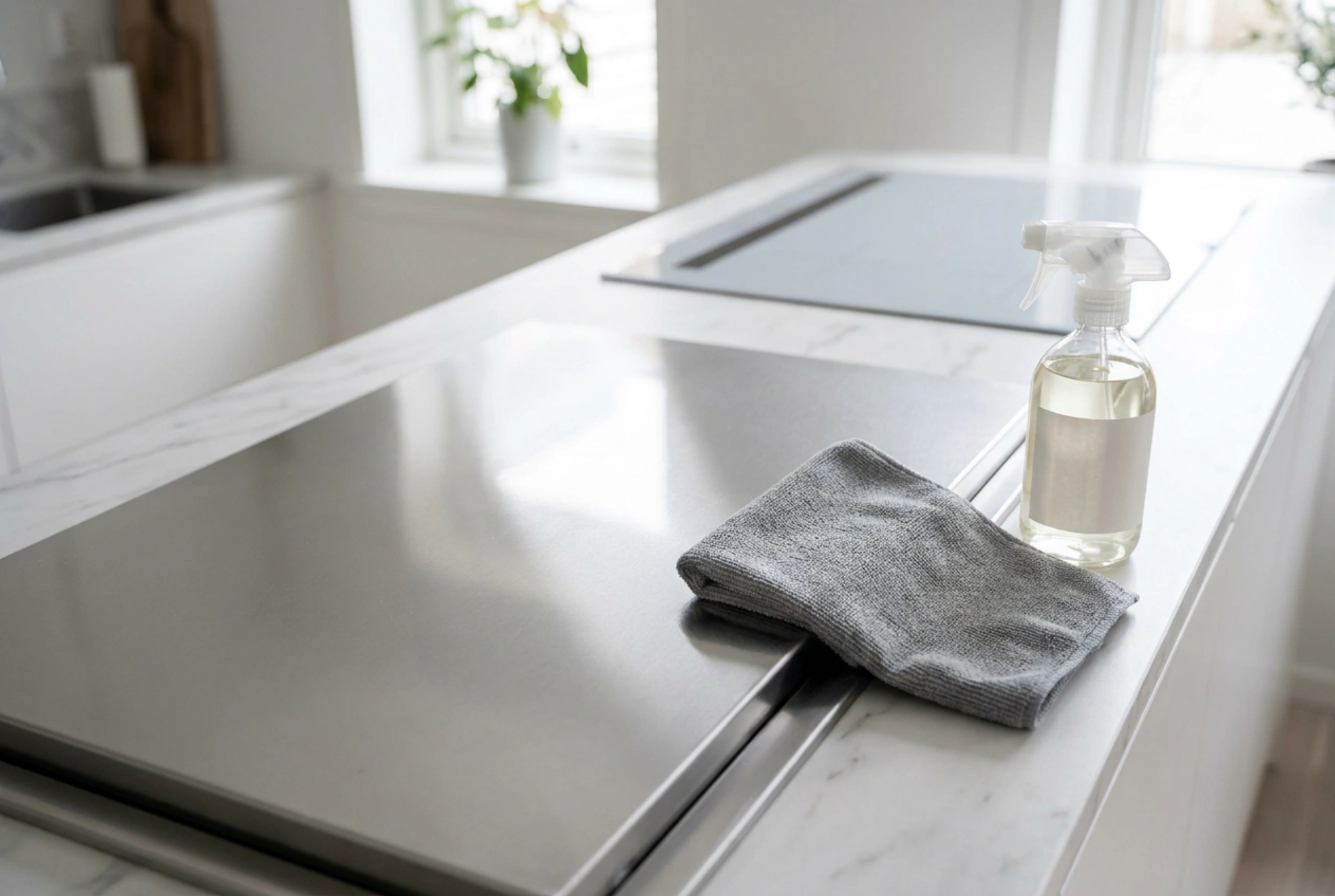
The physical structure of the hood also affects its performance. Dust and grease build-up on the exterior surface can attract more grime, which eventually migrates to the fan blades, causing rotational imbalance and bearing wear. Wipe the stainless steel or glass exterior using a microfiber cloth and a mild surfactant solution or isopropyl alcohol, always wiping in the direction of the metal grain to prevent micro-abrasions. Additionally, if your hood vents externally, inspect the gravity flaps or external grilles annually. Obstructions like bird nests, dust, or stuck flaps create immense backpressure, rendering even a clean internal filter system ineffective.