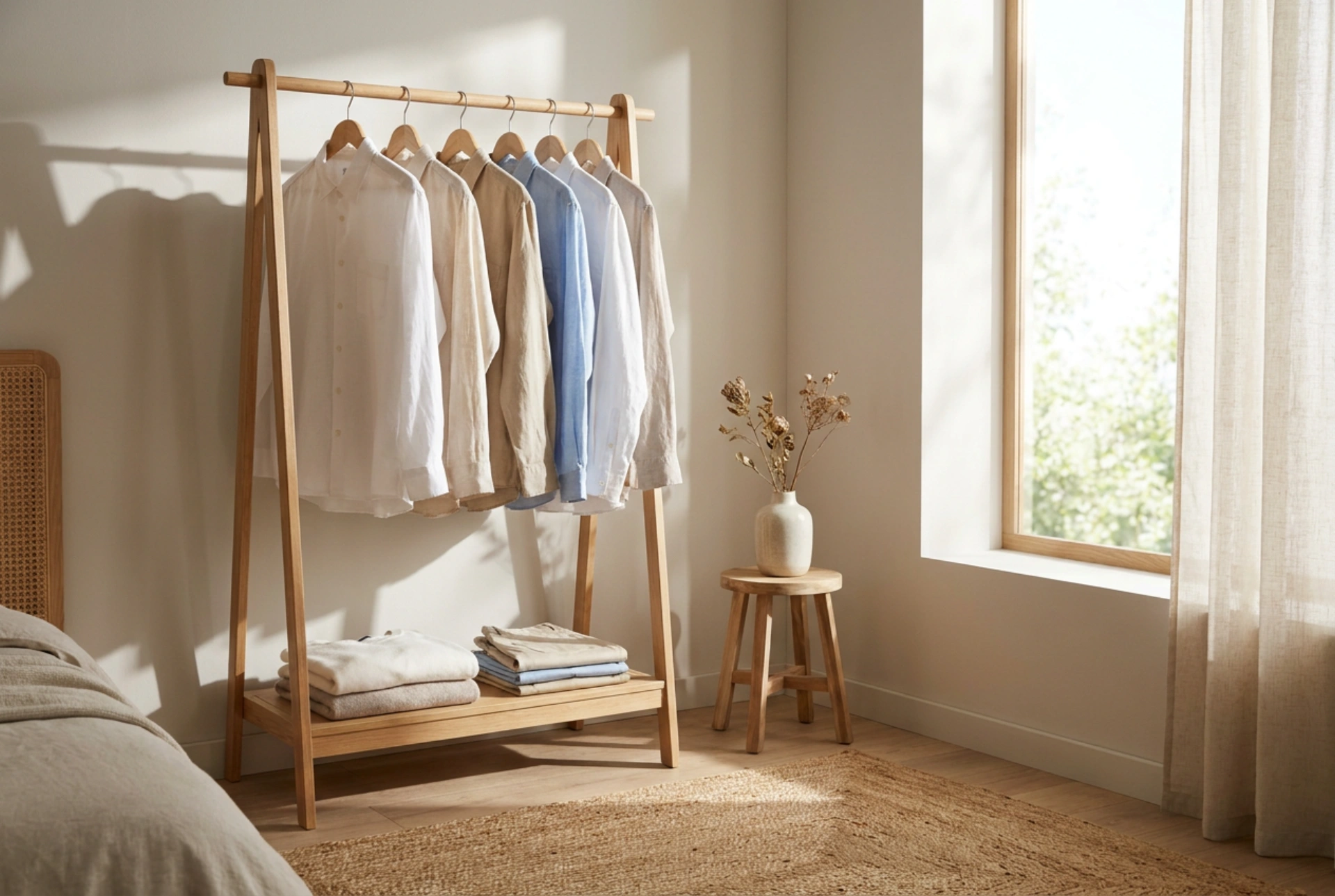


Streamlining your morning routine starts with optimizing the physical layout of your immediate environment. By curating a dedicated, highly organized mini wardrobe directly in the bedroom, you reduce cognitive friction, eliminate decision fatigue, and protect the structural integrity of your garments through proper material management.
The Ergonomics of Visual Order and Fiber Desorption
When clothing is packed tightly into dark, deep closets, it undergoes mechanical compression. This lack of space prevents natural fiber desorption—the process by which fabrics release absorbed body moisture and environmental humidity. To combat this, a free-standing mini rail or dedicated bedroom niche should operate on a low-density hanging principle.
Leaving a physical gap of approximately three centimeters between hangers ensures adequate airflow. This convective air movement assists in smoothing out wrinkles naturally, as fibers like wool and linen utilize ambient air moisture to recover their molecular structure after wear. From a psychological perspective, limiting your active wardrobe to ten to fifteen carefully selected seasonal garments reduces the visual stimuli your brain must process immediately upon waking, facilitating a calmer transition into the day.
The Physics of Garment Suspension
Choosing the correct support mechanism for your clothes is a matter of material science and structural physics. Cheap wire hangers possess a narrow surface area, concentrating the gravitational pull on a tiny strip of fabric. This concentrated pressure causes permanent deformation of shoulder seams, particularly in knitted textiles and delicate weave patterns.
- Broad-Shouldered Wooden Hangers: Wooden hangers, specifically those made from untreated hardwoods, distribute the weight of heavy coats and structured blazers evenly. The natural wood also acts as a micro-hygrometer, absorbing trace amounts of ambient moisture from the garment.
- Friction Coefficient of Velvet: For silk, satin, and synthetic blouses, hangers coated with flocked velvet provide the necessary surface friction to prevent slippage without causing physical abrasion to the delicate fibers.
- Tension-Free Trouser Suspension: Heavy denim and wool trousers should be hung by their cuffs using felt-lined clamp hangers. This utilizes the natural weight of the garment to pull down on the fabric, effectively tensioning and straightening creases without requiring heat-damaging iron cycles.
Designing the Kinetic Flow of Your Morning
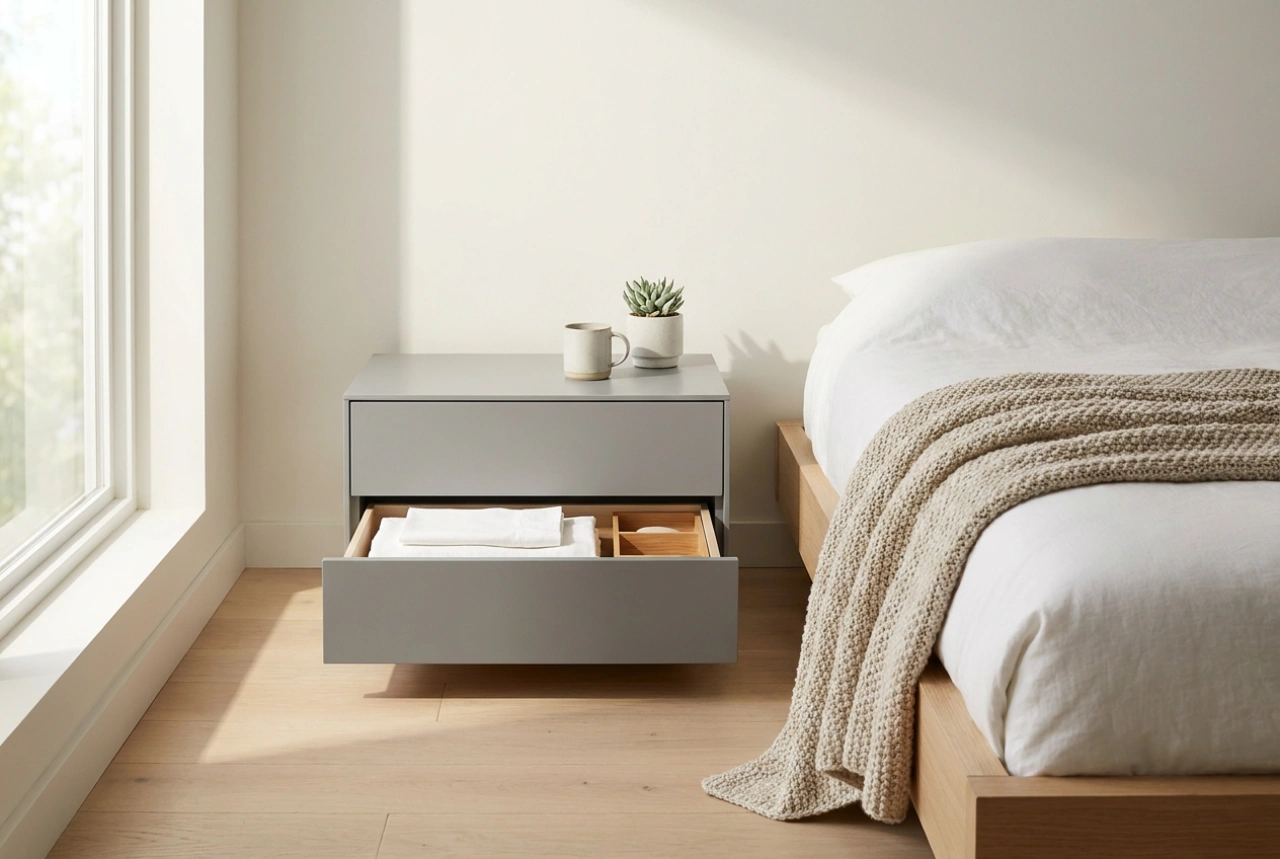
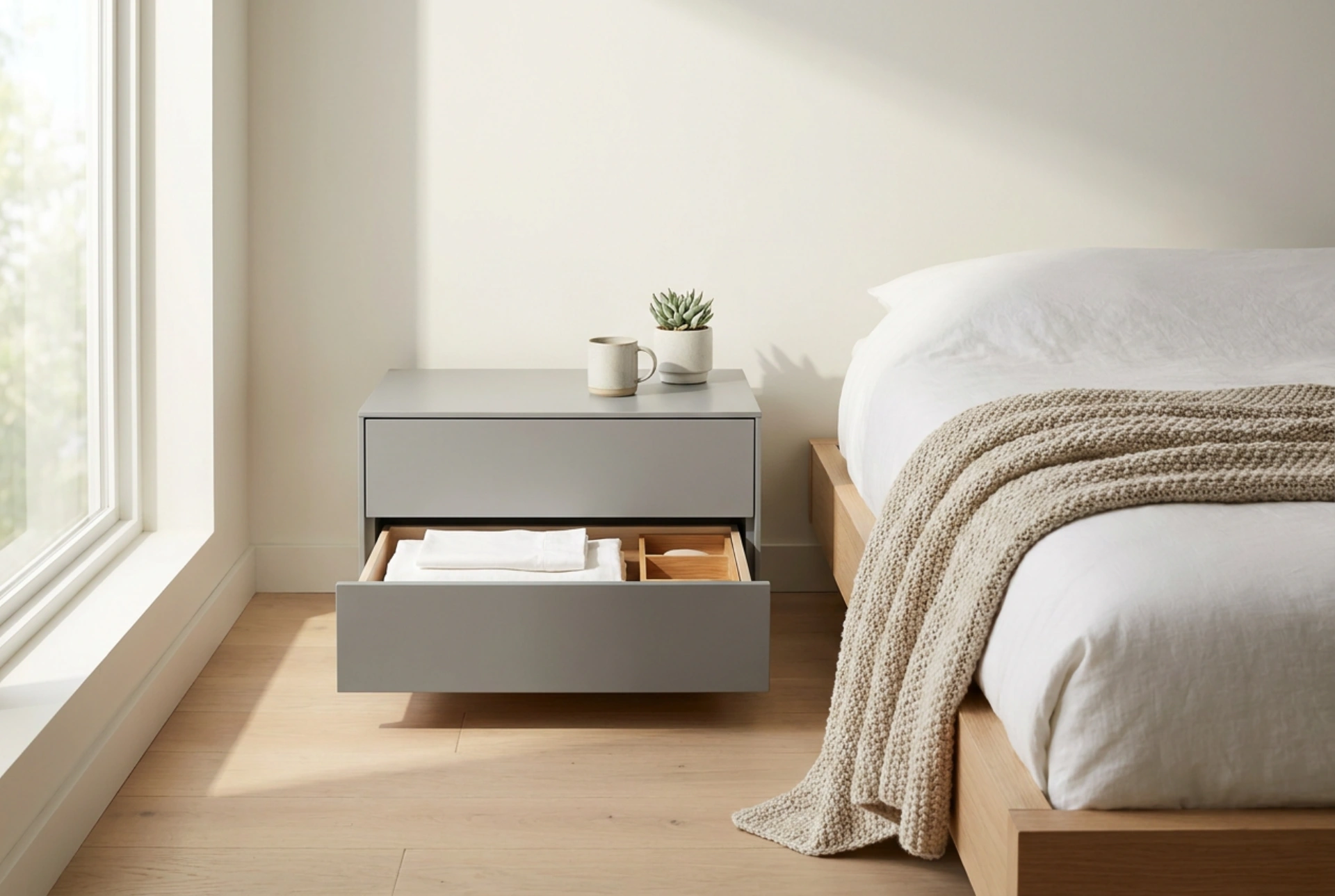
An efficient mini wardrobe is organized according to kinetic flow—the sequence in which you naturally dress. Arrange your garments from left to right in order of application: undergarments and base layers in low-level wooden drawer units, shirts and trousers on the main rail, and structured outerwear or knitwear on the outer edges.
Position the rack away from direct pathways to maintain clear physical transit zones. Ergonomically, the most frequently accessed items should reside between hip and shoulder height (the "active zone"). This eliminates unnecessary bending or stretching first thing in the morning, preserving physical energy and reducing joint strain during the waking hours.
Managing Light Exposure and Microclimates
An open bedroom wardrobe must be strategically positioned to protect textiles from environmental degradation. Direct sunlight emits ultraviolet (UV) radiation, which breaks down the chemical bonds in textile dyes and natural fibers, leading to localized fading and fiber embrittlement.
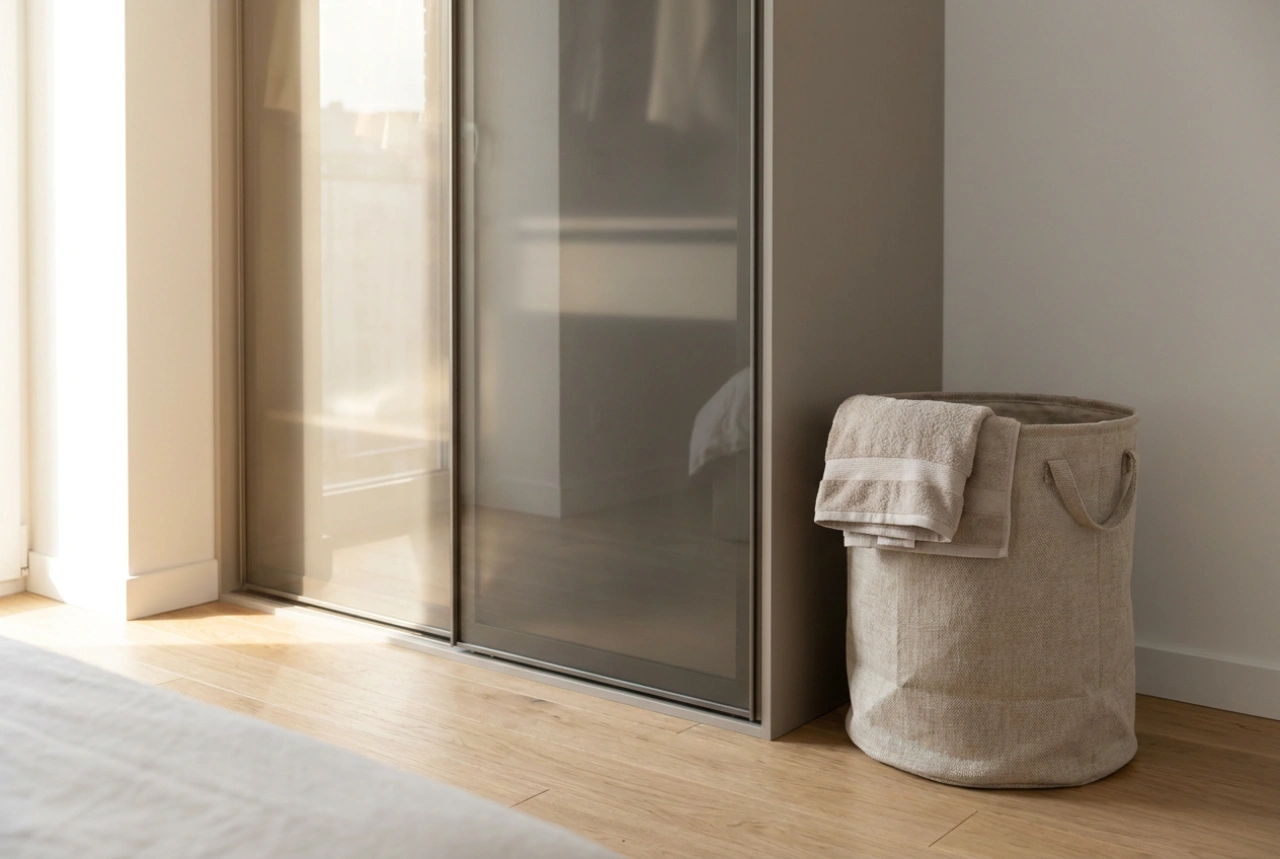
Position your mini wardrobe in a shaded corner, perpendicular to the window. To prevent dust accumulation without sacrificing the benefits of open airflow, opt for lightweight, breathable cotton garment covers for pieces that are worn less frequently. Ensure the bedroom maintains a relative humidity level between 40% and 55% and a temperature of 18°C to 20°C; this microclimate inhibits the proliferation of dust mites and mold while allowing natural fibers to maintain their elasticity and fresh scent.