

Rustic solid wood wardrobes possess undeniable character, but their deep, dark interiors and heavy physical presence can easily make storage feel cramped, dark, and cluttered. Achieving a practical, well-organised wardrobe system within a rustic frame requires balancing wood dynamics with light-diffusing materials and proper weight distribution.
The Material Physics of Wooden Wardrobe Care
Solid wood is a hygroscopic material, meaning it constantly absorbs and releases moisture from the surrounding air. Unlike modern synthetic laminate wardrobes, a rustic timber wardrobe behaves like a living organism. Storing items inside it requires a deep understanding of airflow and humidity control. When dense garments are packed tightly against raw or oiled wood surfaces, stagnant microclimates form, leading to musty odours and potential mould growth. To prevent this, you must maintain a physical gap of at least two to three centimetres between the wardrobe's back panel and your clothes. Never store garments in airtight plastic boxes or vacuum bags inside a wooden wardrobe for extended periods; these trap residual humidity and prevent the timber from breathing. Instead, opt for highly breathable, open-weave organisers made from natural linen, cotton, or unbleached canvas. These natural fibres allow air to circulate freely, matching the moisture-regulating properties of the wood itself.
Visual Weight and Light Diffusion Techniques
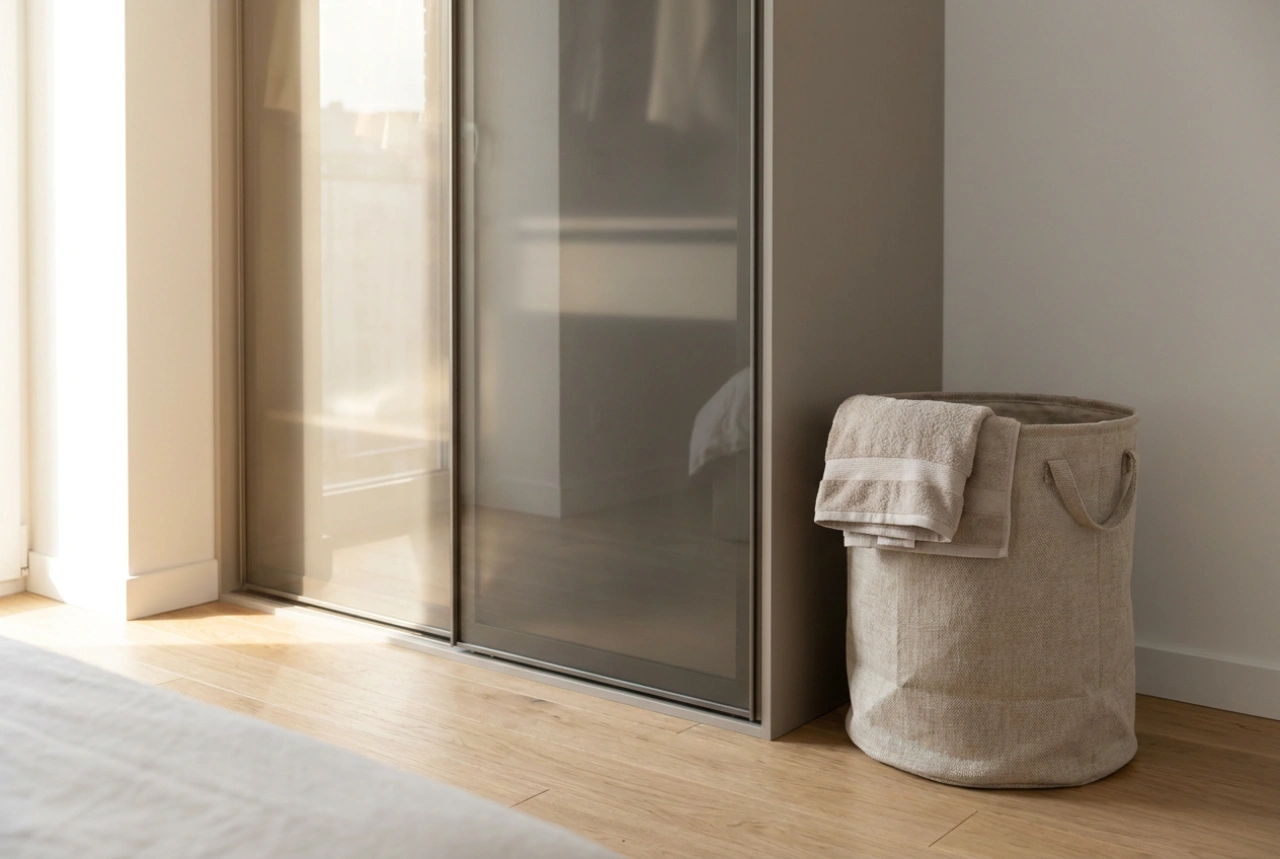
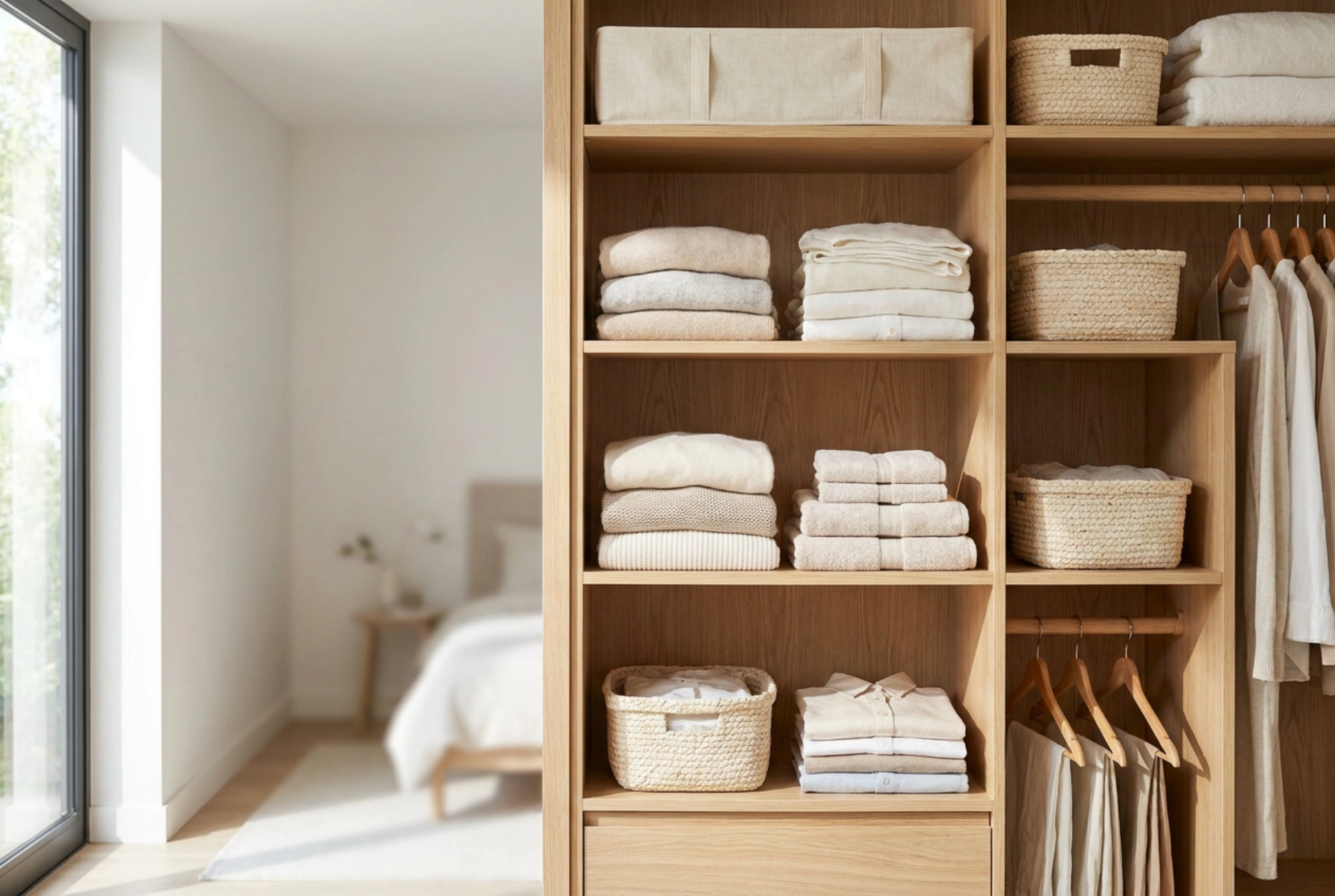
Rustic furniture often features dark stains, prominent wood grains, and heavy iron hardware, which absorb light and make the interior look smaller than it is. To counteract this heavy visual effect, you must introduce elements that diffuse and reflect light. Cream-coloured, off-white, or light-grey linen organisers serve as perfect visual counterweights. Woven baskets made from light-toned seagrass, willow, or rattan introduce texture while breaking up the solid, dark planes of wood shelving. When categorising your wardrobe, implement a colour-gradient system: hang darker, heavier garments, such as wool coats and dark denim, towards the corners or back, and place lighter, brighter fabrics like white cotton shirts and pastel knits in the centre. This clever optical trick draws the eye to the brightest point, creating an illusion of depth and spaciousness inside the cabinet.
Structural Weight Distribution and Ergonomics
Organising a rustic wardrobe is also an exercise in structural physics. Heavy solid wood shelves can warp over decades if subjected to uneven load distribution. Place your heaviest textile items, such as winter blankets, heavy boots, and denim stacks, on the bottom shelf or floor of the wardrobe. This lowers the centre of gravity and prevents top-heavy structural strain. Medium-weight items, such as daily wear t-shirts and trousers, should occupy the eye-level shelves. Reserve the highest shelves for lightweight, seasonal items enclosed in breathable, zippered fabric containers. When folding garments, utilise the vertical filing method instead of stacking them in tall, unstable piles. Stacking creates downward pressure, crushing the bottom garments and trapping air pockets that collect dust. Folding items to stand vertically in shallow linen drawers or baskets distributes weight evenly and ensures every garment is visible at a glance.
Natural Humidity Regulators and Wood Protection
Because rustic wardrobes are prone to absorbing environmental humidity, maintaining a dry microclimate is essential for preserving both the wood and your garments. Avoid synthetic chemical air fresheners, which contain solvents that can degrade natural varnish, wax, or oil finishes on the wood. Instead, rely on natural desiccants and aromatic timber. Blocks of untreated red cedarwood are highly effective; they contain natural oils that repel textile pests like clothes moths while absorbing excess airborne moisture. Similarly, sachets filled with dried lavender or baking soda can be tucked into linen organisers to neutralise acidic odours. Regenerate your cedar blocks every six months by lightly sanding the surface with fine-grit sandpaper to reopen the wood pores and release the active natural oils.