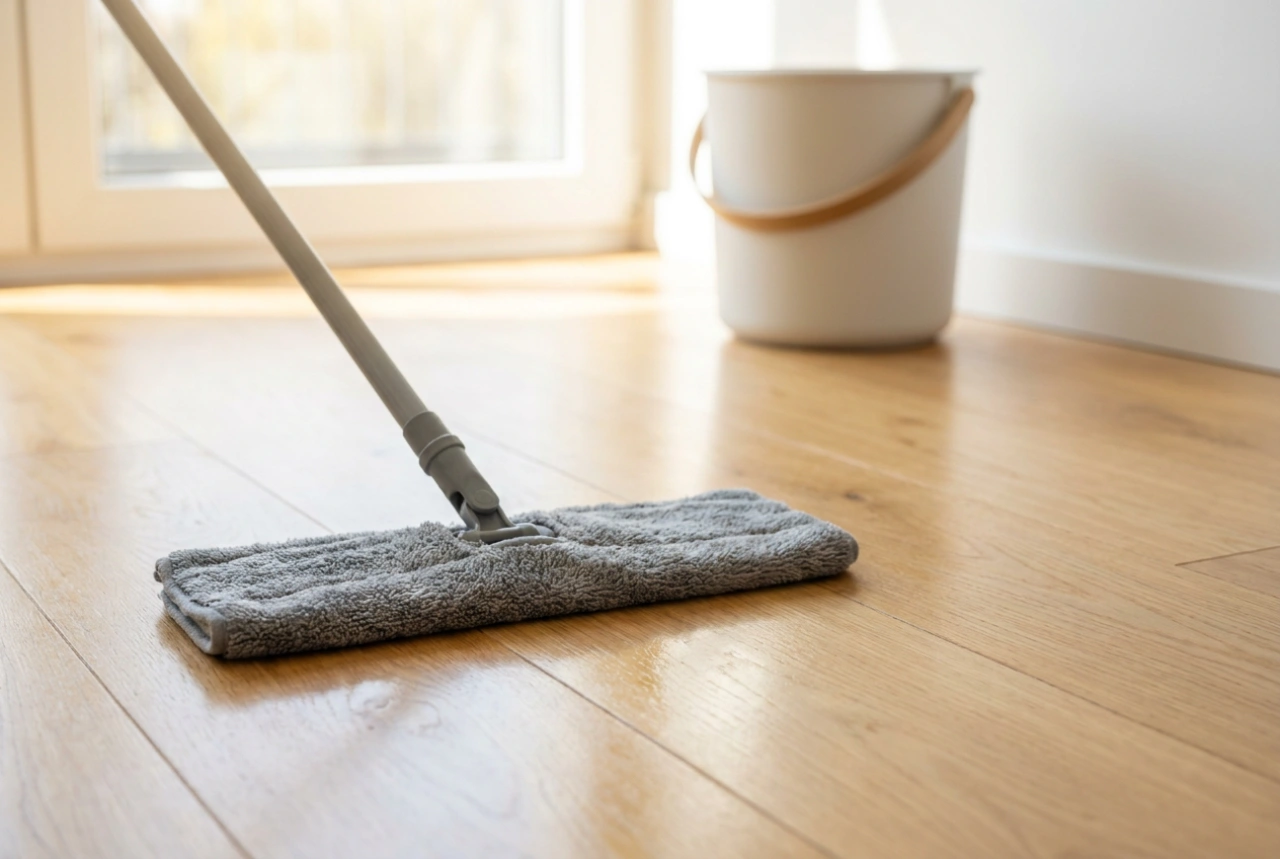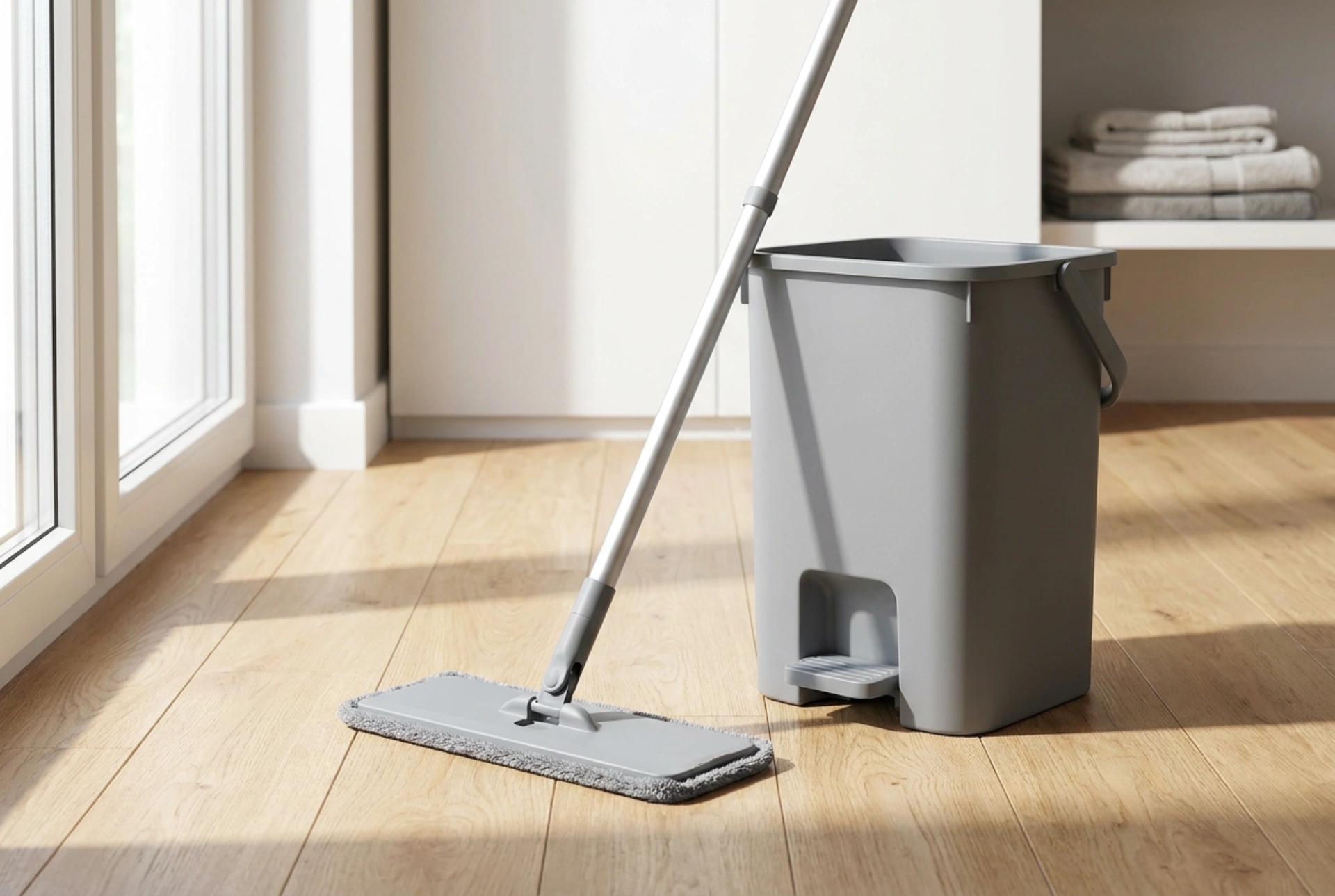


Efficient floor maintenance depends on minimizing moisture while maximizing contact surface area. A flat mop equipped with a dedicated wringer bucket offers the precise mechanical control needed to lift soils without degrading modern flooring materials.
Microfiber Dynamics and Soil Adhesion
Microfiber pads are composed of millions of split synthetic fibers—usually polyester and polyamide—that create a vast surface area. This physical structure utilizes capillary action to draw in and lock water, grease, and micro-particles deep within the fibers, rather than merely pushing them across the floor. In contrast to traditional cotton string mops, which can smear residues, flat microfiber pads make uniform contact with flat surfaces. This ensures even pressure distribution and consistent friction, which breaks up stubborn surface films mechanically, reducing the reliance on aggressive chemical surfactants.
The Role of the Compression Wringer in Moisture Control
Modern flooring materials like laminate, engineered wood, and sealed hardwoods are highly susceptible to moisture damage. Excess water can penetrate seams, causing wood fibers to swell and warp. The mechanical press or wringer integrated into the bucket system solves this by applying targeted compression to the flat pad. By squeezing out excess liquid, the wringer leaves the microfiber in a damp state. This optimal moisture level ensures that water evaporates rapidly from the floor surface within one to two minutes, preventing pooling and eliminating water spots or streaks.
The S-Motion Technique for Streak-Free Results
Speed and efficiency in floor cleaning are determined by technique rather than force. To clean effectively, one should employ the "figure-eight" or S-motion technique. This movement involves leading with the same edge of the mop frame at all times, drawing the mop toward yourself in continuous, overlapping curves. This physical path traps debris in front of the leading edge rather than spreading it. Starting from the furthest corner of the room and working backward toward the exit prevents stepping on wet surfaces and ensures a continuous, uninterrupted clean.
Thermal and Chemical Factors in Mopping
The temperature of the cleaning solution plays a crucial role in soil emulsification. Lukewarm water (around 30°C to 40°C) is ideal for most residential floors. While hot water can dissolve greasy soils faster, it can also destabilize polymer floor coatings, degrade adhesives on laminate flooring, and cause cleaning agents to evaporate too quickly, leaving sticky residues behind. When mixing cleaning agents, opt for neutral, non-ionic surfactants. These molecules lower the surface tension of water, allowing it to penetrate dirt particles without leaving a high-friction residue that attracts dust post-cleaning.
Preserving Microfiber Efficiency Through Correct Laundering
The electrostatic and capillary properties of microfiber are highly sensitive to improper maintenance. After each cleaning session, the mop pad should be detached and thoroughly rinsed or laundered. Wash microfiber pads at a moderate temperature (40°C to 60°C) using a standard, residue-free laundry detergent. It is critical to avoid fabric softeners; these products contain cationic surfactants that coat the split fibers in a silicone-like layer, clogging the micro-channels and permanently destroying the pad’s ability to attract dust and absorb liquids.