

Removing stubborn stains from coloured garments requires a careful balance of chemical reaction and mechanical action to dissolve the spot without stripping the fabric's dye. Understanding how active ingredients interact with textile fibres allows you to lift contaminants safely while preserving the original vibrancy of your wardrobe.
The Chemistry of Dye Preservation and Bleeding
Fabric dyes are organic compounds bound to textile fibres through various chemical links, such as hydrogen bonds or ionic bonds. When you apply a stain remover, the objective is to break down the foreign proteins, lipids, or pigments without destabilising these dye-to-fibre bonds. Traditional chlorine-based bleaching agents rely on harsh oxidation that destroys the chromophores (the colour-producing parts of the dye molecules), leading to permanent white or faded spots. To protect colours, you must use selective chemistry. Oxygen-based bleaches, which release hydrogen peroxide in water, oxidise stains at a much lower rate, targeting organic stains specifically while leaving modern synthetic and treated cotton dyes intact. Additionally, maintaining a neutral to slightly acidic pH during treatment prevents the swelling of natural fibres like cotton and wool, which otherwise releases trapped dye molecules into the wash water.
Selecting Colour-Safe Active Ingredients
To safeguard your garments, avoid multi-purpose cleaners containing optical brighteners or chlorine. Instead, rely on two main categories of colour-safe agents:
- Oxygen Bleach: Commonly containing sodium percarbonate, this compound releases sodium carbonate and hydrogen peroxide when dissolved in water. It acts as a mild oxidiser that breaks down pigmented stains (such as coffee, tea, or juice) without attacking stable fabric dyes.
- Enzymatic Formulae: Enzymes are biological catalysts that target specific stain components. Proteases break down protein-based stains (blood, grass, sweat), amylases dissolve starches, and lipases target fats and oils. Because enzymes only interact with these specific organic structures, they leave dye molecules completely untouched.
Step-by-Step Pre-Treatment Protocol
Success lies in the order of operations and the physical mechanics of stain removal. Rubbing a stain aggressively pushes the pigment deeper into the fibre matrix and causes mechanical abrasion, which damages the yarn structure and creates a faded, fuzzy appearance known as frosting.
1. The Colourfastness Test
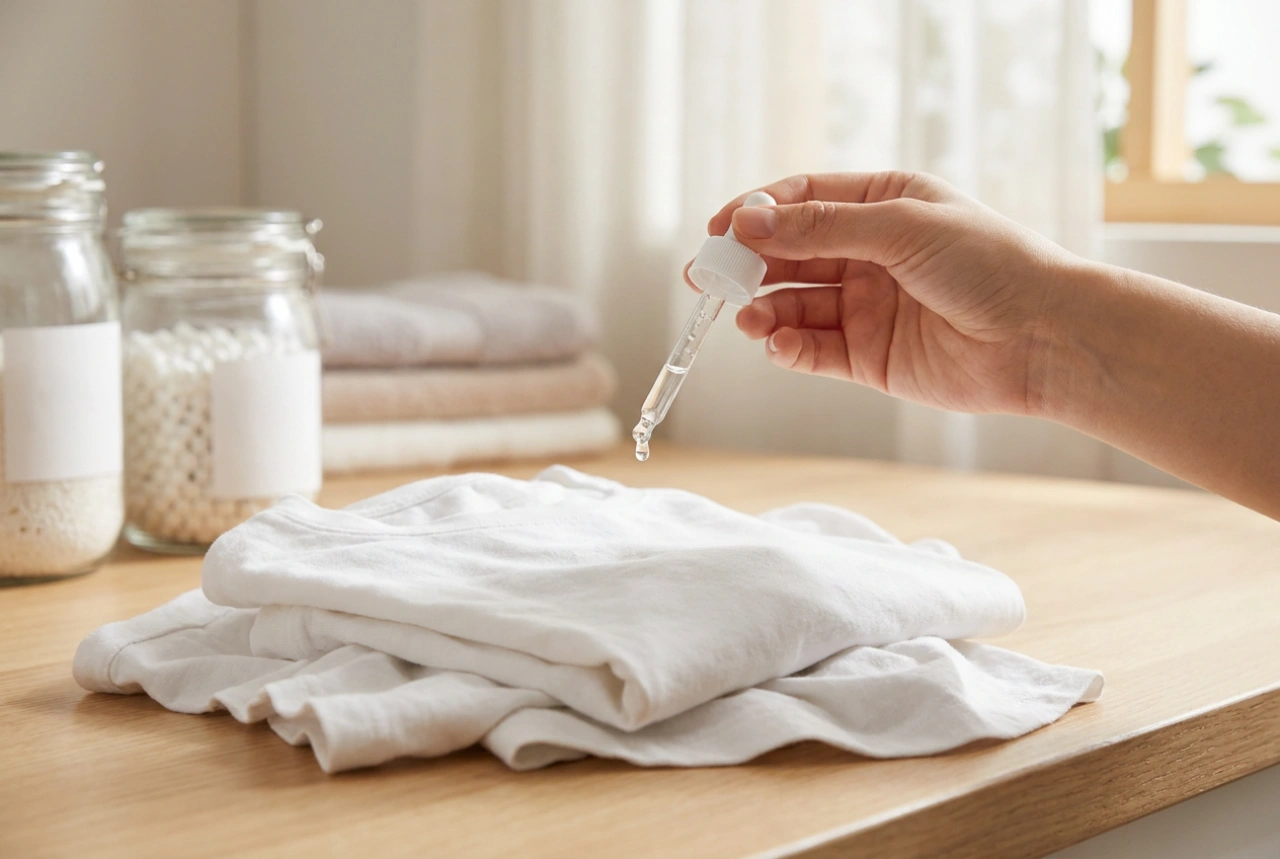
Before applying any treatment to a visible area, always conduct a colourfastness test. Dilute a small amount of your chosen stain remover in warm water. Apply a single drop to an inconspicuous area, such as an inside seam or the inner hem. Wait five minutes, then press a clean, white cotton cloth firmly against the damp spot. If any dye transfers to the white cloth, the garment is not colourfast, and chemical stain removers should not be used.
2. Application and Blotting Mechanics
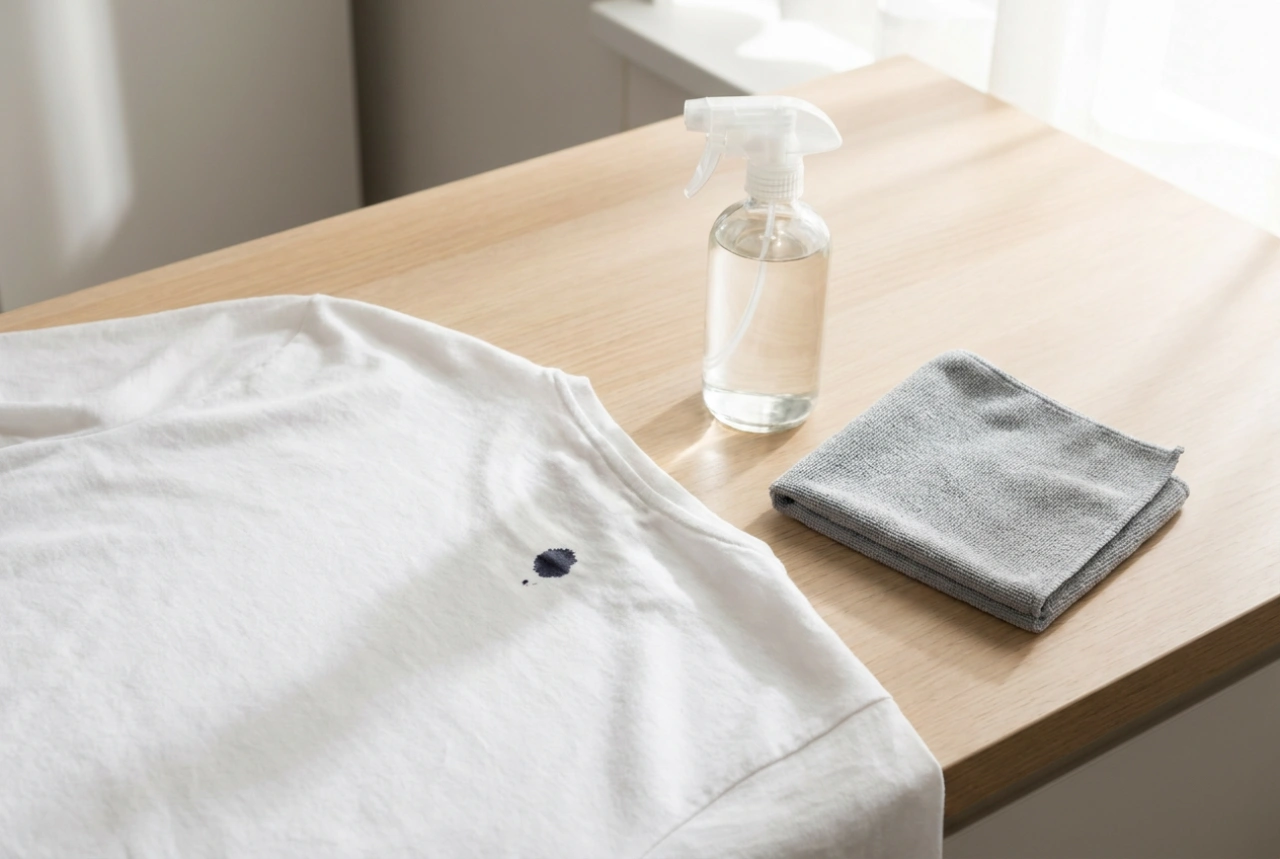
Lay the garment flat on a clean, absorbent surface. Apply the enzyme-based or oxygen-based remover directly to the stained area. Instead of rubbing, use a soft-bristled brush or a clean microfibre cloth to gently tap the fluid into the weave. Work from the outside of the stain toward the centre to prevent the spot from spreading. This mechanical tapping coaxes the cleaning agent between the fibres without abrading the surface yarn.
3. Temperature Regulation
Temperature dictates the rate of chemical reactions. While hot water can accelerate stain breakdown, temperatures above 40 degrees Celsius often weaken dye bonds, causing them to bleed. For coloured items, stick to cool or lukewarm water (between 20 and 30 degrees Celsius). This temperature is sufficient to activate enzymatic agents while keeping the dye molecules locked securely within the fabric structure.
Optimal Washing and Rinsing Techniques
Once the pre-treatment has sat for the recommended duration (typically 5 to 10 minutes; do not let it dry on the fabric), the garment must be thoroughly rinsed. Residual active oxygen or surfactants left on the fabric can slowly degrade dyes when exposed to ambient light or heat during drying. Wash the garment on a gentle cycle with a neutral pH liquid detergent. Avoid powder detergents with high alkalinity, as alkaline environments promote dye bleeding. Finally, dry the garment away from direct sunlight, as UV radiation acts as a natural catalyst for oxidation, which can accelerate the fading of any remaining chemically weakened dyes.