

Utilising the inside of cabinet doors is one of the most effective ways to reclaim lost space in kitchens, bathrooms, and utility rooms. By understanding the mechanical limits of cabinet hinges and selecting the right materials, you can transform these overlooked vertical surfaces into highly functional storage zones.
The Physics of Cabinet Door Storage
Before installing any organising system, it is crucial to understand the mechanical forces at play. A cabinet door acts as a lever arm pivoting on its hinges. When you add weight to the door, you increase the torque exerted on the hinges and the cabinet frame. Torque is calculated as the force (weight of the items) multiplied by the distance from the pivot point (the hinges). Therefore, placing heavy items near the outer edge of the door exerts significantly more stress on the mounting screws than placing them closer to the hinge side.
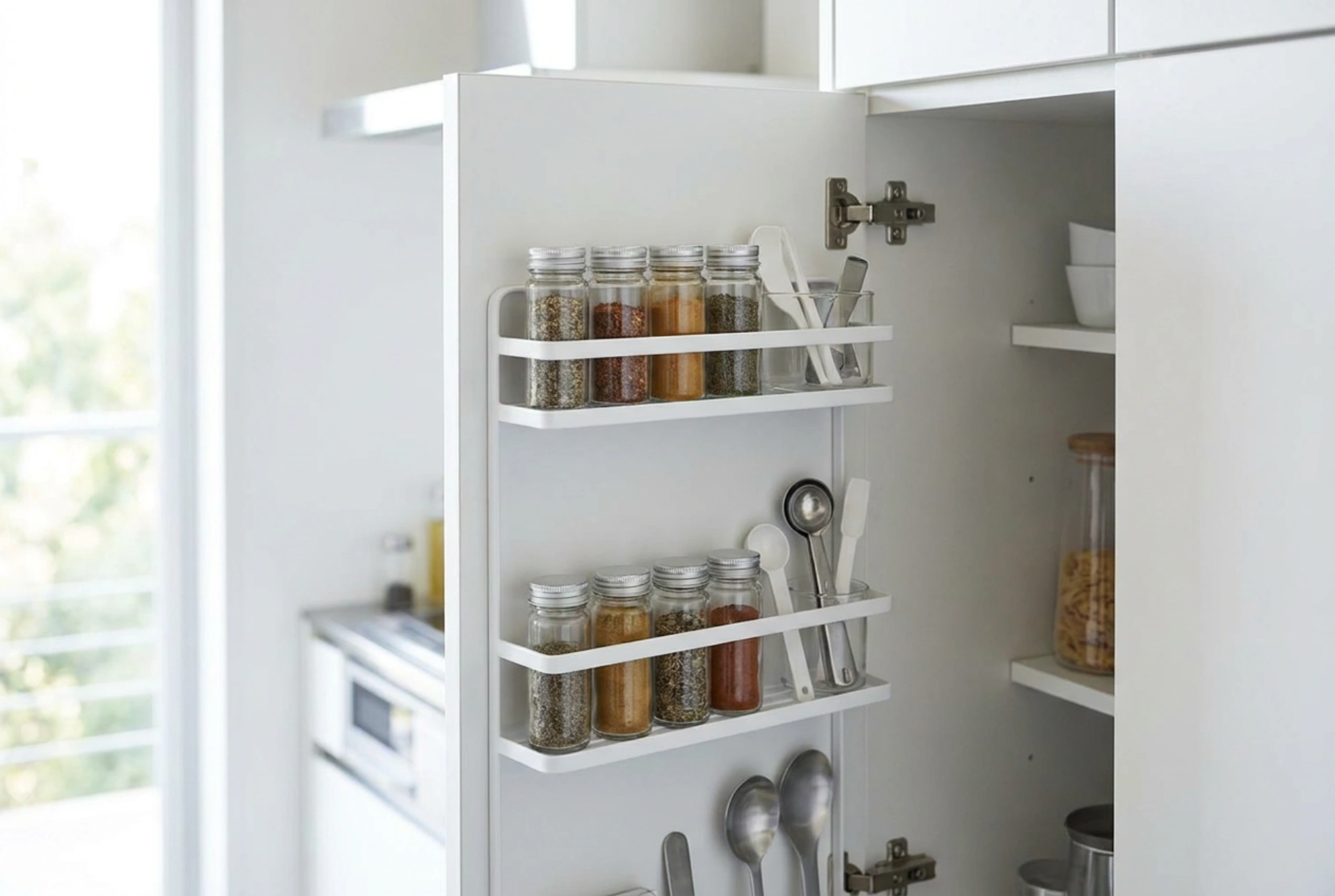
Standard European-style concealed hinges are typically rated for specific weight capacities, usually around 10 to 15 kilograms per pair, which includes the weight of the door itself. Adding too much weight, or distributing it poorly, leads to door sagging, misalignment, and eventual strip-out of the hinge screws from the cabinet carcass. To mitigate this risk, heavy items such as glass jars should be placed closer to the hinge axis, while lighter items like plastic containers, sponges, or baking paper rolls can be positioned further out to balance the dynamic load.
Material Science and Attachment Methods
Selecting the right material for your organiser depends on the door construction and the items you intend to store. Matte-coated wire organisers offer high tensile strength and minimal weight, preventing unnecessary loading on the hinges. They also allow for optimal airflow, which is critical in kitchens and bathrooms to prevent moisture accumulation and subsequent mould growth. Solid polymer containers, on the other hand, are excellent for containing small powders or liquids, preventing drips from reaching the wood or laminate surfaces below.
Attachment methods fall into three primary categories, each with distinct mechanical properties:
- Over-the-door hooks: These rely on gravity and a simple cantilever design. They require no drilling, making them ideal for rented spaces. However, they can cause minor wear on the top of the cabinet frame due to friction and may prevent the door from closing fully if the clearance gap is too tight.
- Adhesive mounts: Modern polymer-based adhesives distribute weight across a wide surface area, reducing localised shear stress. For successful adhesion, the door surface must be thoroughly degreased using isopropyl alcohol to remove grease films. Adhesive mounts are best suited for lightweight items.
- Screw-in brackets: This is the most secure mechanical connection. When drilling into engineered wood like MDF or chipboard, pilot holes must be drilled to prevent splitting. Use screws that penetrate no more than two-thirds of the door thickness to avoid damaging the front veneer.
Strategic Loading and Order of Operations
Organising small items requires a logical layout based on physical accessibility and weight distribution. A bottom-heavy configuration is always preferred to maintain the door's balance when swinging open and shut. Place taller, heavier containers at the bottom of the organiser to lower the centre of gravity, reducing the pendulum effect when the door is operated quickly.
For daily efficiency, group items by thermal and chemical compatibility. In the kitchen, keep dry spices away from areas prone to steam exposure when the door is opened near a hob. In utility cabinets, store chemically stable items like microfibre cloths and dry sponges in the upper tiers, reserving the lower, more stable sections for sealed cleaning agents. Always ensure that the depth of the organiser does not collide with the internal shelves of the cabinet; a clearance margin of at least 5 centimetres is recommended between the front of the organiser and the edge of the internal shelving.
Maintaining System Integrity and Balance
Over time, the dynamic forces of opening and closing the cabinet door will cause screws to loosen slightly. A quarterly maintenance routine prevents structural failure. Periodically check the alignment of the door using a spirit level. If sagging is detected, adjust the tension screws on the concealed hinges to realign the door vertically and horizontally. Tighten any mounting screws on the organiser itself, ensuring they have not stripped the wood fibres inside the pilot holes. Applying a tiny drop of thread-locking fluid or wood glue into the screw hole before re-tightening can significantly enhance long-term stability.