

Standard cutlery inserts often leave annoying gaps or slide around during rapid drawer movements, causing clutter and potential damage to delicate utensils. Implementing an adjustable cutlery organiser offers a precise mechanical fit for diverse drawer widths, eliminating shifting and maximising usable space.
The Mechanics of Adjustable Drawer Organisers
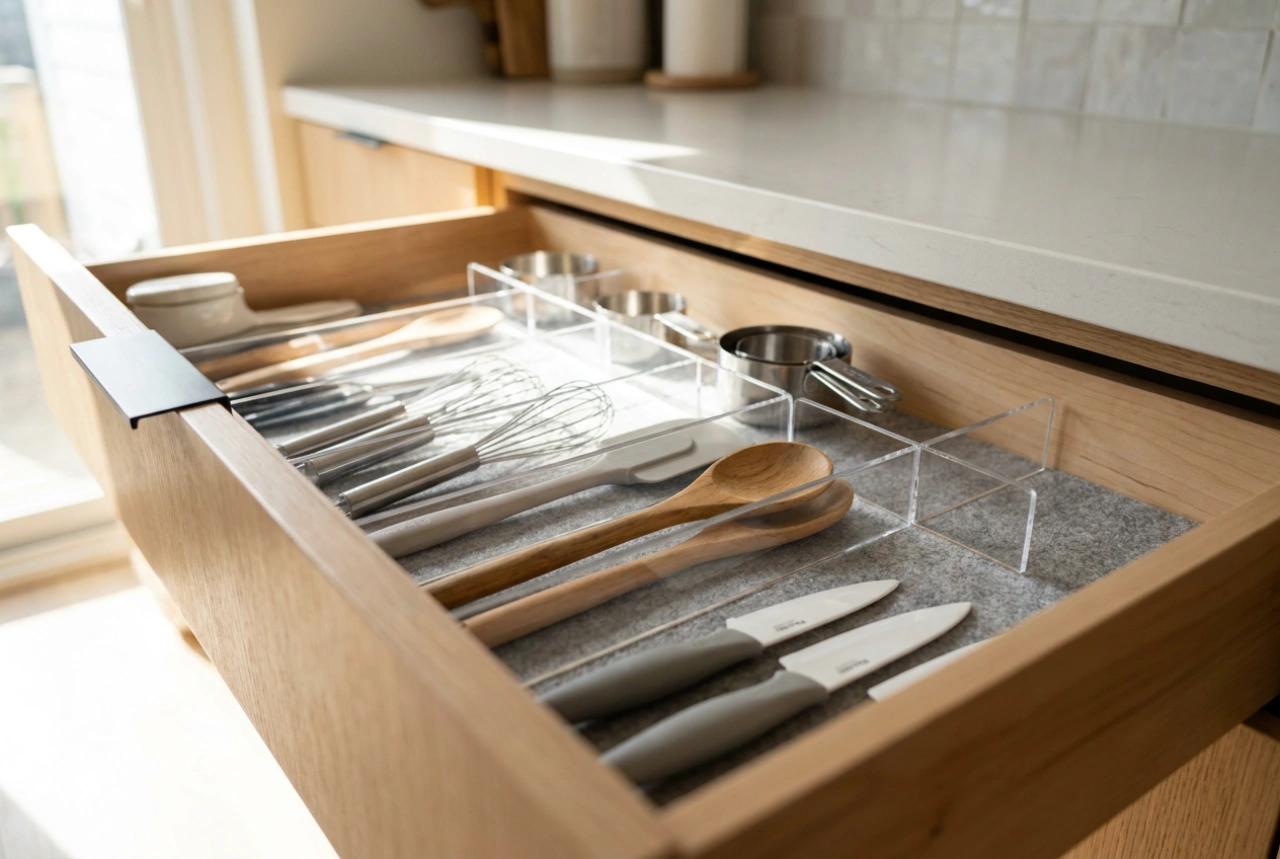
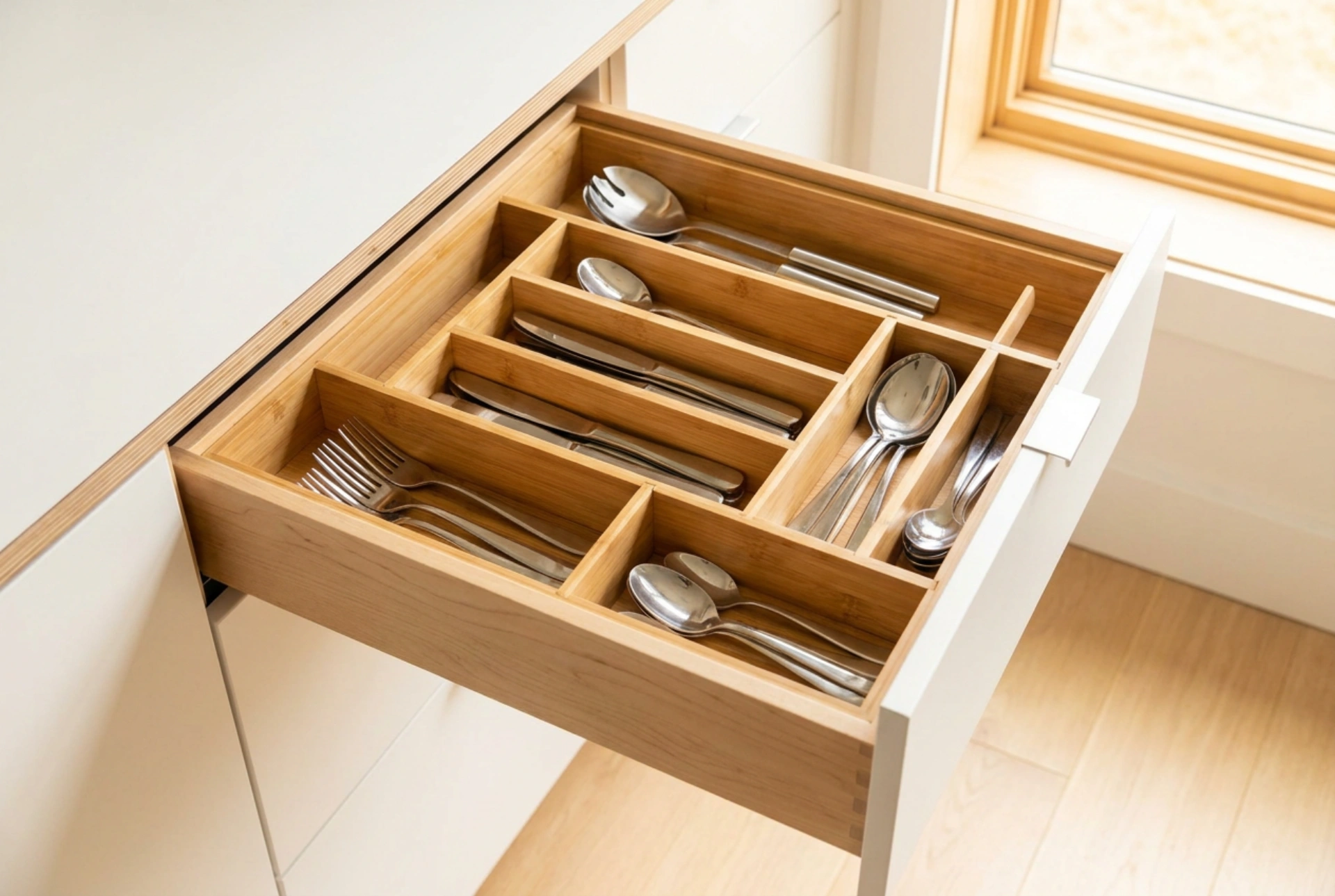
Adjustable cutlery inserts typically utilise a sliding telescopic mechanism. Two or more interlocking lateral wings expand outwards from a central core, allowing the organiser to adapt dynamically to the exact internal width of your drawer. This friction-fit design ensures that the insert remains anchored against the drawer walls, absorbing the kinetic energy generated when the drawer is pulled or pushed.
When choosing a material, the mechanical properties dictate durability. Bamboo is highly valued for its compressive strength and structural rigidity, preventing the warping often seen in thin-walled plastics. On the other hand, high-density polymers offer superior resistance to impact and moisture, though they lack the natural weight that helps anchor the organiser in place. Understanding these material characteristics allows you to choose an organiser that balances structural stability with the weight profile of your cutlery.
Measuring and Securing the Perfect Fit
Before installing an adjustable organiser, accurate physical measurements are essential. Always measure the internal width and depth of the drawer at the lowest point, as drawer boxes often feature a subtle taper or bevelled bottom edge. Additionally, measure the vertical clearance height to ensure your tallest utensils do not catch on the drawer frame during operation.
- Internal Depth: Measure from the inside of the front panel to the inside of the back panel.
- Adjustable Range: Ensure the organiser’s minimum and maximum expansion dimensions fully encompass your drawer’s internal width.
- Friction Enhancement: To prevent any residual longitudinal sliding, apply self-adhesive polyurethane bumper pads to the base of the organiser or lay down a high-friction silicone mesh liner beneath it.
By securing the organiser tightly against the drawer walls, you prevent lateral movement, which reduces noise and wear on the drawer’s soft-close runners over time.
Material Care and Longevity
The micro-environment of a kitchen drawer is subject to temperature changes and micro-moisture from recently washed utensils. Bamboo is naturally anisotropic, meaning its dimensions can change slightly depending on humidity. To prevent warping or splitting, treat bamboo organisers with food-grade mineral oil every few months. This creates a hydrophobic barrier, preventing moisture absorption.
For polymer organisers, avoid harsh chlorine-based detergents that can degrade the plastic chains and cause yellowing or brittleness. Clean them using a mild surfactant in warm water, drying them thoroughly before reinsertion. This prevents moisture from pooling underneath, which can damage the drawer’s wooden base board.
Ergonomics and Weight Distribution
Organising the contents within the adjustable compartments requires careful consideration of physics and ergonomics. Heavy items, such as chef knives or serving spoons, should be placed in the outer, expanded wings of the organiser. This keeps the heaviest mass closer to the drawer slides, reducing the torsional stress placed on the drawer tracks when fully extended.
Frequently used items like forks and knives should occupy the central, most accessible compartments. Keep specialised tools, like bottle openers or tea strainers, in the smaller sub-compartments. This deliberate zoning ensures a seamless workflow and preserves the mechanical integrity of your kitchen cabinetry.