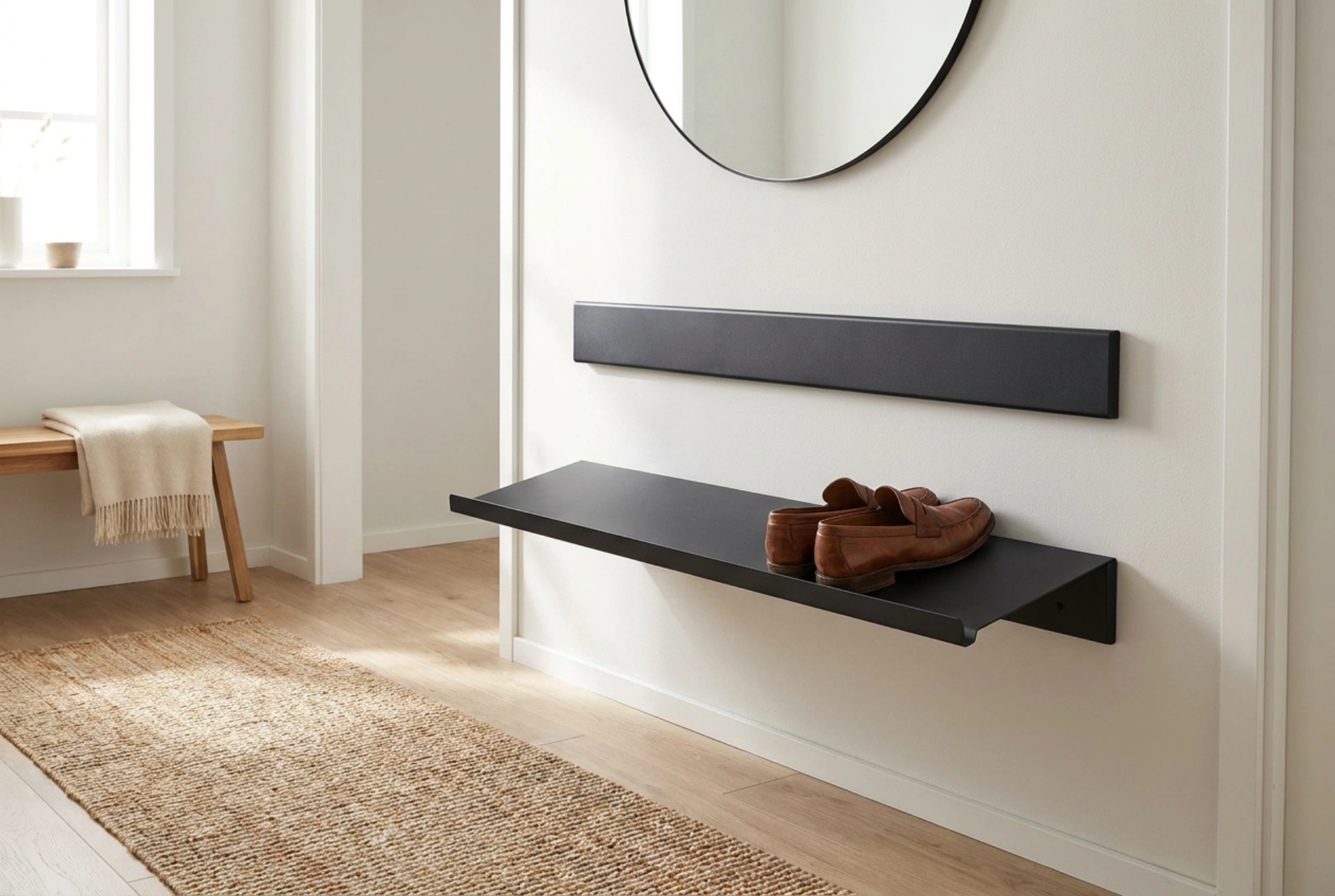


A black shoe rack is a striking design element in any entryway, but its dark surface demands a strategic approach to maintenance and organization to prevent it from looking dusty or cluttered.
The Science of Dust and Matte Black Surfaces
Matte black surfaces, whether powder-coated metal, anodized aluminum, or painted wood, have a micro-textured finish that scatters light, giving them their characteristic non-reflective look. However, this microscopic roughness also makes them highly susceptible to trapping fine particulate matter like dust, skin flakes, and outdoor soil. Because of the high visual contrast between light-colored dust (which often contains silica, pollen, and keratin) and the dark background, even a thin layer of grime becomes instantly visible to the human eye.
To combat this, avoid dry dusting, which merely redistributes particles and generates an electrostatic charge that actively attracts more dust to the shelf surface. Instead, use a slightly damp microfiber cloth. Microfiber features wedge-shaped polyester and nylon fibers that physically grab and hold dust particles through capillary action and weak van der Waals forces, rather than pushing them around. For an added anti-static effect, a highly diluted solution of a cationic surfactant can neutralize the surface charge, keeping the rack dust-free for longer periods. This simple mechanical shift in how you clean dramatically reduces the frequency of dusting required to keep the entryway looking immaculate.
Managing Moisture and Soil Chemistry in the Entryway
Footwear introduces moisture, abrasive grit, and potentially corrosive substances like road salt (sodium chloride) into the home environment. When wet shoes are placed directly onto a black metal shelf, water droplets can evaporate and leave behind mineral deposits—primarily calcium carbonate and magnesium compounds—visible as unsightly white rings or streaks. Over time, moisture trapped between the shoe sole and the shelf surface can lead to oxidation (rust) on steel racks or swelling and warping on wood composite materials.
To protect both the shelf and your shoes, implement a strict sequence of care based on material science:
- Pre-drying protocol: Never place saturated footwear directly onto the black rack. Use an absorbent tray filled with natural river stones or a heavy-duty coir mat near the door for initial drying. This separates the bulk liquid from the shoe before storage.
- Grit removal: Mechanical friction from embedded sand can scratch powder coatings. Quickly wipe or tap the soles of your shoes outside before placing them on the shelf to minimize abrasive wear.
- Hydrophobic barrier protection: For metal shelves, applying a thin, hydrophobic layer—such as a wipe-on silicone-based polish or a carnauba wax—creates a microscopic water-repellent barrier. This prevents mineral ions from bonding to the surface and makes subsequent cleaning effortless.
Optimizing Air Circulation and Material Health
Shoes require adequate airflow to dry properly and prevent the colonization of bacteria and fungi, which thrive in dark, humid environments. When footwear is crowded too closely together, air stagnation occurs, slowing down the evaporation of sweat and external moisture from leather, canvas, and synthetic textiles. This trapped moisture not only ruins the shoes but can also transfer dampness directly to the shelving material, leading to mold growth in hidden joints.
Position shoes with at least two to three centimeters of space between each pair to allow natural thermal currents to circulate around them. If your black shoe rack is a wall-mounted design, ensure it is installed with a small spacer so it sits slightly away from the wall to facilitate convective airflow behind the unit. For premium leather shoes, always insert unfinished cedar shoe trees before placing them on the rack; the porous wood actively absorbs moisture and acid from the interior leather while maintaining the shoe's structural shape, preventing creasing and cracking.
Chemical Guide for Streak-Free Cleaning
Cleaning matte black finishes requires mild, non-reactive agents to preserve the integrity of the surface coating. Harsh chemicals can strip protective sealants or leave white residues that ruin the aesthetic. Avoid chlorinated detergents, strong acids, or abrasive scouring creams, which will permanently scratch the finish or cause discolored patches.
Opt for a simple solution of warm water mixed with a few drops of a neutral pH anionic surfactant (such as standard dishwashing liquid). Wipe down the surfaces using linear motions rather than circular patterns, as circular rubbing can create polished, shiny spots on matte finishes over time. Immediately follow with a dry, clean microfiber towel to absorb any remaining water minerals, ensuring a flawless, deep black appearance that maintains its clean look.