

The physical arrangement of a child's study desk directly influences their cognitive processing, focus, and physical comfort during learning. By applying basic principles of ergonomics and visual psychology, you can transform a simple desk organiser from a mere storage container into a tool that actively minimises distractions and streamlines workflow.
The Science of Visual Clutter and Cognitive Load
Every object within a child's immediate field of vision competes for mental processing power. In cognitive psychology, this is known as cognitive load. When a desk organiser is overflowing with colourful, mismatched, or redundant items, the brain must work harder to filter out these visual stimuli. To reduce this unnecessary mental fatigue, position the organiser just outside the primary visual field—ideally at a forty-five-degree angle from the child's non-dominant side.
This strategic placement keeps the central working zone entirely clear for the task at hand, such as reading or writing, while keeping necessary tools within easy reach. Minimising the height of the organiser also prevents it from casting large shadows or creating a physical barrier that makes the workspace feel cramped and restrictive.
Ergonomic Zones and Hand Dominance
Efficient desk layout relies on dividing the surface into three distinct ergonomic zones based on reach. Understanding these zones prevents repetitive strain and maintains a continuous flow of concentration during homework.
- The Primary Zone: This is the area directly in front of the child, easily reached with the forearms resting on the desk. This space must remain empty, reserved strictly for the current book or notebook.
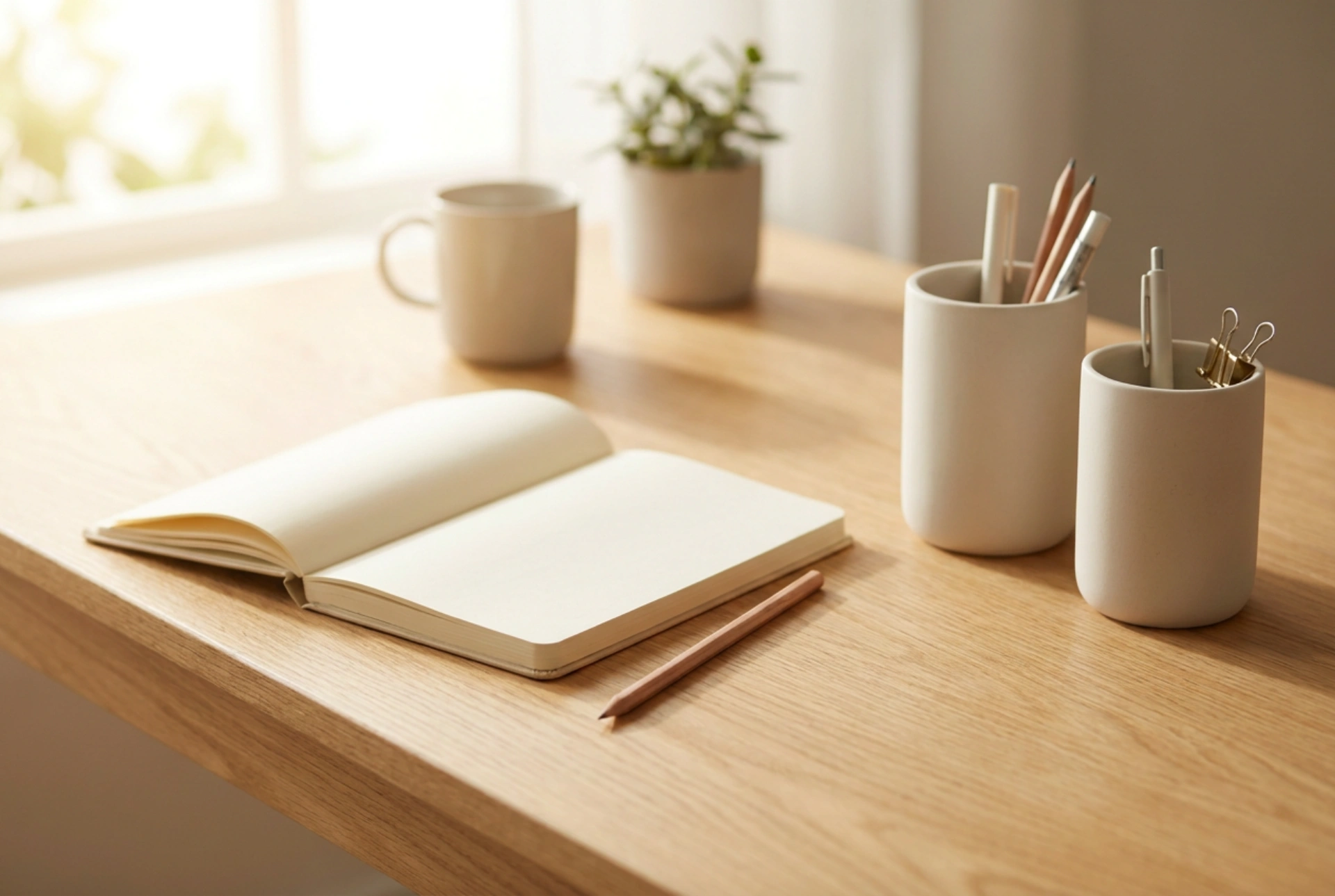
- The Secondary Zone: Accessible by extending the arm without leaning the torso forward. This is where the desk organiser should reside. For a right-handed child, place the organiser on the left side to allow the right hand to write without obstruction, while the left hand can quickly retrieve rulers, highlighters, or erasers. For a left-handed child, reverse this layout.
- The Tertiary Zone: Requires leaning forward or stretching. Keep reference books, spare paper, and non-essential supplies here to discourage idle fidgeting during study sessions.
Categorisation by Frequency of Use
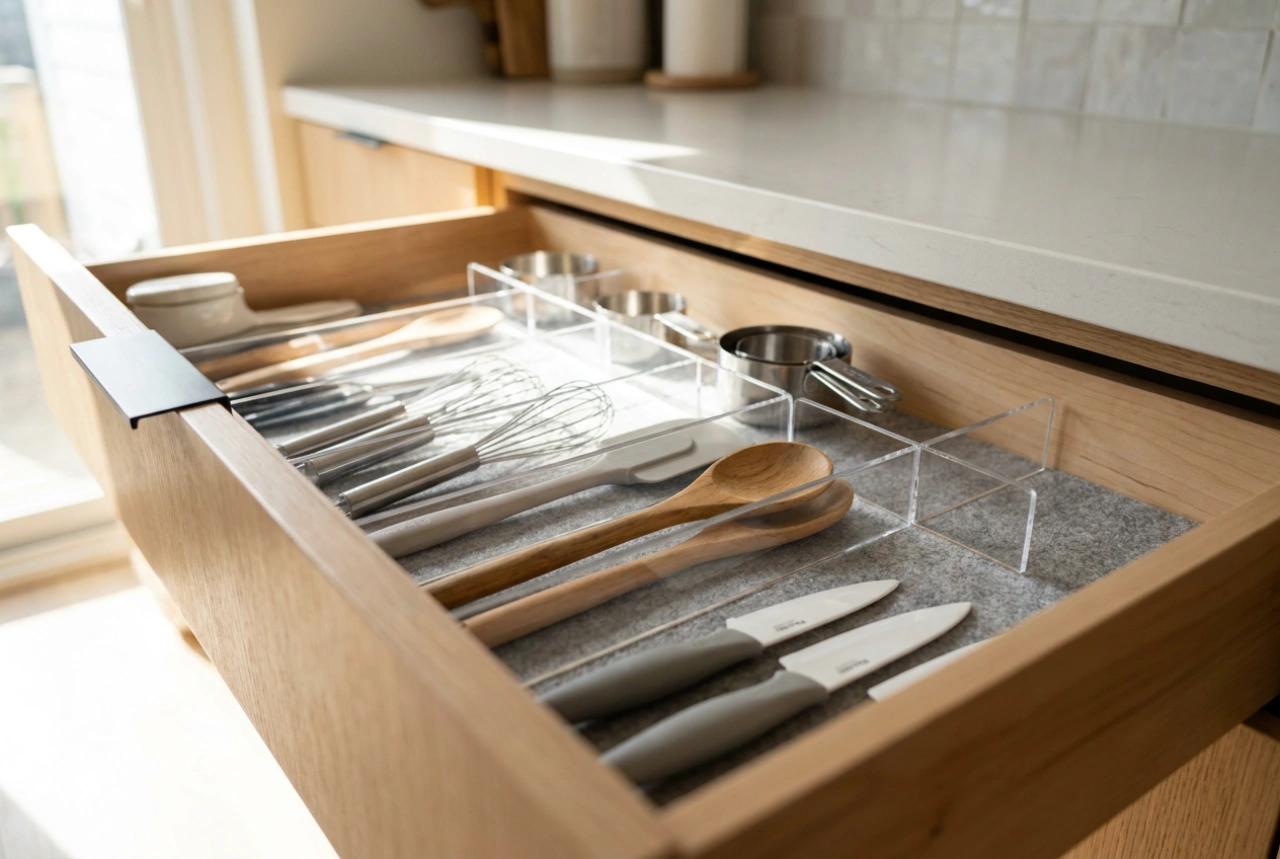
An effective organiser uses spatial hierarchy to dictate where items belong. Grouping stationery by frequency of use rather than aesthetic appeal prevents the child from rummaging through compartments, which breaks their concentration cycle. Use a simple three-tier system within the holder.
Daily essentials, such as pencils, a blue or black pen, and an eraser, should occupy the most accessible, shallow compartments. Intermediate tools like coloured pencils or highlighters belong in secondary pockets. Items used occasionally, such as scissors or geometry compasses, should be stored at the back of the organiser or in a separate drawer entirely, reducing visual noise and potential safety hazards.
Lighting, Shadows, and Ergonomics
The position of the organiser must work in harmony with the room's light sources. If a desk lamp is placed on the same side as the organiser, it can cast long, harsh shadows across the workspace, causing eye strain. Position the desk lamp opposite the child's writing hand to prevent their own hand from casting shadows on the paper, and ensure the desk organiser is placed away from the direct path of this light beam to maintain uniform illumination across the reading area.