

Integrating steam into the laundry cycle alters the physical state of water to enhance cleaning efficiency, relax textile fibres, and neutralise microscopic pathogens. Understanding the thermodynamic properties of steam allows you to optimise your washing machine's performance while safeguarding different fabric structures.
The Thermodynamics of Steam Laundry
Traditional washing relies on mechanical agitation, water surface tension, and surfactant chemistry to lift soil from fabrics. Steam introduces a highly energetic gaseous phase into this equation. When liquid water absorbs latent heat and vaporises, its volume expands dramatically, and the resulting gas molecules carry substantial kinetic energy. This energy allows steam to penetrate deep within the microscopic gaps of textile weaves far more rapidly and thoroughly than liquid water can.
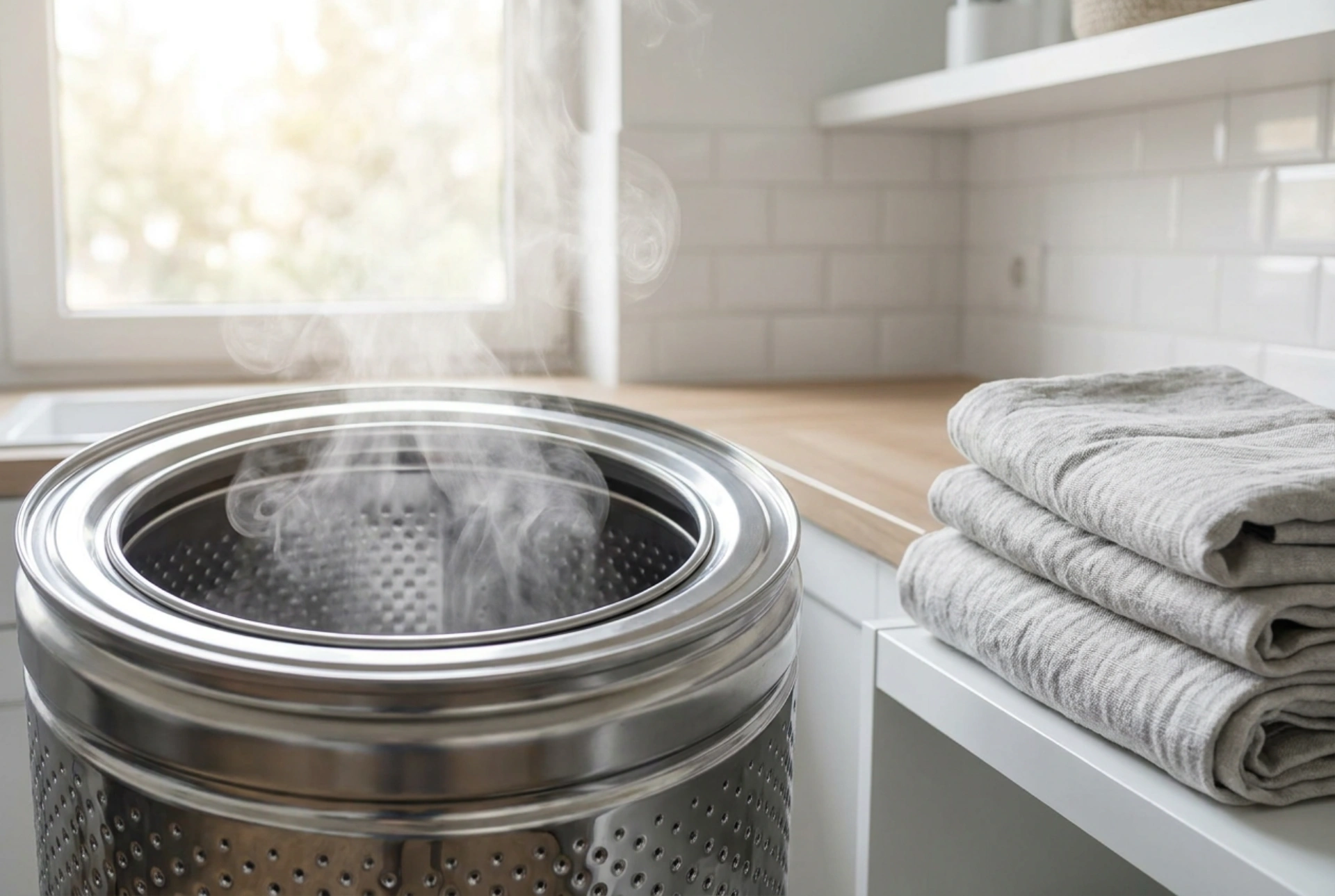
In a modern washing machine, steam is generated either by heating water in the tub to a boil or via an independent steam generator that injects vapour directly into the drum. This process serves several core thermodynamic functions:
- Enhanced Heat Transfer: Steam transfers thermal energy faster than hot water, raising the temperature inside the drum rapidly and uniformly without requiring the tub to fill completely.
- Fibre Swelling: The combination of high temperature and fine moisture causes textile fibres to swell, loosening trapped dirt particles, mineral deposits, and oil-based soils.
- Pathogen Denaturation: Maintaining a high temperature destabilises the cellular proteins of dust mites, bacteria, and fungal spores, rendering them inactive without requiring aggressive chemical sanitizers.
Fibre Mechanics: Why Steam Removes Wrinkles
The primary structural components of natural fibres like cotton and linen are cellulose chains held together by hydrogen bonds. When fabric is worn, folded, or spun in a washing machine, these bonds break and reform in bent positions, creating wrinkles. Steam addresses this at a molecular level.
The high-temperature water vapour penetrates the crystalline regions of the cellulose. The thermal energy breaks the temporary hydrogen bonds between the polymer chains, acting as a molecular lubricant. As the drum rotates gently, the weight of the damp fabric pulls the fibres straight. When the steam dissipates and the fabric cools, the hydrogen bonds reform in a relaxed, linear alignment, significantly reducing the need for mechanical ironing and preserving the structural life of the garment.
The Chemical Dissolution of Stains and Odours
Steam plays a vital role in breakdown chemistry. Many everyday stains consist of lipids (fats and oils) and proteins. Lipids have specific melting points; at room temperature, they remain viscous or solid, trapping dirt within the fabric weave. Steam rapidly elevates the temperature of these lipids past their melting point, liquefying them so they can be easily emulsified by detergents or carried away by water droplets.
For odours, which are caused by volatile organic compounds (VOCs) trapped in the fibres, steam acts as a carrier gas. The high kinetic energy of the steam molecules collides with the VOCs, dislodging them from the fibre surfaces. As the steam is vented from the drum, it carries these odour-causing molecules with it, leaving the textiles refreshed without the use of artificial fragrances.
Fabric Compatibility Matrix
Not all textiles react the same way to the intense heat and moisture of steam. Understanding the chemical and physical boundaries of your garments is essential to prevent shrinkage, felting, or structural damage.
Suitable Fabrics
- Cotton and Linen: These plant-based fibres have high thermal resistance and strong crystalline structures. Steam relaxes their rigid structures beautifully, making it ideal for shirts, bed linen, and heavy tablecloths.
- Robust Synthetics (Polyester, Nylon): Synthetic polymers have a high melting point and benefit from steam's ability to discharge static electricity and release deep-seated synthetic odours, which tend to bond with hydrophobic plastics.
Fabrics Requiring Extreme Caution
- Wool and Cashmere: Wool fibres are coated in microscopic scales (cuticles) made of keratin proteins. The combination of heat, moisture, and mechanical agitation causes these scales to interlock permanently—a process known as felting. Steam cycles should only be used if the machine has a certified cold-steam refresh cycle with zero drum rotation.
- Silk: Silk is a delicate protein fibre (fibroin). High thermal energy can dull its natural lustre and alter its tensile strength. Water spotting can also occur if the steam condenses unevenly on the surface.
Optimising Steam Cycles for Maximum Efficiency
To achieve the best results without degrading your wardrobe, follow a systematic order of operations. First, categorise garments by material composition rather than colour alone when utilising steam. Heavy cottons should never be mixed with delicate synthetics during a steam cycle, as the heat retention properties of the dense cotton can create localized hot zones inside the drum.
Second, use steam primarily as a pre-treatment or a post-treatment phase. A pre-treatment steam phase relaxes the fibres to allow laundry detergents to penetrate more deeply, while a post-treatment phase focuses on sterilisation and wrinkle relaxation. By understanding these thermodynamic principles, you can reduce your reliance on chemical fabric softeners and protect the structural integrity of your textiles over time.