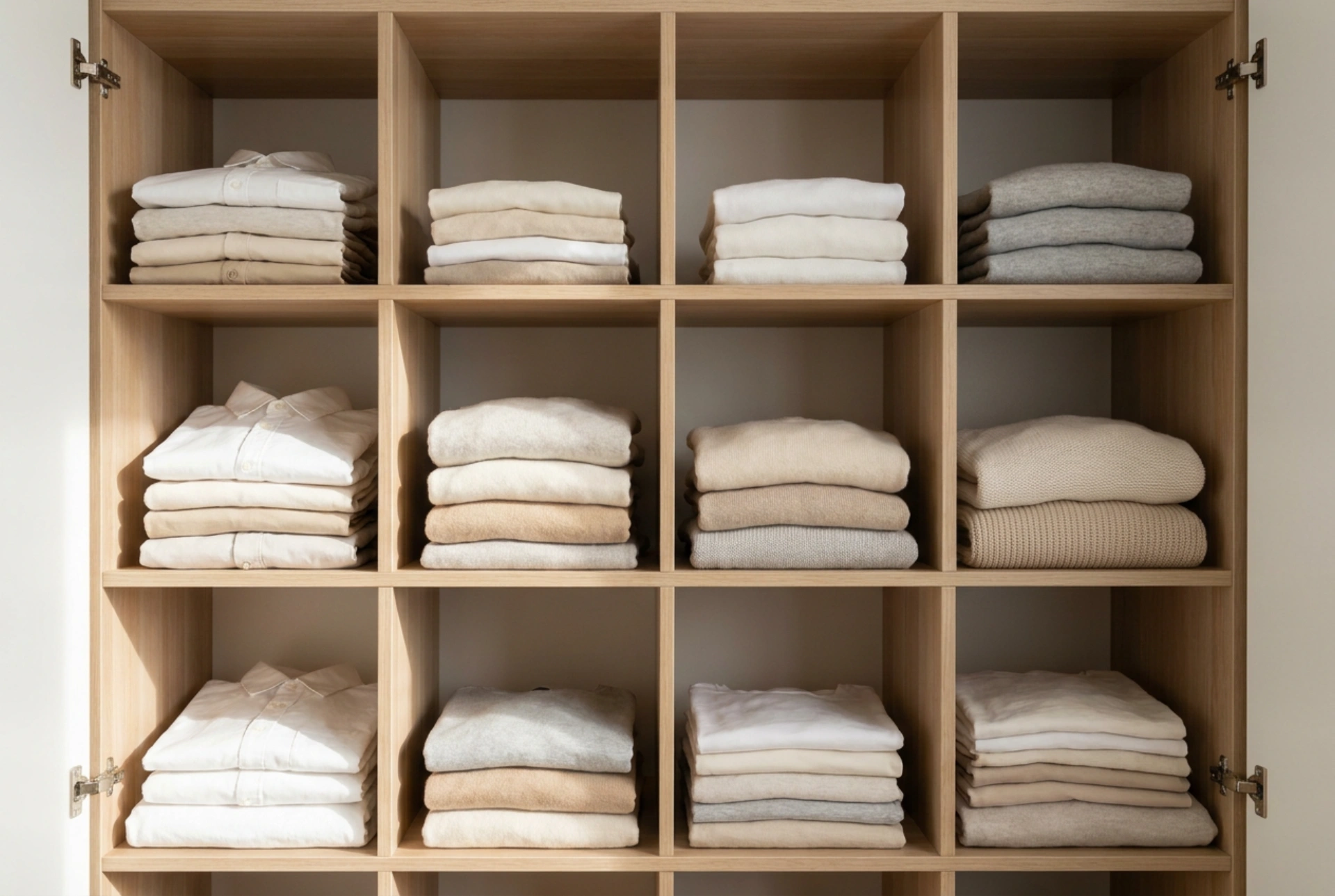


Designing the interior layout of a custom wardrobe is not merely an aesthetic choice, but a practical exercise in ergonomics and material preservation. Properly spaced shelves prevent garment compression, maintain fiber elasticity, and ensure efficient daily access to your wardrobe.
The Physics of Pile Height and Fabric Compression
When garments are stacked, gravity exerts constant pressure on the lower layers. For delicate natural fibers like cotton, wool, and silk, excessive compression forces air out of the weave, flattening the fibers and leading to deep creases that require high heat or steam to remove. To prevent this, shelf spacing must be calculated based on optimal pile height rather than maximum storage capacity.
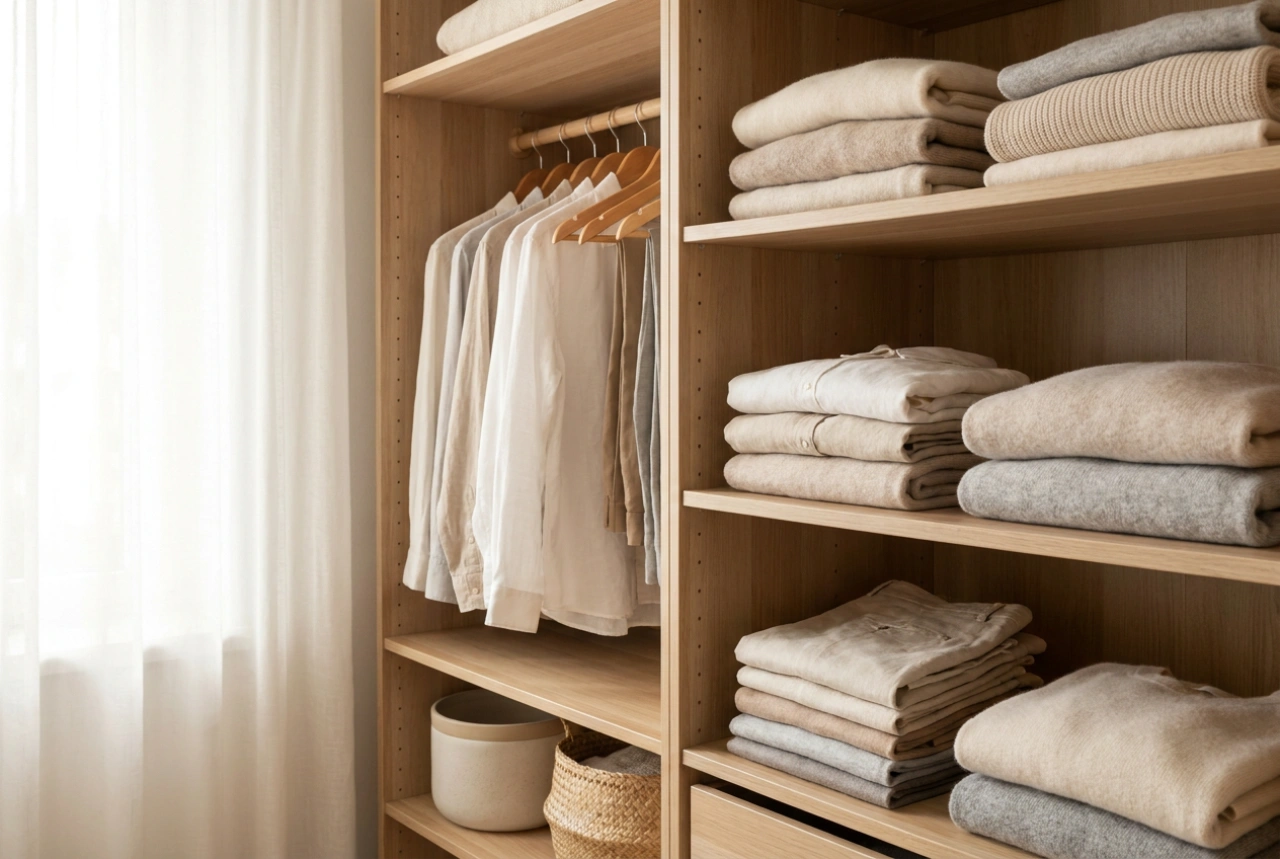
As a rule of industrial design, a stable stack of folded garments should not exceed 25 to 30 centimetres in height, which typically equates to six to eight folded shirts or knitwear items. Beyond this height, the center of gravity shifts, and friction between different fabric textures (such as textured wool against smooth mercerised cotton) can cause the stack to lean and collapse. Therefore, the ideal distance between shelves for folded clothing is between 30 and 35 centimetres. This leaves a 5-centimetre clearance gap at the top of the stack, facilitating easy retrieval without disrupting the items above or below.
Ergonomic Zoning and Reach Zones
Organising shelves vertically requires an understanding of human anthropometry. The wardrobe should be divided into three distinct functional zones based on ease of physical reach:
- The Active Zone (80 to 160 cm): Located between hip and eye level. This is the most ergonomic space, requiring no bending or stretching. Reserve this zone for daily-wear items, placed on shelves spaced exactly 30 cm apart.
- The Lower Zone (below 80 cm): Requires bending. This area is best suited for heavy items, pull-out baskets, or shoes. Shelves here can be spaced further apart (35 to 40 cm) to accommodate storage containers or specialized footwear.
- The Upper Zone (above 160 cm): Requires stretching or a step stool. This space is ideal for seasonal storage, bedding, and travel gear. Because these items are often stored in protective fabric boxes, shelf spacing here should be larger, ranging from 40 to 50 centimetres to accommodate bulky, lightweight parcels.
Material Specifications: Width, Depth, and Deflection
Shelf depth and width are critical to preventing structural failure and ensuring clothing fits without overhang. Standard clothing folds require a shelf depth of at least 35 to 40 centimetres for flat-folded items, or 50 to 60 centimetres if the wardrobe also utilizes hanging rails.
The physical span of the shelf must also resist gravity-induced bending, known as deflection. Standard 18-millimetre-thick furniture board will begin to sag if the unsupported span exceeds 80 centimetres under the weight of heavy winter knits or linens. For spans wider than 80 centimetres, either increase the shelf thickness to 22 millimetres or introduce vertical central supports to maintain structural integrity and keep the shelf perfectly level.
Atmospheric Circulation and Fabric Longevity
Airflow is a critical, often overlooked factor in wardrobe design. Densely packed shelves restrict air movement, trapping ambient humidity within the fibers. This microclimate encourages the degradation of natural proteins in wool and silk and can lead to musty odours. Keeping a 5 to 10-centimetre gap between the top of your clothing stacks and the shelf above ensures convection currents can circulate dry air, keeping fabrics fresh and preventing fiber rot.