

Integrating a standing coat rack into a living space or bedroom requires a careful balance between spatial geometry and optical physics to prevent the room from feeling cramped. By understanding how light interacts with white surfaces and mapping the physical pathways of your home, you can position this functional piece to enhance rather than disrupt your interior flow.
The Physics of Visual Weight and Light Reflection
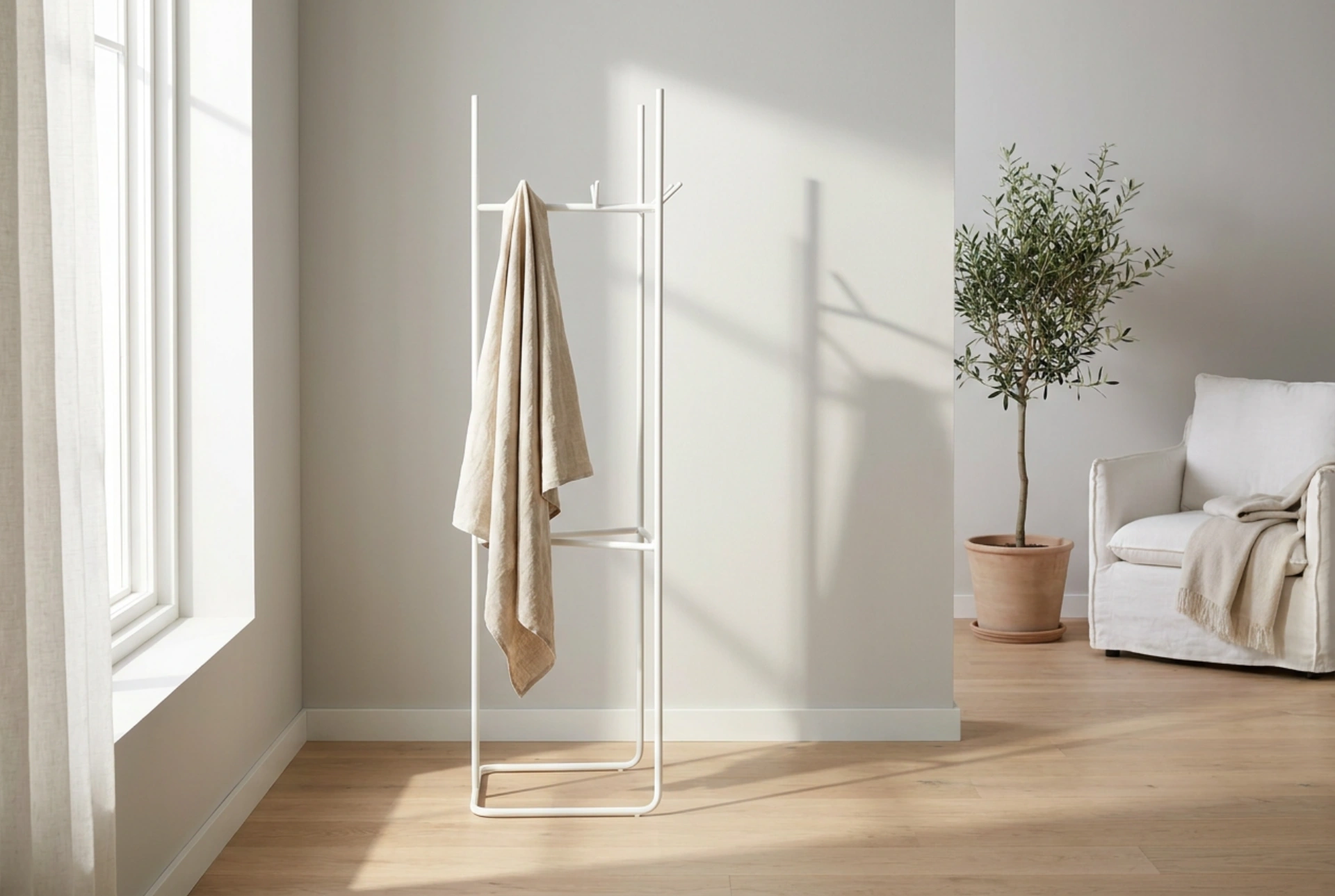
The colour white possesses a high Light Reflectance Value (LRV), meaning it reflects the majority of visible light wavelengths rather than absorbing them. In interior design, this physical property can be exploited to reduce the visual weight of an object. A white standing coat rack, when placed correctly, can almost blend into a light-coloured wall, making the space feel more open. To maximise this effect, position the rack in a well-lit corner or adjacent to a natural light source, such as a window. This allows daylight to bounce off the matte or semi-gloss finish of the rack, softening the harsh shadows that typically define the edges of furniture. Avoid placing the rack directly in front of dark, high-contrast backdrops, as this sharp contrast highlights the physical boundaries of the object, drawing immediate attention to its footprint and making the room feel smaller.
Mapping Traffic Flow and Clearance Zones
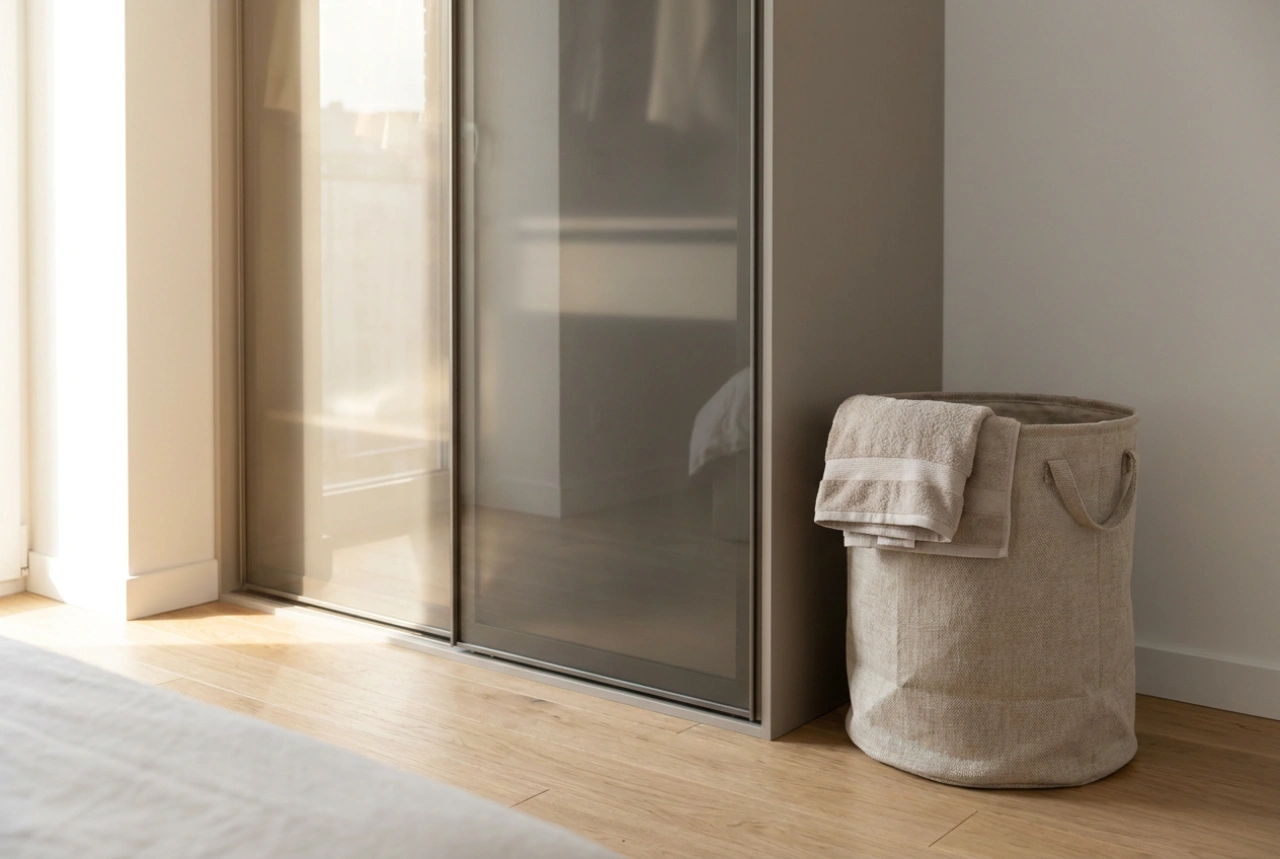
To prevent a standing coat rack from becoming a physical obstacle, you must analyse the kinetic pathways of the room. Every doorway, hallway, and furniture piece has a corresponding clearance zone required for comfortable human movement. A standard standing coat rack has a base diameter of approximately 30 to 45 centimetres, but its effective footprint increases significantly once garments are hung upon it. When planning the position, calculate a clearance radius of at least 60 to 80 centimetres around the central pole. This ensures that bulky coats, scarves, or bags do not drape into active walking paths or interfere with the swing radius of doors and wardrobe panels. Positioning the rack in a natural architectural recess or an underutilised corner utilises dead space, keeping the main transit lines of the room completely unobstructed.
The Mechanics of Stability and Weight Distribution
A standing coat rack is subject to the laws of rotational equilibrium and gravity. Most vertical racks rely on either a heavy circular base or a wide tripod structure to maintain stability. The centre of gravity of an empty rack is low and centrally aligned. However, hanging heavy garments on one side introduces a turning force, or torque, which can easily destabilise the structure if not managed. To maintain equilibrium, distribute weight symmetrically around the vertical axis. Hang heavier woollen coats or leather jackets on opposite hooks to cancel out opposing forces. Furthermore, utilise lower hooks for heavier bags or items, which lowers the overall centre of gravity and increases physical stability. Overloading the top hooks creates a top-heavy system that is highly susceptible to tipping from minor physical contact.
Curating Textiles to Prevent Visual Clutter
Even a perfectly positioned coat rack will make a room feel chaotic if it is overloaded with a disorganised mass of fabrics. The key to maintaining a clean, minimalist aesthetic is treating the rack as a curated display rather than a storage closet. Limit the items on the rack to a maximum of three to four pieces at any given time. Select garments made from high-quality, structured natural fibres like linen, cotton, or wool. These materials drape naturally and hold their shape, reducing the chaotic visual noise created by wrinkled synthetic fabrics. Additionally, maintain a cohesive colour palette that complements the surrounding room decor. By matching the hanging textiles to the neutral tones of the space, the coat rack transitions from a potential source of clutter into an elegant, functional extension of the room's design.