

A tiered cake stand is an excellent serving piece, but its vertical, wide structure makes it a notorious space-waster when left on countertops or shoved assembled into a cabinet. Storing it efficiently requires understanding its physical construction, material vulnerability, and disassembly potential to free up valuable kitchen workspace.
The Anatomy of Disassembly: Minimising Physical Volume
Most tiered cake stands are designed with a modular structure, consisting of a central metal spindle divided into threaded rods, washers, and plates of progressing sizes. Keeping the stand fully assembled in a cabinet creates massive amounts of "dead space"—empty air trapped between the tiers that cannot be utilised. To reclaim this volume, disassembly is the most effective approach.
The disassembly process should always proceed from top to bottom. Grip the top handle or rod and unscrew it counter-clockwise while holding the plate beneath it steady. Work your way down, collecting the metal washers, rubber gaskets, and connecting rods. By reducing a 40-centimetre-tall object into flat, individual plates and a handful of hardware, you reduce its total storage volume by up to 80 per cent.
Material Protection: Preventing Friction and Micro-Abrasion
Once disassembled, the plates must be stacked or stored in a way that preserves their glazed surface. Ceramics, glass, and slate have high surface hardness but are susceptible to impact and friction. When plates are stacked directly on top of each other, microscopic dust particles (often composed of hard quartz) act as abrasives. This leads to hairline scratches in the glaze, dulling the finish over time.
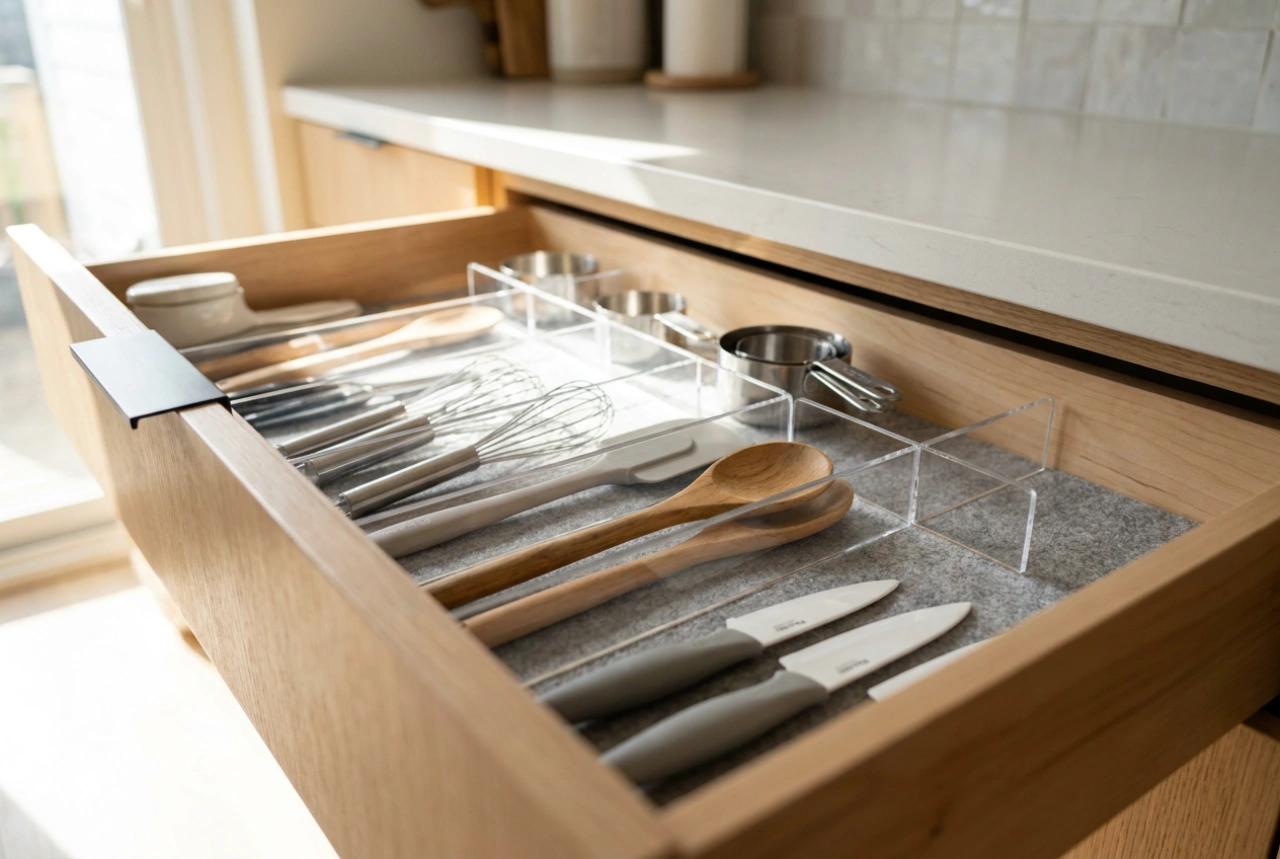
To prevent this mechanical wear, place protective barriers between each plate. Soft felt dividers, silicone mats, or even heavy-duty cotton liners are ideal. These materials absorb kinetic energy from cabinet vibrations and prevent direct glass-on-glass or ceramic-on-ceramic contact. Additionally, ensure the plates are completely dry before stacking to prevent trapped moisture, which can lead to anaerobic bacterial growth or mineral spotting in closed spaces.
Vertical Cabinet Storage and Hardware Management
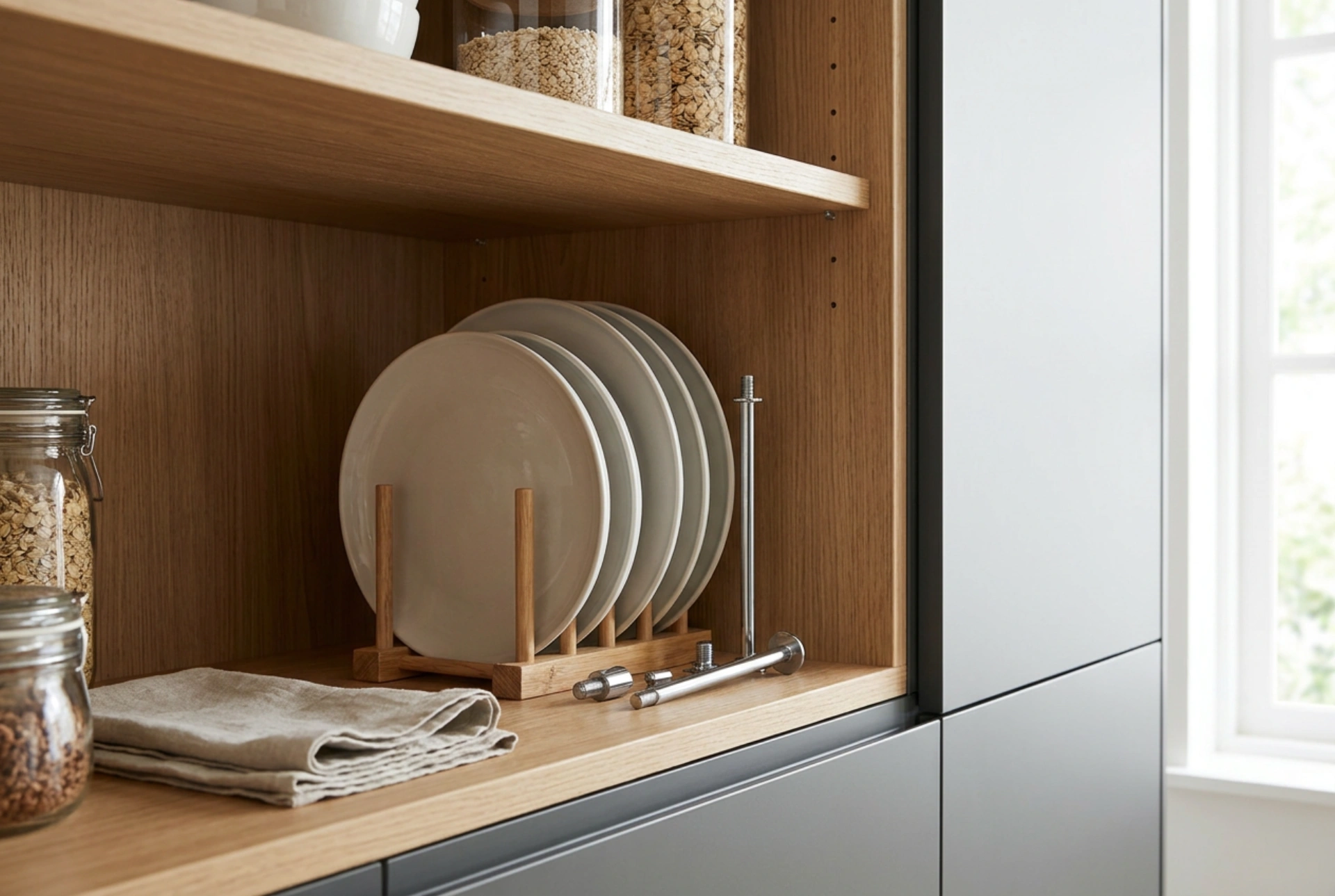
Instead of stacking the disassembled plates horizontally, which still occupies a wide footprint, consider vertical storage. Placing the plates in a dedicated wooden or coated wire plate rack inside a cabinet reduces their footprint to a fraction of the shelf space. This method also distributes the weight individually rather than stacking it, eliminating downward pressure on the lowermost plate.
The most common issue with disassembling tiered stands is losing the small connection hardware, particularly the tiny rubber or plastic washers that prevent the metal rods from cracking the plates. To prevent this, store the rods, screws, and washers inside a small, breathable cotton drawstring bag. Loop the drawstring around one of the plates or place the bag in the immediate vicinity within the same cabinet. This ensures all structural components remain together for future assembly.
Reassembly Physics: Protecting the Structural Core
When retrieving the stand for use, the order of operations and torque application are critical to preventing structural damage. Always place a rubber or silicone washer on both the upper and lower surfaces of each plate where the metal spindle connects. These washers act as load-distributors, absorbing the localized compression forces exerted by the metal threads.
Tighten the rods clockwise until you feel firm resistance, but do not overtighten. Over-tightening creates intense tensile stress around the drilled central hole of the plate. Because ceramic and glass are brittle materials with low tensile strength, excessive force can cause immediate cracking or create micro-fractures that will fail later when loaded with the weight of cakes or subjected to temperature changes.