

Concealing everyday items inside a living room cabinet requires a deliberate balance between spatial mechanics, material compatibility, and visual ergonomics. By understanding how light interacts with surfaces and how weight distribution affects furniture longevity, you can turn a standard storage unit into a highly functional, invisible organising system.
Understanding Visual Ergonomics and the Physics of Reflection
The human eye is naturally drawn to high-contrast areas and reflective surfaces. When selecting and organising a living room cabinet, the external finish dictates how easily the storage system integrates into the space. Matte finishes absorb light rather than reflecting it, effectively minimising the visual impact of cabinet doors and joints. This visual dampening helps the cabinet blend into the wall, drawing attention away from the volume of items stored inside.
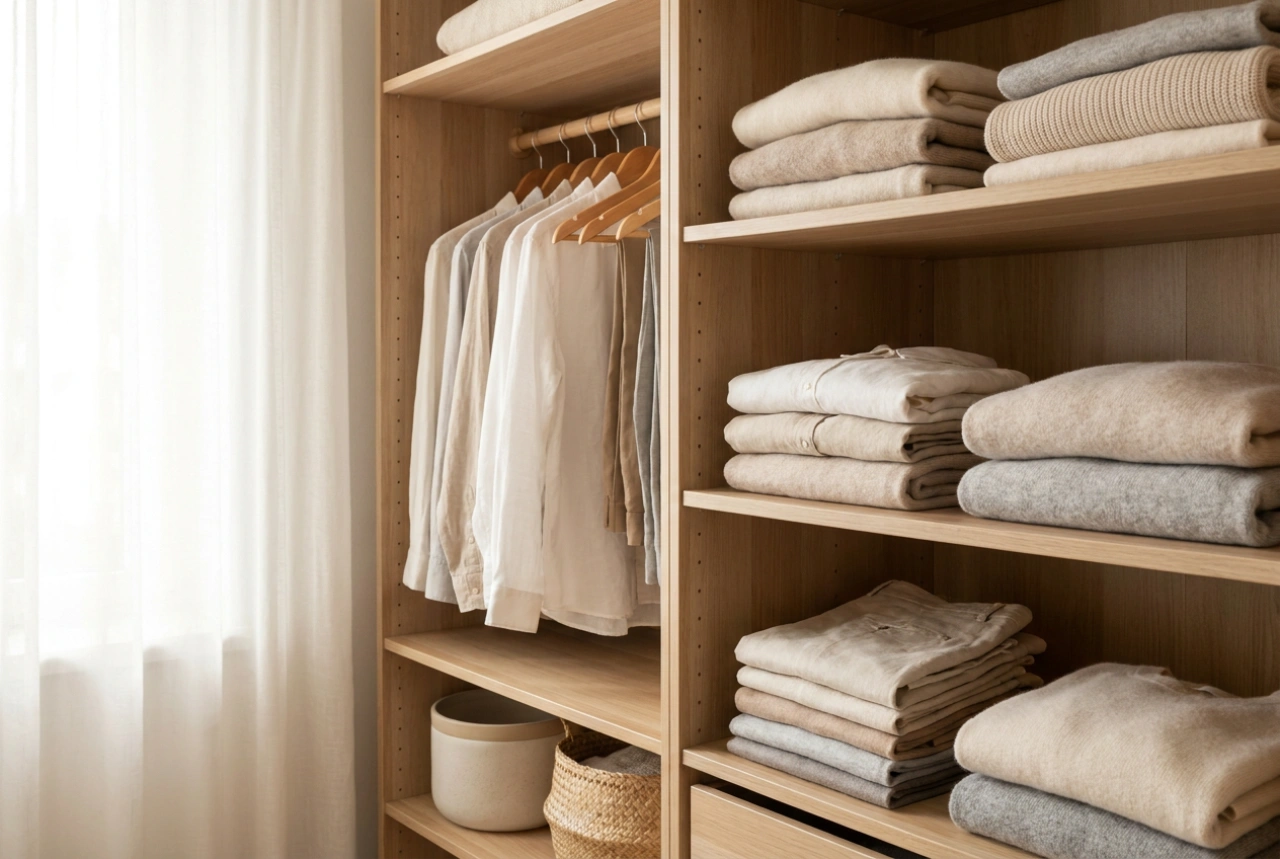
Inside the cabinet, the principle changes. To avoid dark, unmanageable corners where items are lost and forgotten, leverage light-coloured interior linings. A pale wood grain or a soft grey interior reflects the ambient room light when doors are opened, allowing you to locate stored objects quickly without needing harsh, high-voltage integrated light fixtures.
The Material Science of Storage Containers
Choosing the correct storage containers is not merely an aesthetic decision; it directly impacts the microclimate of your cabinet and the preservation of your belongings. Closed cabinets can trap stagnant air, leading to a build-up of microscopic moisture particles and dust.
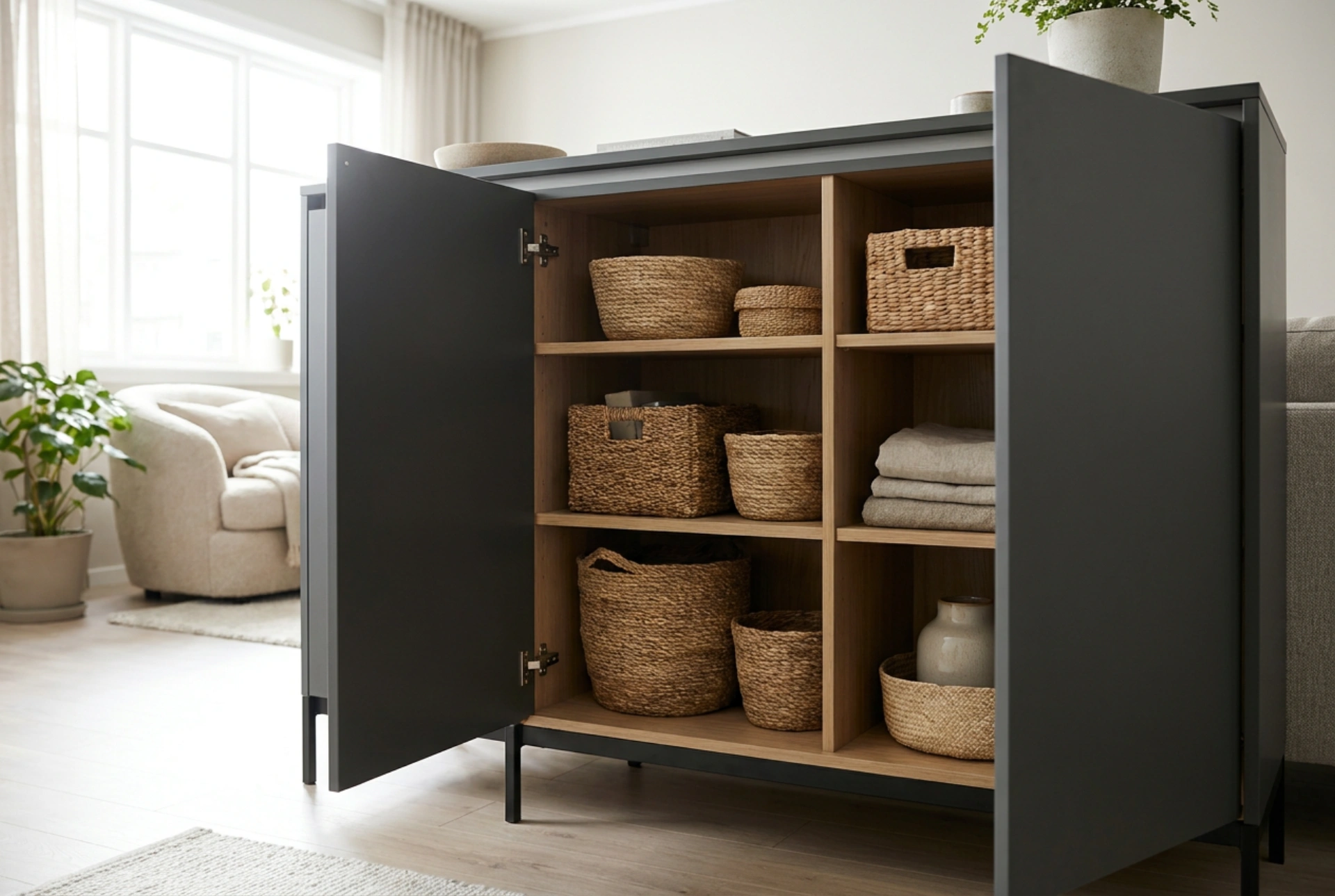
- Woven Natural Fibres: Baskets made of seagrass, rattan, or water hyacinth are highly breathable. They allow constant air circulation, which prevents the development of musty odours on linens, books, or papers. The textured surface also absorbs sound waves, dampening the acoustic echo inside large wooden cabinets.
- Felt and Fabric Bins: Industrial felt containers provide excellent structural rigidity while offering a soft texture that protects delicate items, such as electronic accessories or glassware, from scratches. Like natural fibres, they facilitate minor airflow.
- Avoid Static-Prone Plastics: Minimise the use of low-density polyethylene plastic boxes inside closed wooden cabinets. Synthetic plastics can generate static electricity, which actively attracts ambient dust particles, requiring more frequent cleaning cycles.
Strategic Load Distribution and Structural Integrity
The physical arrangement of items within your cabinet determines both the ease of access and the lifespan of the furniture. Uneven weight distribution causes wooden shelves to sag over time—a phenomenon known as viscoelastic creep.
To prevent structural damage and maintain smooth door alignment, always place the heaviest items, such as books, heavy stoneware, or bulky equipment, on the lowest shelf or directly on the base panel of the cabinet. This keeps the centre of gravity low, ensuring the unit remains completely stable. Medium-weight items, including linen baskets or board games, should occupy the middle shelves at waist height, where they are easiest to reach. Reserve the highest shelves for lightweight, infrequently used objects like seasonal decorations or spare soft goods.
The Order of Operations for Systemic Organisation
An elegant cabinet remains elegant only if the system inside is easy to maintain. Implement a strict zoning protocol during the organisation process. Start by emptying the cabinet entirely and assessing the mechanical condition of the hinges and shelf supports. Tighten any loose screws to prevent doors from sagging, which compromises the seamless external look.
Next, categorise items by frequency of use rather than just size. Group smaller, loose items into dedicated containers, ensuring that each container is filled to no more than eighty percent of its volume. Overfilled baskets bulge, ruining the clean internal lines and causing premature wear on the storage containers themselves. Finally, position frequently used baskets on the right or left side depending on your dominant hand, allowing for a fluid, natural movement when opening the cabinet doors.