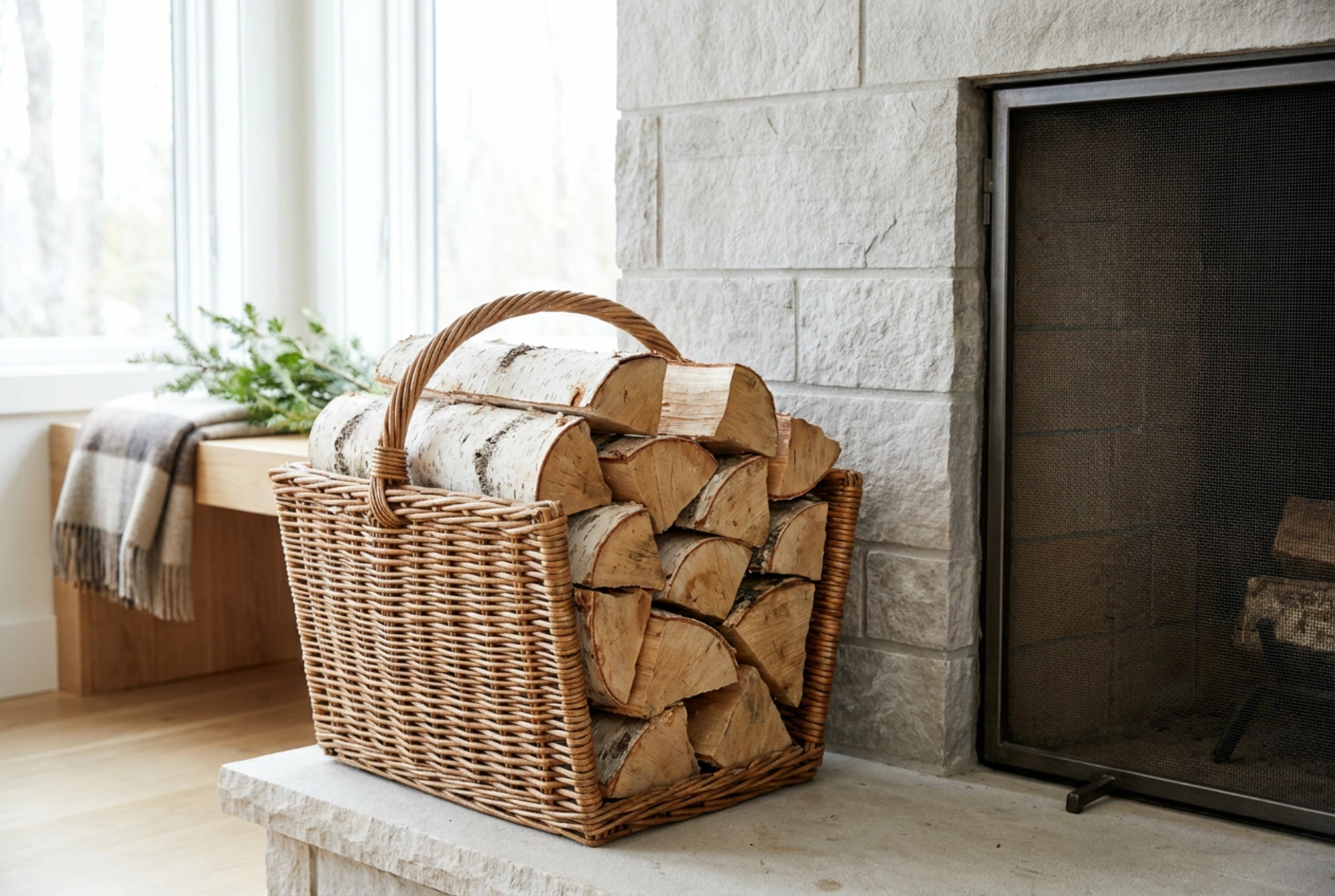


Storing firewood indoors requires a system that balances air circulation with containment of natural debris. Utilizing a woven wicker basket beside the hearth provides a highly functional, breathable solution that prevents moisture buildup while keeping bark and wood dust contained.
The Science of Wicker: Elasticity and Breathability
Wicker is not a specific material, but rather a traditional weaving technique utilizing flexible plant shoots, most commonly willow (Salix). The physical properties of willow make it ideal for transporting and storing heavy, abrasive firewood logs. Willow branches possess high tensile strength combined with natural elasticity, allowing the basket to deform slightly under the weight of heavy birch or oak logs without fracturing.
Unlike solid plastic or metal containers, a woven wicker basket features thousands of microscopic gaps between the intersecting rods. This open structure is critical for air circulation. Firewood brought indoors from external wood stores often carries surface moisture. If stored in an airtight container, this moisture evaporates and condenses on the container walls, creating a humid microclimate that encourages mold growth. The natural ventilation of a wicker weave allows continuous air currents to pass through the wood stack, lowering the relative humidity around the logs and facilitating further drying before combustion.
Contaminant Containment: Managing Bark and Dust
The primary challenge of storing firewood indoors is the shedding of bark, moss, lichen, and wood dust. As logs are stacked and removed, mechanical friction shears these dry organic materials off the wood. If left unchecked, these fine particulates settle onto the floor, posing a slipping hazard and tracking dirt across the home.
To mitigate this while preserving the ventilation benefits of the basket, a dense fabric liner made of natural jute or heavy canvas should be employed. This liner acts as a physical filter. The dense weave of jute stops wood dust and small bark chips from falling through the wicker onto the floor, yet the material remains porous enough to allow heat and air to exchange. For optimal maintenance, the liner should be periodically removed and shaken outside to clear accumulated organic debris, preventing the buildup of allergen-inducing wood dust indoors.
Safe Placement and Hearth Thermodynamics
Positioning a wicker firewood basket requires strict adherence to thermal safety margins. Natural willow consists of cellulose, hemicellulose, and lignin. Prolonged exposure to intense radiant heat from a fireplace can dry these organic polymers to a critical point where they lose their natural moisture content (typically around eight to twelve percent for dried wicker), rendering the basket brittle and prone to structural failure.
- Clearance: Always maintain a minimum clearance of one meter from any open flame or glass hearth door to prevent radiant heat degradation of the organic wicker material.
- Air Convection: Place the basket in a zone where natural convection currents—drawn toward the fireplace draft—can gently pull air through the firewood, accelerating surface drying without overheating the basket itself.
- Elevation: Baskets with solid wooden runners or raised feet elevate the wood off cold floor tiles, preventing cold-bridging which can cause condensation at the base of the stack.
Preventing Biological Activity and Wood Pest Ingress
Bringing natural timber indoors inevitably introduces the risk of microscopic fungal spores and dormant insects. To maintain a hygienic hearth, firewood should only be brought indoors in quantities sufficient for thirty-six to forty-eight hours of burning. This limits the time insects or mould have to colonise the storage area. Vacuuming the empty wicker basket with a brush attachment once a week removes lingering dust and insect larvae from the woven crevices, keeping the fireplace area clean and structurally sound.