

Maximising the capacity and functionality of a small wardrobe requires a systematic approach based on structural ergonomics and material preservation. Integrating a mirror not only serves a functional dressing purpose but also strategically manipulates light and perceived depth within a compact enclosure.
Strategic Mirror Placement and Light Manipulation
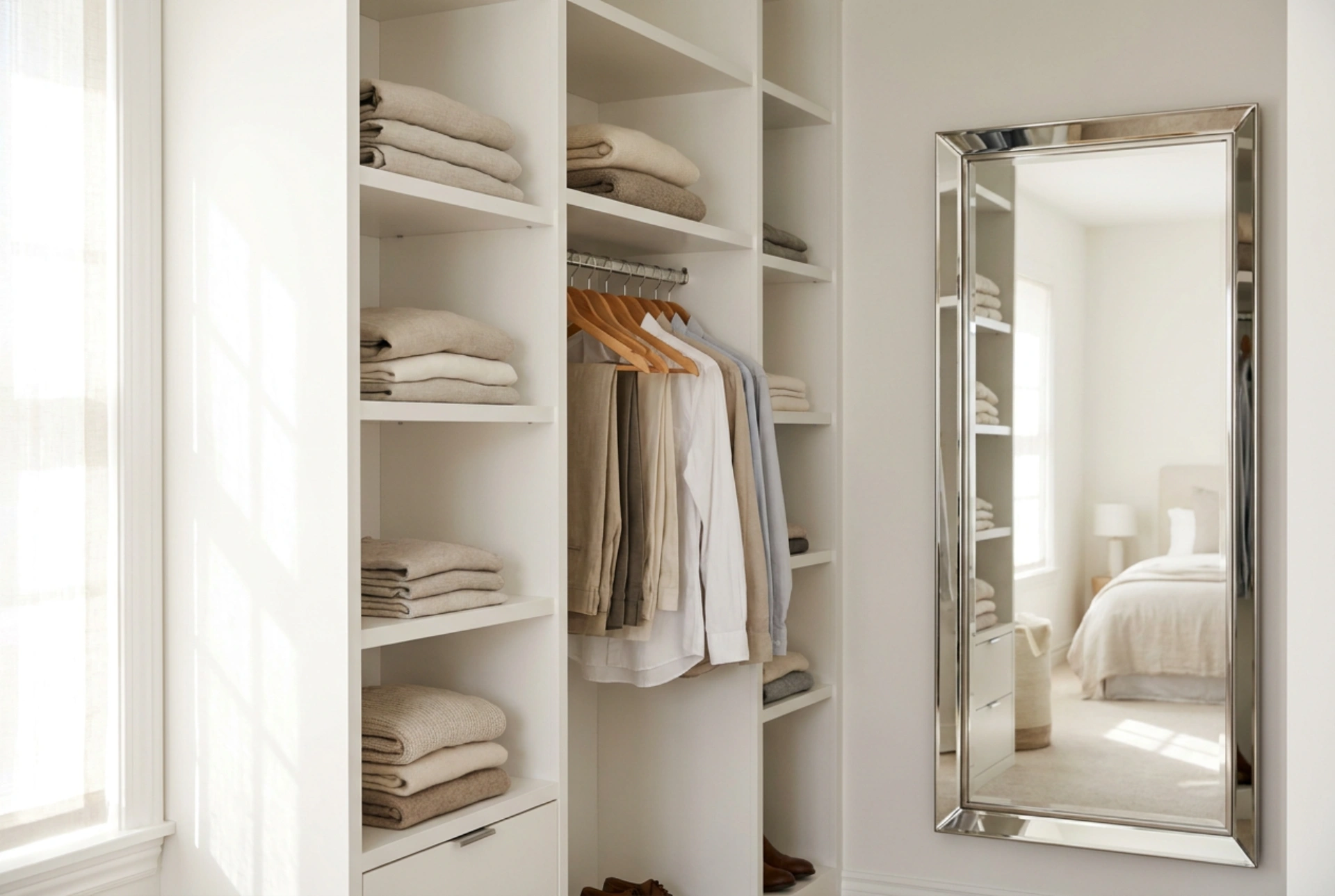
Positioning a mirror within or on a small wardrobe relies on the principles of specular reflection. When light waves strike a flat, polished glass surface backed by a reflective metallic coating, they bounce off at the same angle they arrived. Placing a full-length mirror on the exterior door panel catches ambient natural light from adjacent windows, redirecting it into darker corners of the room to make the space feel larger. If the wardrobe is a reach-in style with sliding doors, mounting the mirror on the internal back panel or an inner door face requires careful positioning relative to internal illumination. Standard light sources with a colour rendering index of ninety or higher should be positioned to shine directly onto the user, rather than the mirror itself, preventing glare and harsh shadows. To prevent dust accumulation caused by electrostatic charges on the glass surface, clean the mirror periodically using a dry microfibre cloth, which utilises capillary action to lift particles without creating static.
Vertical Zoning and Ergonomic Load Distribution
An efficient small wardrobe layout operates on a three-tier zoning system based on gravity, physical effort, and frequency of use. The primary ergonomic zone, situated between hip and eye level (approximately 70 to 140 centimetres from the floor), is reserved for daily essentials. This is where activewear, daily trousers, and shirts should be stored, reducing the physical strain of bending or reaching. The lower zone is ideal for heavy items such as shoes and storage boxes. Placing heavier objects at the base lowers the centre of gravity of the wardrobe structure, preventing tipping hazards. The upper zone, which requires a step stool or high reach, should hold lightweight, seasonal, or rarely used textiles. When organising these zones, material properties dictate the storage method. Knitted fabrics, such as wool or cashmere, must never be hung; gravity pulls at the yarn loops, causing permanent elongation and structural distortion. Instead, fold these garments loosely to preserve fibre elasticity, and place them on shelves or in shallow drawers.
Airflow, Humidity, and Microclimate Control
Small, closed wardrobes are highly susceptible to stagnant air and moisture accumulation, which creates a microclimate conducive to mould growth and textile degradation. Air has a specific moisture-carrying capacity that changes with temperature; a drop in temperature inside a tightly sealed wardrobe can lead to localised condensation on cold outer walls. To prevent this, maintain a clear ventilation gap of at least 3 to 5 centimetres between the wardrobe’s back panel and the stored items. This gap facilitates natural convection currents, allowing air to circulate freely. Furthermore, avoid storing clothes that are slightly damp from wear or washing. Natural fibres like cotton, linen, and wool are hygroscopic, meaning they readily absorb water vapour from the surrounding air. When storing delicate textiles, use breathable woven cotton covers instead of airtight plastic bags, which trap moisture and volatile organic compounds, leading to fabric yellowing and fibre weakening.
Hanging Dynamics and Hanger Selection
Hanging garments effectively is a matter of distributing mechanical stress across the fabric. Fine wire hangers should be avoided entirely; their narrow profiles concentrate the gravitational pull of the garment onto a very small surface area, leading to puckering and fabric stretching at the shoulders. Instead, select wide, contoured wooden hangers for structured garments like blazers and coats. Wood acts as a natural buffer, absorbing small amounts of excess humidity while providing robust physical support. For lightweight shirts and dresses, smooth timber or velvet-coated hangers prevent slipping without snagging delicate fibres. Group hung garments by length and weight to create an ordered gradient. This visual order also has a physical benefit: keeping shorter garments on one side opens up the floor space directly beneath them, creating an additional storage niche for low-profile shoe racks or storage bins.
Cleaning and Maintenance of Wardrobe Surfaces
Maintaining a small wardrobe requires regular cleaning to prevent dust mites and microscopic debris from settling on fabrics. When cleaning timber or laminate shelving, avoid using saturated wet cloths, as moisture can seep into joints, causing the wood fibres to swell and warp. Instead, use a damp cloth followed immediately by a dry one. For glass mirrors, a simple solution of distilled water and isopropyl alcohol (in a 1:1 ratio) effectively cuts through skin oils and dust without leaving a surfactant residue that attracts future grime. Wipe in a continuous, S-shaped pattern from top to bottom to eliminate streaking, ensuring the glass remains highly reflective and clean.