

Positioning a toilet brush and paper stand combination requires careful consideration of bathroom airflow, material susceptibility to moisture, and aerosolised particles. Optimising this layout minimises cross-contamination and ensures paper remains dry and hygienic.
The Mechanics of Toilet Plume and Contamination
Every time a toilet is flushed, the mechanical action creates a turbulent spray of microscopic droplets, known scientifically as a toilet plume. These aerosolised particles can carry enteric pathogens and remain suspended in the bathroom air for several minutes, eventually settling on nearby surfaces. Placing a toilet paper stand directly adjacent to the bowl exposes the porous, absorbent paper fibres to this invisible mist. To prevent paper from becoming a vector for bacteria, the stand must be positioned outside the primary trajectory of the plume, ideally at a minimum distance of 50 centimetres from the toilet rim, or shielded by the physical structure of the vanity or toilet tank itself.
Material Science and Stand Selection
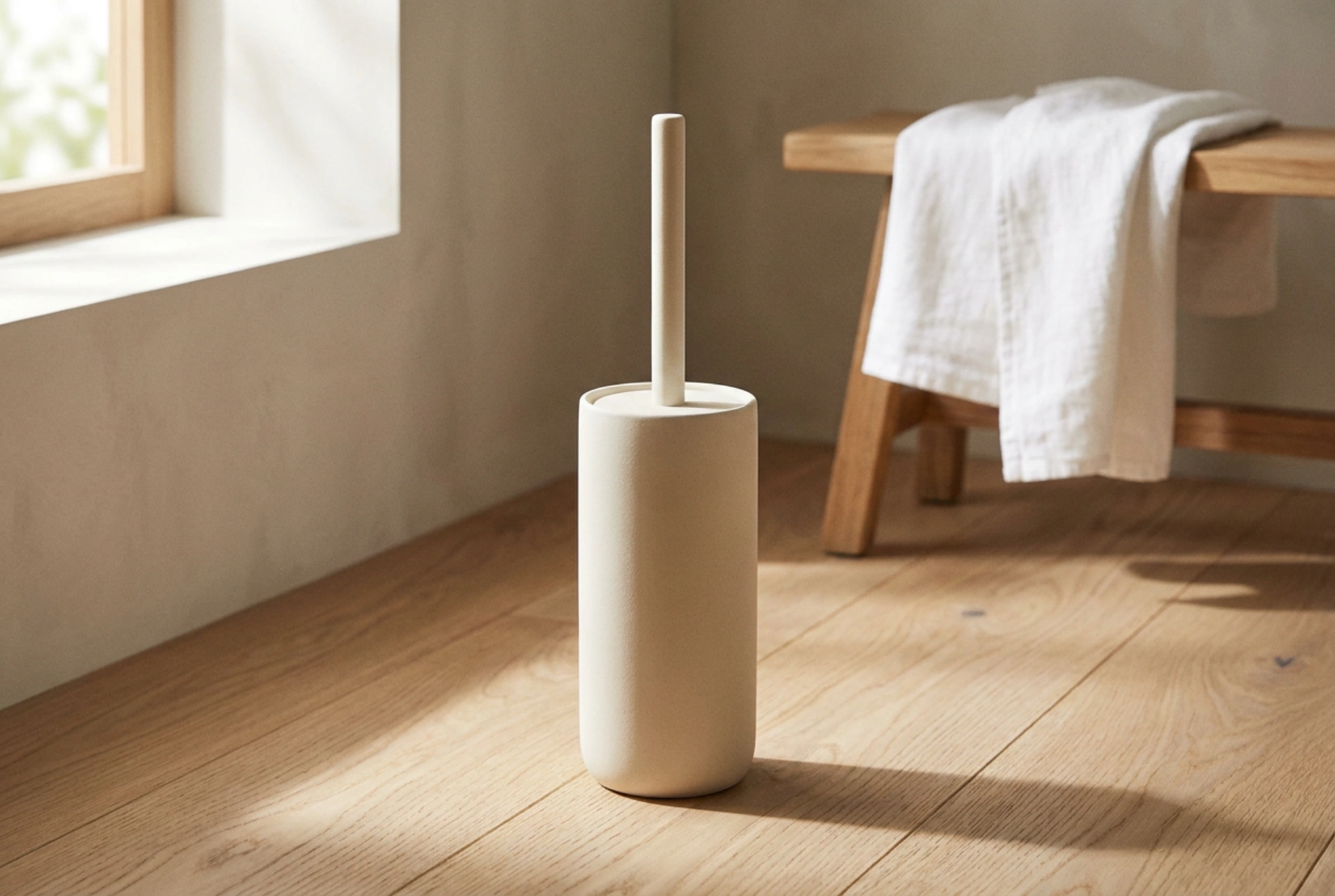
The materials of your stand and brush holder dictate how easily pathogens can colonise their surfaces. Non-porous materials such as glazed ceramic, high-grade stainless steel, and matte-coated metals are highly resistant to bacterial adhesion and can withstand frequent chemical disinfection. Wooden or low-quality plastic stands tend to develop micro-abrasions over time, which harbour moisture and organic matter, creating an ideal breeding ground for microbes. When selecting a combined unit, opt for a design where the toilet paper holder is elevated significantly above the brush container. A physical barrier or a solid drip tray between the two zones is essential to prevent moisture from evaporating upward and condensing onto the clean toilet paper rolls.
Optimising the Evaporation vs. Ventilation Balance
A common error in bathroom layout is placing the toilet brush holder in a dead zone—an area with zero air circulation, such as a tight corner between the toilet and a wall. This lack of airflow prevents the brush from drying, leading to stagnant water pooling at the bottom of the holder and promoting anaerobic bacterial growth. Instead, position the stand in a location that benefits from ambient ventilation, such as near a mechanical extraction vent or under a window, while still keeping it shielded from direct drafts that could disperse aerosols. Furthermore, the brush holder itself should feature a design that allows air to circulate around the bristles without exposing the wet brush to the open room.
The Dripping Protocol: A Systematic Approach to Hygiene
Proper placement is ineffective if the brush is returned to the holder dripping wet. Establishing a strict protocol for brush use is the most effective way to maintain hygiene. After scrubbing the bowl, suspension is key: wedge the handle of the brush under the toilet seat lid, allowing the head to suspend directly over the bowl. Leave it in this position for at least ten minutes. This harnesses gravity to drain the excess water back into the sewer system, preventing water accumulation in the holder cup. Once dry, the brush can be returned to its base, drastically reducing the humidity levels inside the container and preventing the formation of unpleasant biofilms.
Disinfection and Maintenance of the Stand
Regardless of how strategically the stand is placed, regular sanitisation is mandatory. Avoid harsh abrasive cleaners that can scratch the surface of stainless steel or ceramic, as these scratches provide microscopic anchors for bacteria. Instead, flush the brush holder weekly with hot water and a diluted solution of oxygen bleach or a generic quaternary ammonium compound. Allow the cleaning solution to sit in the holder for fifteen minutes before rinsing and thoroughly air-drying. By maintaining dry, clean conditions at the base of the stand, you ensure that the entire unit—including the paper stored above—remains completely sanitary.