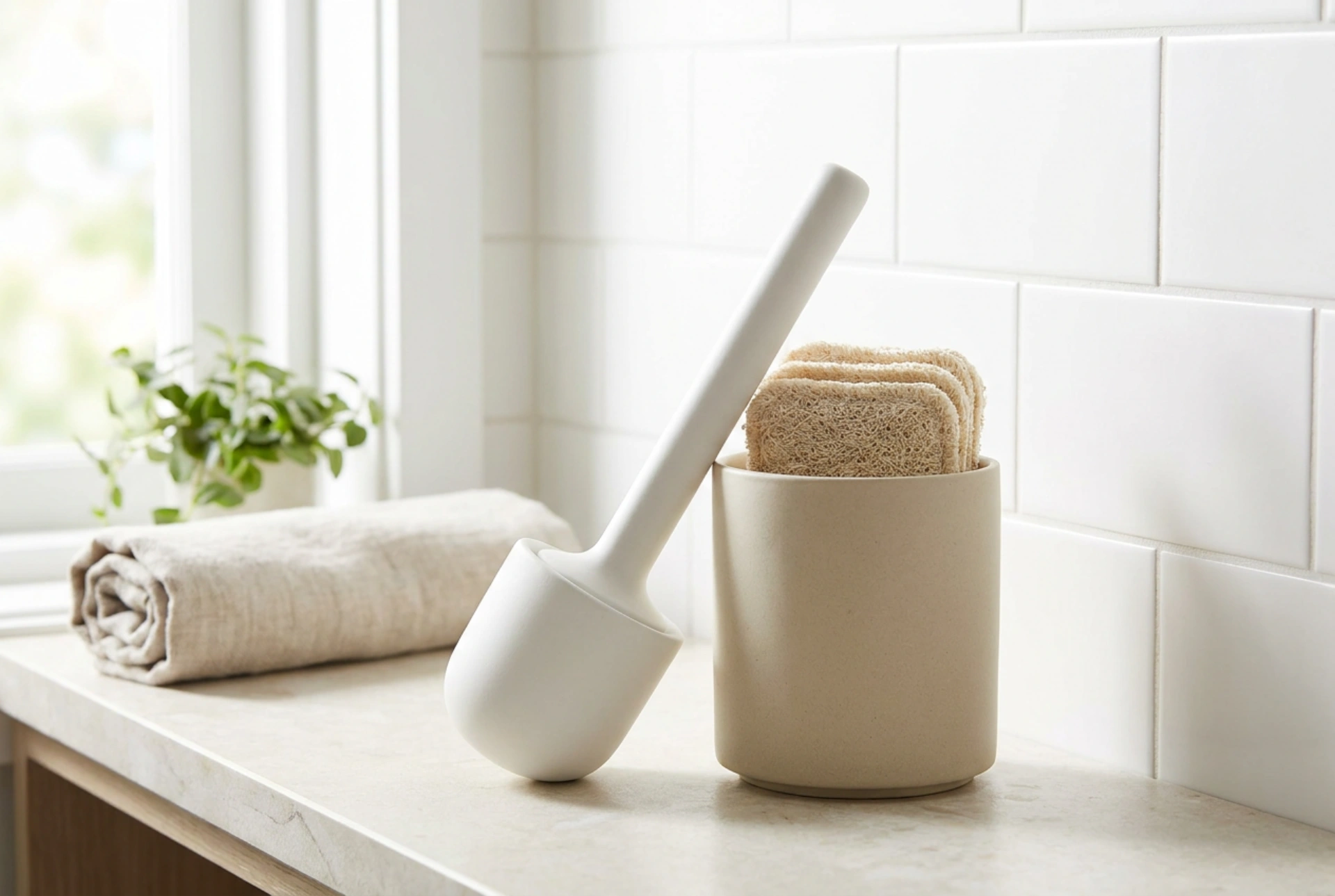


Replaceable-head toilet brushes offer a highly hygienic alternative to traditional plastic bristles by eliminating the damp, bacteria-prone environment of a standard brush holder. Understanding the mechanical application and chemical activation of these systems ensures maximum sanitization with minimal physical effort.
The Chemistry of Pre-Impregnated Cleaning Heads
Many replaceable toilet brush pads come pre-treated with concentrated dry detergents, surfactants, and descaling agents. When these compounds come into contact with the water in the toilet bowl, a rapid dissolution process begins. Surfactants work by lowering the surface tension of the water, allowing it to penetrate deep into organic soils and lift them from the ceramic surface.
For hard water stains and limescale, which are primarily composed of calcium carbonate, the pre-impregnated agents often include weak organic acids like citric acid. This initiates an acid-base reaction, converting insoluble calcium carbonate into soluble calcium salts and carbon dioxide gas. This chemical action significantly reduces the amount of physical scrubbing required, protecting the delicate ceramic glaze from abrasive damage that harsh, dry scouring powders might cause.
Mechanical Attachment and Ergonomic Preparation
Modern replaceable systems utilize a mechanical locking mechanism to ensure the cleaning pad remains secure during heavy scrubbing. To prepare the system without exposing your hands to pathogens, follow these steps:
- Align the socket of the handle directly over the connector of a fresh cleaning pad resting in its storage caddy.
- Press down firmly until you hear a distinct physical click, which indicates the spring-loaded jaw or clamp has locked onto the pad.
- Gently submerge the pad into the toilet bowl water for three to five seconds to activate the dry cleaning agents, allowing the surfactants to fully hydrate.
Using cold water in the bowl is standard, but if you are dealing with heavy grease or stubborn organic buildup, flushing the system once with warm water (not boiling, as thermal shock can crack ceramic) beforehand can accelerate the chemical reaction rate of the detergents.
Optimizing Physical Scrubbing and Order of Operations
To achieve a sterile finish, physical shear force must be applied systematically. Biofilms—complex matrices of bacteria—adhere strongly to surfaces and cannot be removed by chemicals alone; they require mechanical disruption.
1. Under the Rim
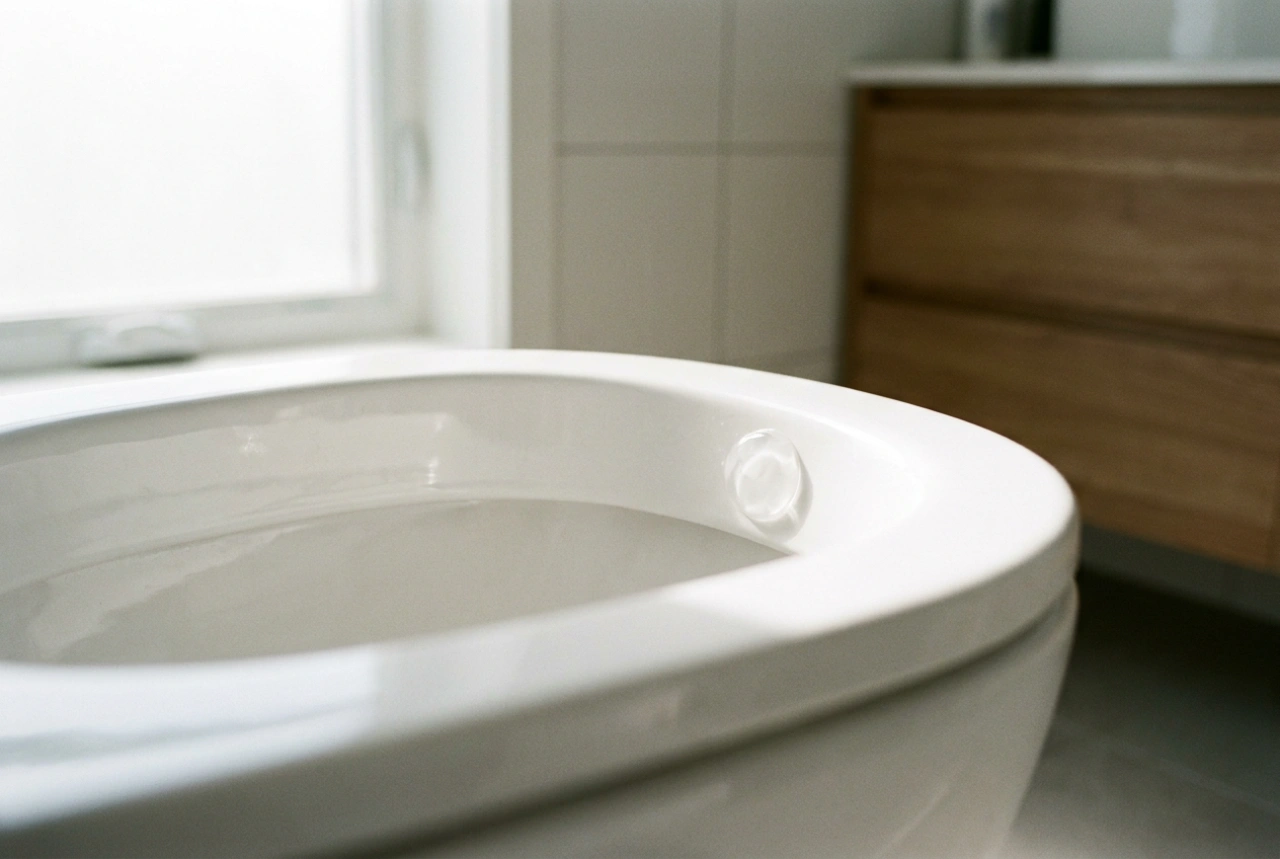
Begin at the top under-rim area where water enters the bowl. This dark, damp channel is a primary breeding ground for mineral deposits and bacteria. Use the sharp edge of the replaceable pad, applying upward pressure to scrape away hidden buildup.
2. The Bowl Walls
Work your way down the walls of the bowl using broad, overlapping vertical strokes. This ensures complete coverage and allows the gravity-assisted flow of the activated detergent to coat the entire ceramic surface.
3. The Siphon Jet and Trapway
Push the pad deep into the trapway, rotating the handle in a circular motion. This agitation forces the concentrated soapy water into the siphon jet, loosening debris in areas that are typically difficult to reach with standard, rigid bristle brushes.
Hygienic Release and System Maintenance
Once the scrubbing process is complete, the contaminated pad must be discarded without manual contact. Hold the wand directly over a waste receptacle and slide the release button forward. The internal spring mechanism will mechanically eject the pad instantly.
To maintain the handle itself, rinse the clamping tip in clean, running water and wipe it down with a dry cloth or an isopropyl alcohol solution. Storing the handle in a dry, ventilated holder prevents the colonization of anaerobic bacteria on the grip, completing a fully hygienic sanitation cycle.