

Yellow underarm stains on shirts are not caused by sweat alone, but by a chemical reaction between sebum proteins and the aluminum compounds found in antiperspirants. Removing these stubborn residues requires a targeted approach that breaks down the mineral-lipid bond adhering to the textile fibres.
The Chemistry Behind Underarm Staining
To effectively eliminate these unsightly marks, it is essential to understand their origin. Human sweat is naturally colourless and consists primarily of water, salts, urea, and sebum (lipids). The yellow discoloration occurs when these organic components react with aluminum chlorohydrate or aluminum zirconium—the active ingredients in most antiperspirants. This reaction produces a synthetic, insoluble precipitate that coats the cotton or synthetic fibres of the shirt. Over time, exposure to oxygen and body heat causes these bound molecules to oxidise, turning them yellow and eventually hardening the fabric. Crucially, laundering with standard detergent at low temperatures often fails to break this complex matrix, and ironing the shirt acts as a thermal catalyst, permanently setting the stain into the cellulose structure of the cotton.
Deconstructing the Stain: Acidic and Oxidising Agents
Treating these stains requires a two-pronged chemical strategy: dissolving the mineral-aluminum barrier and oxidising the organic protein residues. Standard washing detergents are typically alkaline, which is ineffective against the aluminum-lipid complex. Instead, an acidic environment is required to protonate the mineral compounds, breaking their bond with the fabric fibres and rendering them soluble in water.
- Organic Acids (Citric or Acetic Acid): Citric acid is highly effective at chelating metal ions, including aluminum. By binding to the aluminum molecules, it pulls them away from the fabric structure. Acetic acid (found in white vinegar) serves a similar purpose, lowering the pH to weaken the mineral bonds.
- Oxygen-Based Bleaching Agents: Once the mineral barrier is weakened, the organic proteins must be oxidised. Sodium percarbonate (commonly sold as oxygen bleach) reacts with water to release hydrogen peroxide and sodium carbonate. The active oxygen attacks the double bonds of the organic chromophores—the parts of the molecule responsible for the yellow colour—rendering them colourless and water-soluble. Unlike chlorine-based bleaches, oxygen bleach does not weaken the cotton fibres or cause yellowing of synthetic blends.
Step-by-Step Restoration Protocol
To restore your shirts without damaging the textile structure, follow this precise sequence of physical and chemical steps:
1. The Acidic Soak
Dissolve 10 grams of citric acid powder in 1 litre of warm water (approximately 40°C). The temperature is critical: it must be warm enough to accelerate molecular motion and dissolve the acid, but not hot enough to denature and set any remaining proteins. Submerge the stained areas of the shirt in this solution and allow it to soak for 45 to 60 minutes. This gives the acid sufficient time to chelate the aluminum ions.
2. Targeted Mechanical Agitation
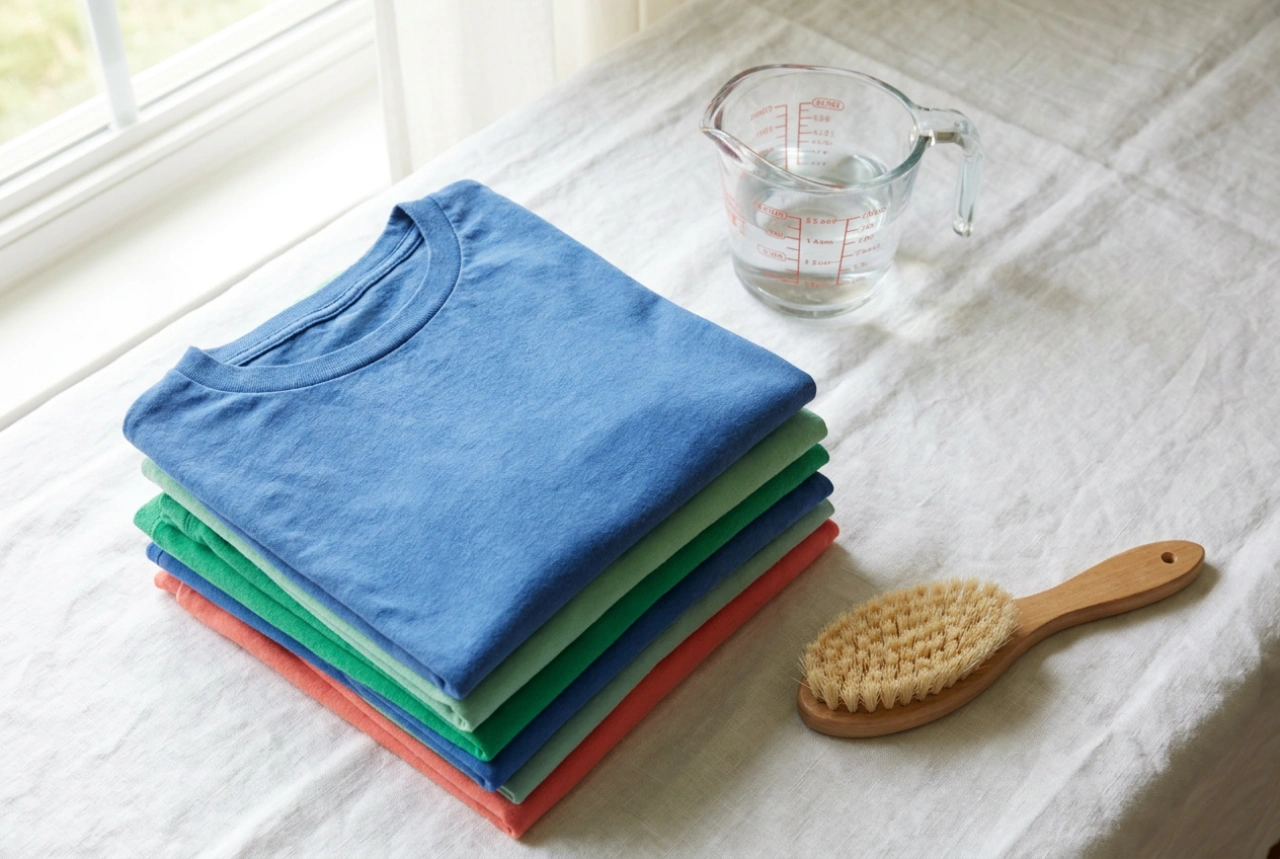
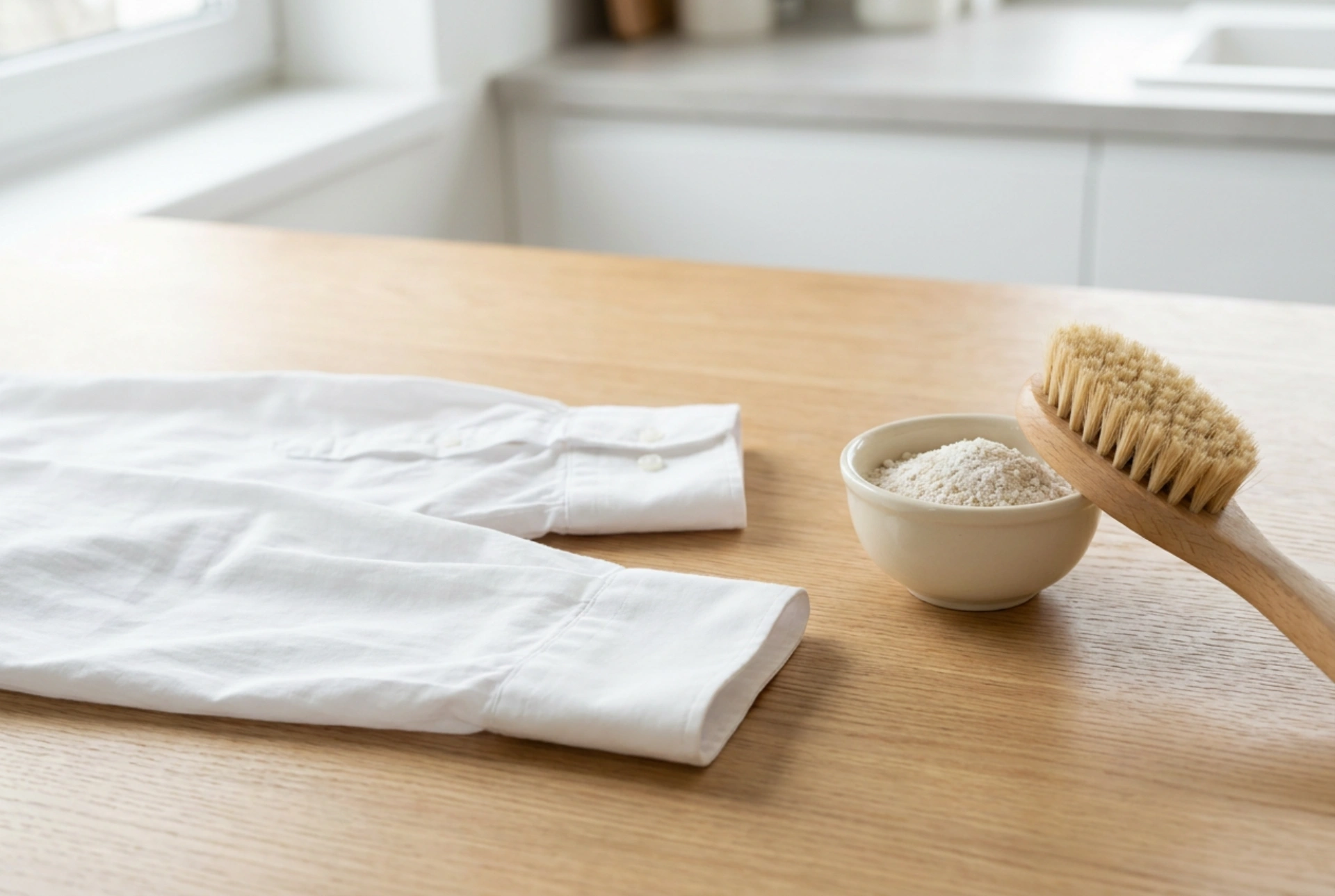
After soaking, use a soft-bristled brush to gently agitate the fibres. Work in circular motions from the outer edge of the stain toward the centre to prevent spreading the dissolved residues. This physical action helps release the weakened mineral-lipid matrix from the interlocking weave of the fabric.
3. The Oxidising Paste
For persistent stains on white garments, mix sodium percarbonate with a small amount of warm water to form a thick paste. Apply this paste directly to the damp underarm area. Let it sit for 20 to 30 minutes. As the sodium percarbonate decomposes, the effervescent release of oxygen physically lifts the organic soil out of the cotton pores.
4. Enzymatic Wash Cycle
Rinse the garment thoroughly with cold water to remove the acidic and oxidising residues. Machine wash the shirt using a high-quality laundry detergent containing proteases and lipases (enzymes that break down proteins and fats). Program the cycle to the maximum temperature permitted by the garment's care label, ideally 40°C or 60°C. The mechanical washing action, combined with enzymatic activity, will flush out the remaining microscopic particles.
Preventative Maintenance for Shirt Longevity
Preventing the formation of these yellow deposits is significantly easier than removing them. Always allow your antiperspirant to dry completely on your skin before putting on your shirt; this minimizes the physical transfer of aluminum compounds to the fabric. Additionally, wash shirts as soon as possible after wearing them to prevent sweat salts and lipids from oxidising and bonding with the fabric. Finally, never iron a shirt that shows even a faint hint of underarm discolouration, as the high heat will permanently bake the stain into the fibres, making future removal almost impossible.