

Removing stubborn black deposits from fireplace glass requires understanding the chemistry of combustion by-products. Standard household glass cleaners are ineffective against these baked-on carbon residues, necessitating specialised alkaline formulations that chemically dissolve the bond between the soot and the glass.
The Chemistry of Fireplace Deposits
When wood burns, it releases volatile organic compounds, water vapour, and carbon particles. Incomplete combustion, often caused by restricted airflow or damp wood, produces creosote and soot. Creosote is a highly complex, sticky mixture of tar, phenols, and organic acids. As these hot gases hit the relatively cool glass pane, they condense and polymerise, forming a stubborn, dark film. Over time, the intense heat of the fire bakes this residue, cross-linking the carbon chains and bonding them chemically to the microscopic pores of the ceramic glass (usually a lithium-aluminosilicate material designed for high thermal resistance). Because these deposits are acidic and highly hydrophobic, neutral or acidic water-based cleaners cannot dissolve them.
The Active Mechanism of Alkaline Cleaners
Specialised fireplace glass cleaners are formulated with strong alkaline agents, typically potassium hydroxide (caustic potash) or sodium hydroxide (caustic soda). These compounds have a very high pH, usually between 12 and 14. The primary chemical mechanism at play is saponification and alkaline hydrolysis. When the highly alkaline solution contacts the acidic, fatty esters and tars in the creosote, it chemically converts them into water-soluble soaps and salts. Simultaneously, surfactants within the cleaner lower the surface tension of the liquid, allowing it to penetrate the porous carbon crust. This action loosens the bond between the grime and the ceramic glass, suspending the dissolved particles in the liquid phase so they can be easily wiped away without abrasive scrubbing that could scratch the delicate glass surface.
The Importance of Dwell Time and Temperature
For the chemical reaction of hydrolysis to occur efficiently, the cleaner must remain in contact with the residue. This is known as dwell time. However, temperature plays a critical role. Fireplace glass must always be completely cold to the touch before any cleaning agent is applied. Applying an aqueous chemical solution to hot ceramic glass risks thermal shock, which can cause micro-fractures in the glass structure. Furthermore, high temperatures cause the water in the cleaner to evaporate instantly, leaving behind a highly concentrated, dry caustic residue that can permanently etch the glass surface or damage the surrounding metal and rope seals.
Step-by-Step Application Technique
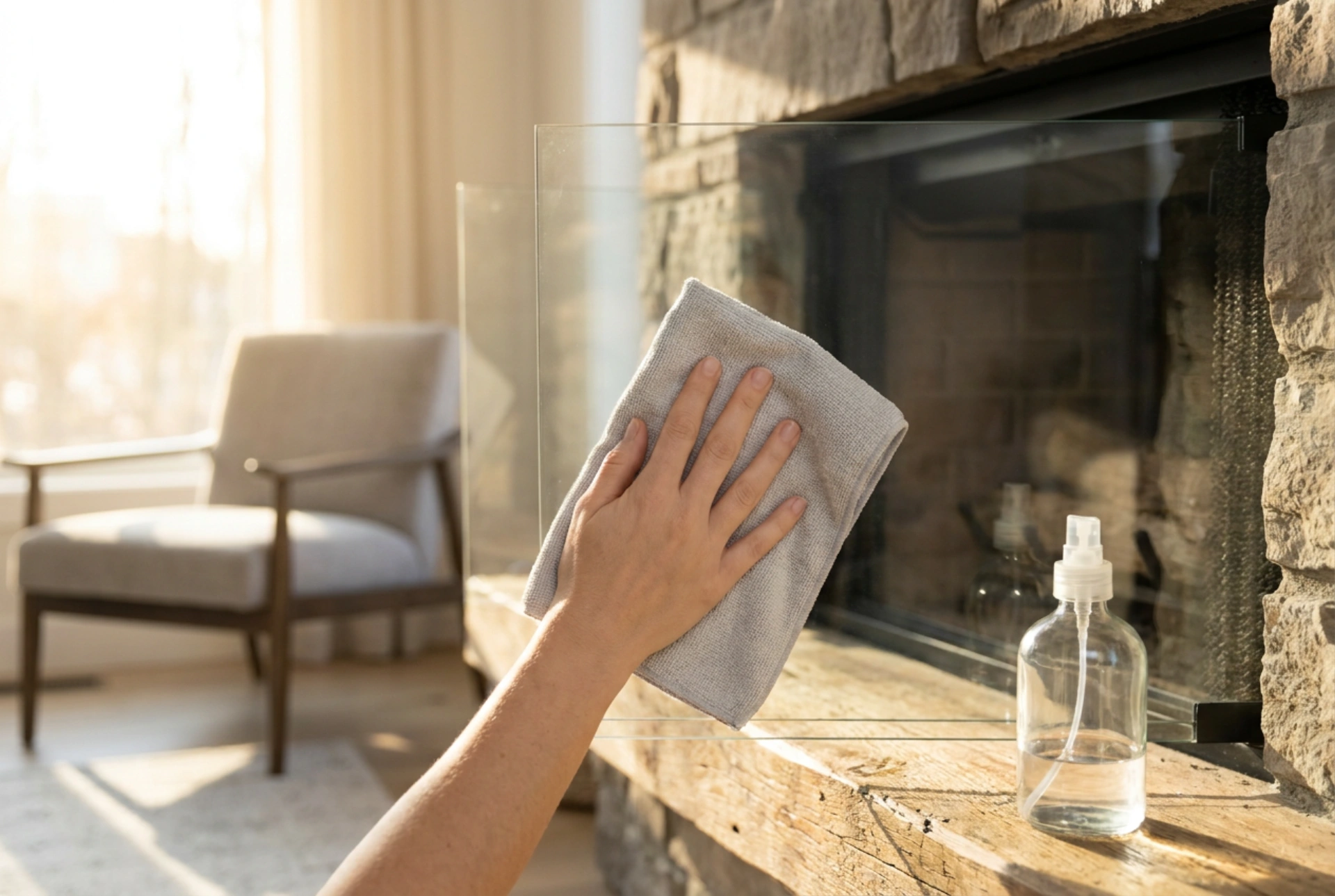
To clean fireplace glass safely and effectively, follow a precise order of operations designed to maximise chemical efficiency and protect the appliance components. First, protect the surrounding area. Place newspaper or dust sheets beneath the fireplace door to catch any highly alkaline drips, which can stain slate, stone, or wooden hearths. Second, apply the cleaner. Spray the alkaline solution evenly over the cold glass pane. Allow it to sit for two to three minutes. This dwell time allows the potassium hydroxide to break down the polymerised carbon chains. Do not allow the product to dry completely. Third, use mechanical action. Wipe the loosened soot away using a damp, non-abrasive sponge or a thick microfiber cloth. Avoid steel wool or abrasive scouring pads, as they can create microscopic scratches that will trap soot even faster during the next burn. Fourth, neutralise and rinse. Because alkaline residues can etch glass if left indefinitely, it is vital to wipe the glass a second time with a clean, damp cloth soaked in pure water, followed by a dry buff with a microfiber cloth to remove all chemical traces.
Protecting the Fiberglass Gaskets
When applying fireplace glass cleaners, extreme care must be taken to avoid spraying the liquid directly onto the fiberglass or ceramic rope gaskets that seal the door. These gaskets are held in place by specialised high-temperature adhesives. Alkaline cleaners can degrade these adhesives, causing the rope seal to loosen or fail. A failing seal allows uncontrolled oxygen into the firebox, leading to inefficient burns and rapid creosote buildup. To prevent this, spray the cleaner onto a cloth first when working near the edges of the glass, rather than spraying the pane directly.