

Managing the high thermal energy of a household iron requires a fundamental understanding of heat transfer and material limits to prevent fabric scorching, surface damage, or tipping hazards. Correct resting techniques during use and proper cooling protocols afterward ensure both domestic safety and the longevity of your appliance.
The Thermodynamics of Iron Soleplates and Heat Transfer
Modern irons operate at temperatures ranging from 70°C for delicate synthetics up to over 200°C for linen. At these temperatures, the metal soleplate—typically made of anodised aluminium, ceramic-coated aluminium, or stainless steel—possesses high thermal conductivity and stores significant thermal energy. When you pause during ironing, placing the soleplate flat on any standard surface causes rapid conductive heat transfer, which can scorch fabrics or melt synthetic fibres within seconds.
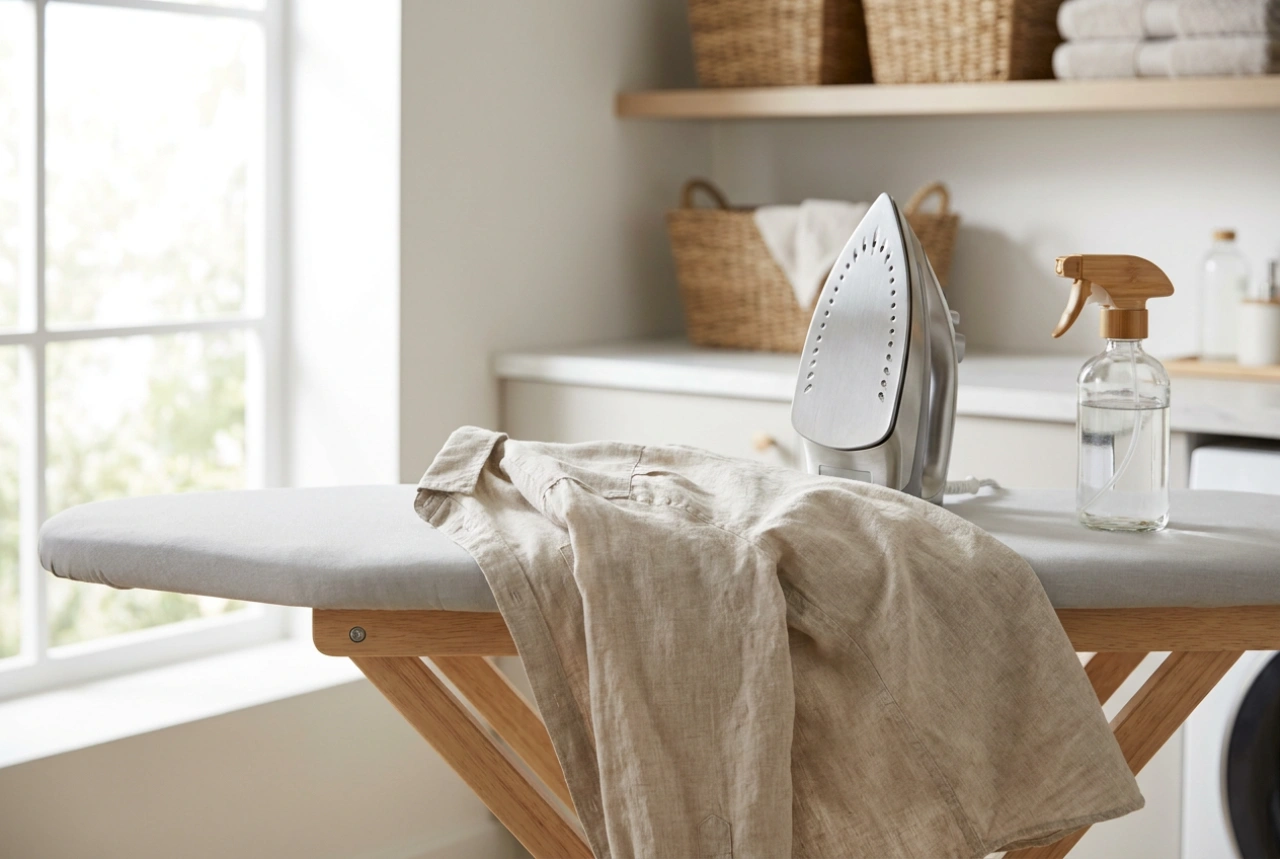
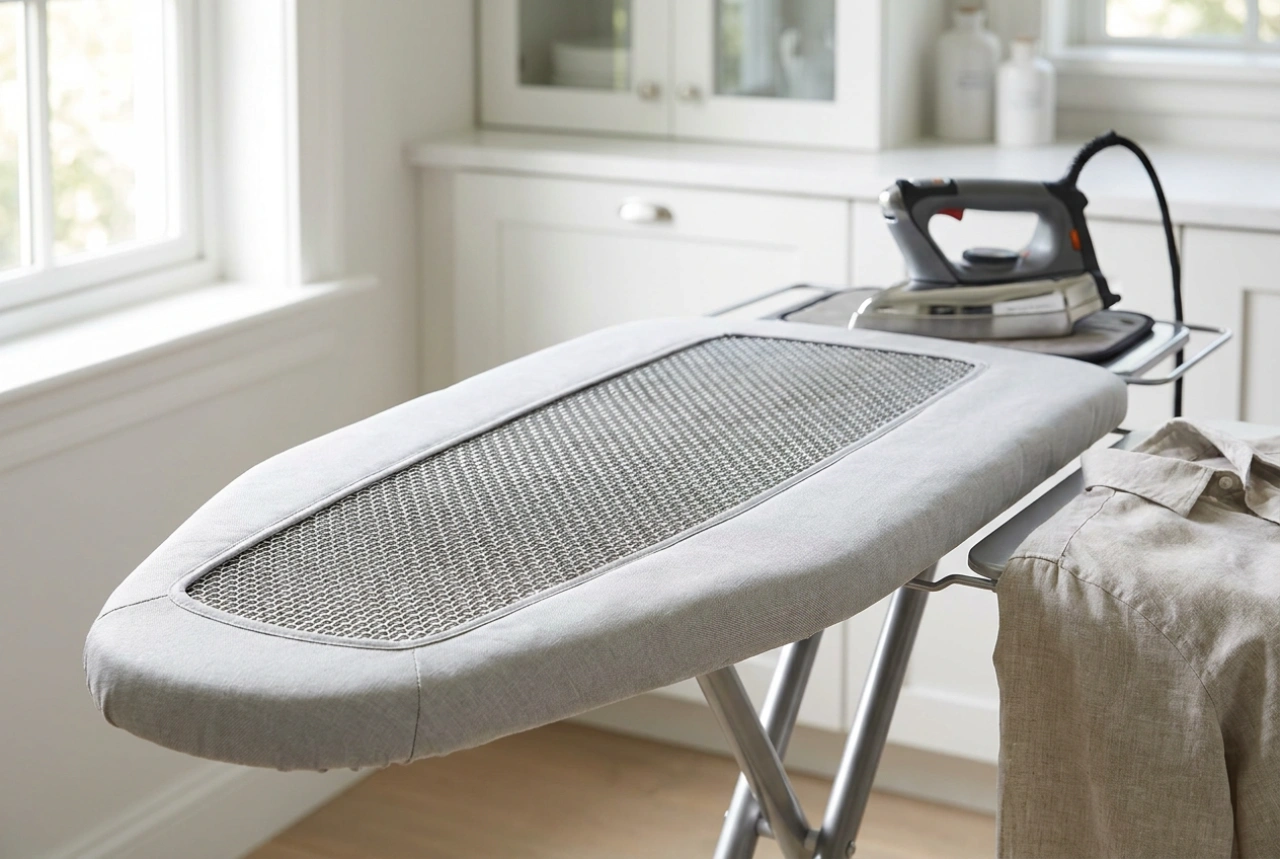
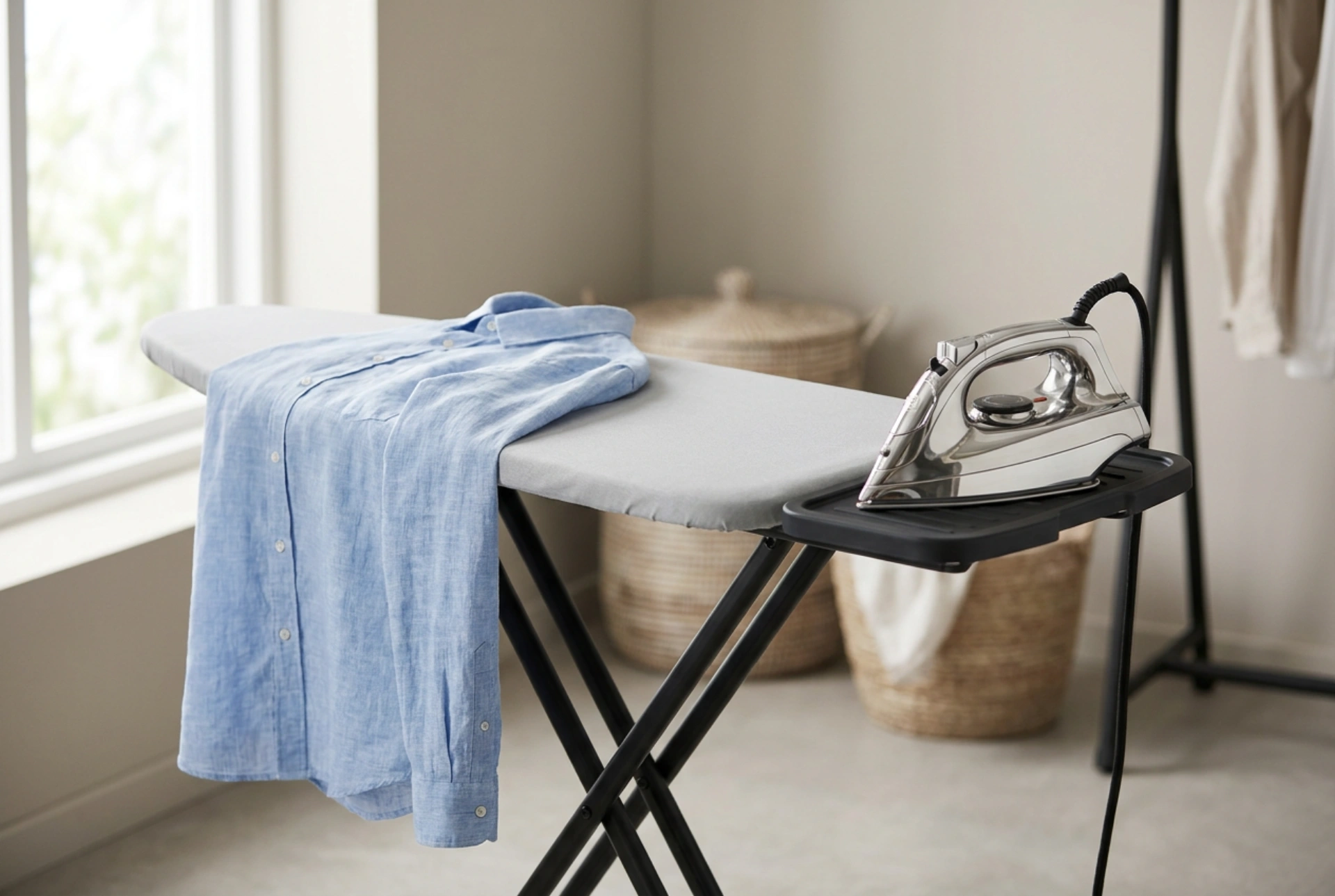
To mitigate this risk, irons are designed to rest vertically on their heel, or flat on a dedicated heat-resistant dock. Resting the iron vertically minimises the surface area in contact with any material and utilizes natural convection to dissipate heat into the surrounding air. However, the heel rest must be structurally stable. If your ironing board features an integrated metal tray with silicone pads, this allows you to rest the iron horizontally. The silicone rubber acts as an excellent thermal insulator, capable of withstanding temperatures up to 300°C without degrading or transferring heat to the board underneath.
The Role of Ironing Board Covers in Thermal Management
An ironing board is not just a flat surface; it is a system designed to manage moisture and heat. Standard covers typically consist of a cotton top layer paired with a felt or foam underlay. Cotton is favoured for its high heat tolerance and breathability, allowing steam to pass through rather than pooling on the surface.
- Heat-reflective covers: Some covers incorporate metallic particles (such as aluminium) woven into the cotton or applied as a coating. This reflects radiant heat back into the underside of the fabric, speeding up the ironing process through dual-sided heating.
- Steam condensation management: High-volume steam irons release substantial water vapour. If the felt padding is too thin, this vapour condenses on the cold metal mesh frame of the board, leading to rust. A thick, porous polyester or felt underlay absorbs and gradually evaporates this moisture.
Never drape a hot iron flat on a standard fabric cover, even for a moment. The heat-reflective coatings or synthetic foams beneath can melt, stick to the soleplate, and ruin both the cover and the soleplate coating.
Safe Post-Use Cooling and Storage Protocols
Once the appliance is turned off and unplugged, it remains a thermal hazard for a considerable duration due to its thermal mass. It can take up to thirty minutes for a soleplate to cool down to a safe ambient temperature.
Preventing Thermal Degradation of Cables
One of the most common household errors is wrapping the electrical power cord around the body of the iron immediately after use. The outer insulation of the cord is made of thermoplastic materials (such as PVC or synthetic rubber) which degrade rapidly when exposed to temperatures exceeding 60°C. Wrapping the cord around a hot iron soleplate causes the plasticizer in the insulation to dry out, leading to cracking, stiffening, and eventually exposing the copper conductors inside. Always allow the iron to cool completely on its secure heel or a heat-resistant stand before winding the cord loosely.
Water Reservoir Management
To prevent internal corrosion and mineral buildup, empty the water tank after every session while the iron is still warm. The remaining internal heat helps evaporate any lingering moisture inside the steam chamber, preventing the growth of mould or the deposition of calcium carbonate from hard water, which can clog the steam vents.
Structural Stability and Mechanical Safety of Ironing Boards
The mechanical design of an ironing board directly influences safety. The height adjustment mechanism, typically a spring-loaded lever engaging with a notched metal bar, must be fully locked into place before placing any weight on the surface. Ensure the board is positioned on a flat, non-slip floor. The centre of gravity shifts significantly when a heavy steam generator or iron is placed on the end tray. To prevent tipping, always position the board so the legs are fully splayed, and avoid hanging heavy garments on the extreme ends of the structure.