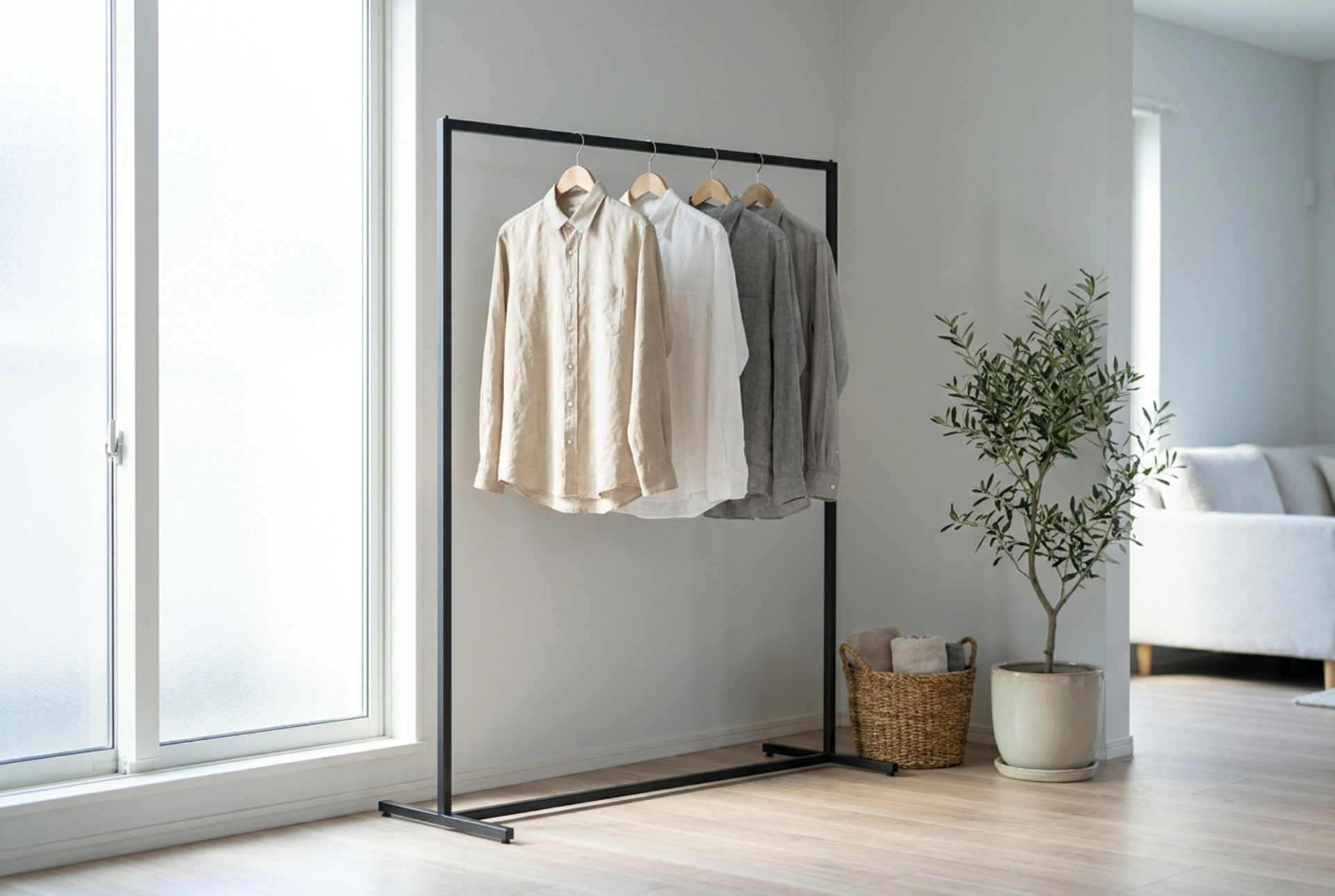


A freestanding black metal clothes rack offers an elegant, minimalist solution for displaying and storing garments, but its open design requires careful physical and visual balancing to remain functional. Overloading a rail not only compromises the structural integrity of the frame but also damages fabrics and creates visual chaos in your living space.
The Physics of Open Storage: Weight Distribution and Structural Integrity
A standing clothes rack relies on a delicate balance of gravity and structural tension. Unlike built-in wardrobes, a freestanding metal rack has a narrow base of support relative to its height. When loaded unevenly, the center of gravity shifts, creating torque that can warp the horizontal rail or cause the entire structure to tip over. To maintain absolute stability, always place the heaviest items—such as winter coats or heavy woollen garments—closest to the vertical support pillars. This channels the downward force directly through the vertical frame and down to the feet, minimizing bending stress on the middle of the rail. Leave the center of the rail for lightweight garments like linen shirts or silk blouses, which exert far less structural strain.
Hanger Dynamics and Material Preservation
The interface between your garments, the hangers, and the matte black rail affects both the durability of the clothes and the longevity of the rack's finish. Standard wire hangers should be avoided entirely; their thin profiles concentrate pressure on narrow points of the garment, leading to permanent fabric stretching and unsightly shoulder dimples. Furthermore, metal-on-metal contact can easily scratch the protective powder coating of a black metal rack, exposing the underlying steel to atmospheric oxygen and humidity, which eventually leads to oxidation and rust.
Instead, opt for broad-shouldered wooden hangers with a smooth, clear lacquer finish. Wood provides broad structural support that mimics human shoulders, preserving the natural drape of woven fabrics like wool and linen. If space is limited, flocked velvet hangers offer a high-friction surface that prevents slippery fabrics from sliding off, while maintaining a slim profile. Ensure all hangers are identical in material and color; this visual consistency reduces cognitive clutter, making a sparsely populated rack look highly intentional and curated.
The Mechanics of Airflow and Dust Prevention
Unlike closed wardrobes, open standing racks expose garments directly to the ambient indoor environment, leaving them vulnerable to dust, lint, and airborne oils. To mitigate this, establish a strict spacing rule: maintain at least a two-finger gap (approximately three to four centimeters) between each hanger. This physical separation is not merely aesthetic; it serves a vital functional purpose by promoting laminar airflow between the garments. Air movement prevents moisture from building up within the fabric fibers, which is critical for natural fibers that absorb ambient humidity.
- Preventing fiber compaction: When clothes are packed too tightly, fibers are compressed under constant pressure, leading to stubborn wrinkles and fabric friction.
- Reducing dust accumulation: Static electricity attracts airborne particulate matter. Properly spaced garments allow static charges to dissipate more evenly into the air rather than building up in a dense, multi-layered textile block.
- Odor mitigation: Volatile organic compounds and residual body heat escape easily when fabrics are allowed to breathe, reducing the frequency of washing cycles and extending the lifespan of your wardrobe.
Arranging by Length and Weight Gradient
To achieve a balanced look on a matte black rack, organize garments by length from left to right. Hanging longer items like trench coats or maxi dresses on one side and tapering down to short shirts on the other creates an ascending diagonal line. This technique clears physical floor space under the shorter garments, which can be utilized for a structured storage box or a pair of leather shoes, anchoring the bottom of the rack. Additionally, grouping by fabric weight (heavy wools to light cottons) ensures that the visual density of the rack aligns with its physical weight distribution, creating a harmonious and highly functional display.