

Washing a duvet is essential for maintaining home hygiene, but selecting the correct water temperature is a precise science dictated by the physical properties of its specific filling material.
The Physics of Heat and Textile Fillings
Every duvet filling, whether natural or synthetic, reacts uniquely to thermal energy. High temperatures accelerate chemical reactions and alter the physical structure of fibers. For synthetic fibers like polyester, excessive heat can approach the glass transition temperature, causing them to deform and clump. For natural proteins like down, feathers, or wool, excessive heat strips away protective lipids, leading to brittle fibers and structural collapse. Therefore, temperature selection is always a balance between hygiene requirements and material preservation.
Synthetic Fillings: Maximising Allergen Elimination at 60°C
Synthetic duvets, typically filled with polyester or hollowfibre, are highly resilient to thermal and mechanical stress. The polymers used in these fillings can easily withstand water temperatures of up to 60°C.
- The 60°C Threshold: This temperature is scientifically proven to denature the glycoproteins found in dust mite waste and dead skin cells, which are primary triggers for respiratory allergies. Lower temperatures merely wash away surface dust without neutralizing these microscopic allergens.
- Structural Integrity: Polyester fibers are hydrophobic, meaning they do not absorb water into their core. This prevents swelling and allows the fibers to maintain their shape even under the mechanical agitation of a high-temperature wash cycle.
Natural Down and Feather Fillings: Preserving Loft at 30°C to 40°C
Down and feather fillings consist of keratin, a natural protein structure designed to trap air. These delicate structures require a conservative approach to temperature and mechanical action.
Washing down duvets at temperatures exceeding 40°C is highly discouraged. Heat strips the natural oils, primarily lanolin, from the feathers. These oils provide flexibility and water resistance. Once stripped, the down becomes dry, brittle, and prone to breaking into fine dust. This permanently reduces the duvet's loft, which is its ability to trap warm air. A temperature of 30°C, combined with a specialized enzyme-free down wash, ensures clean fibers without stripping essential protective lipids.
Wool and Silk: Low-Temperature Protein Protection
Wool and silk are luxurious, thermoregulating natural fibers that are extremely sensitive to thermal shock and moisture.
- Wool: Wool fibers possess overlapping microscopic scales. When subjected to temperatures above 30°C combined with friction, these scales lock together permanently in a process known as felting. This causes the duvet to shrink and harden. Wool must always be washed on a cold or 30°C wool cycle.
- Silk: Composed of fibroin, silk fibers lose up to 20% of their strength when wet. High temperatures degrade these delicate protein chains, leading to structural tears. Silk duvets should rarely be machine washed; if permitted by the care label, a cold, gentle cycle is mandatory.
Deciphering Care Labels and Drying Dynamics
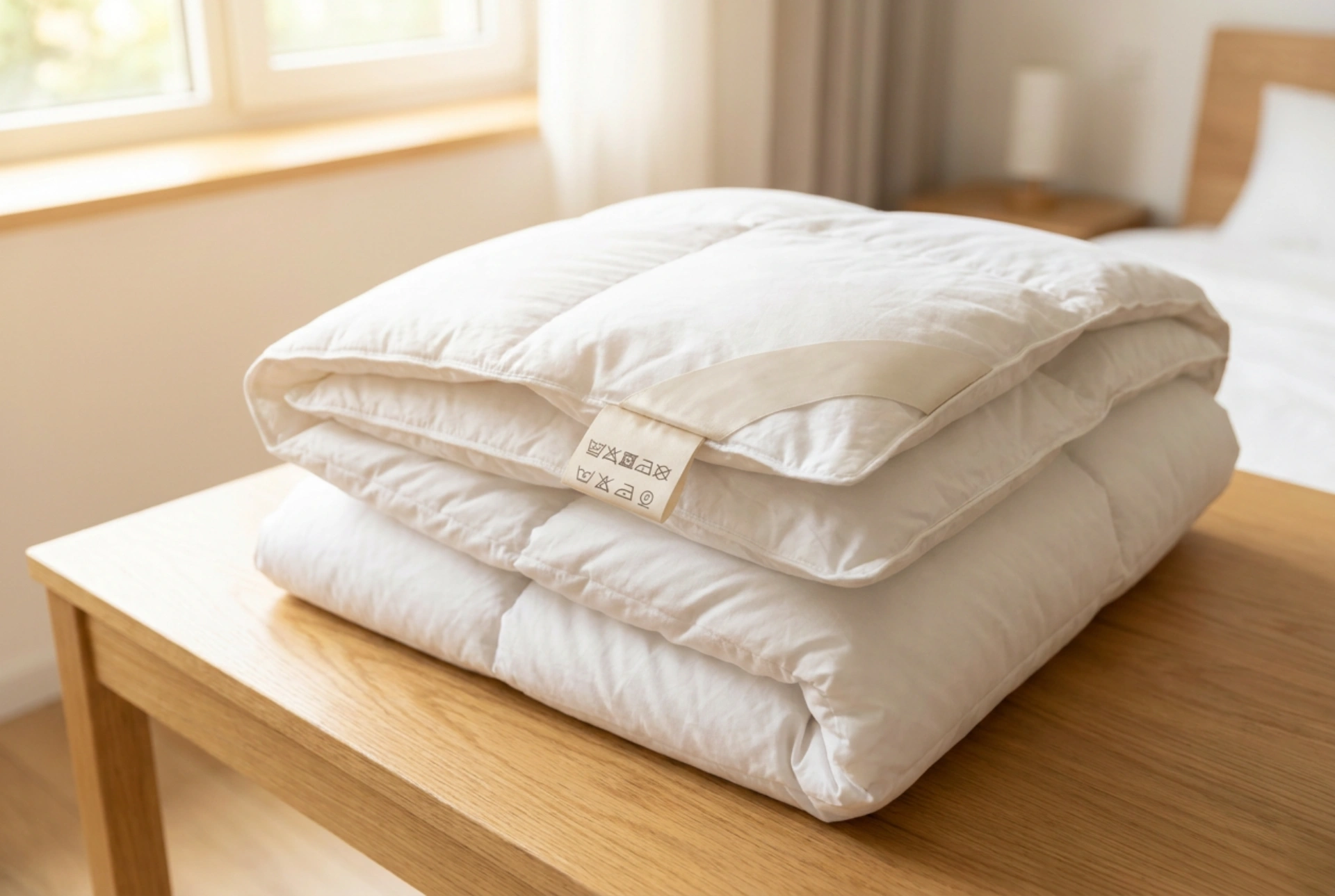
Before proceeding, always consult the care label symbols. A tub symbol with a number indicates the maximum safe water temperature. A bar beneath the tub signals the need for reduced mechanical action during the cycle.
Post-wash drying is just as critical as the wash temperature itself. Residual moisture in natural fillings can lead to the proliferation of mildew and fungi, such as Aspergillus. If tumble drying is permitted by the label, use a low heat setting with clean dryer balls to physically loft the filling, ensuring complete moisture evaporation without scorching the fibers.