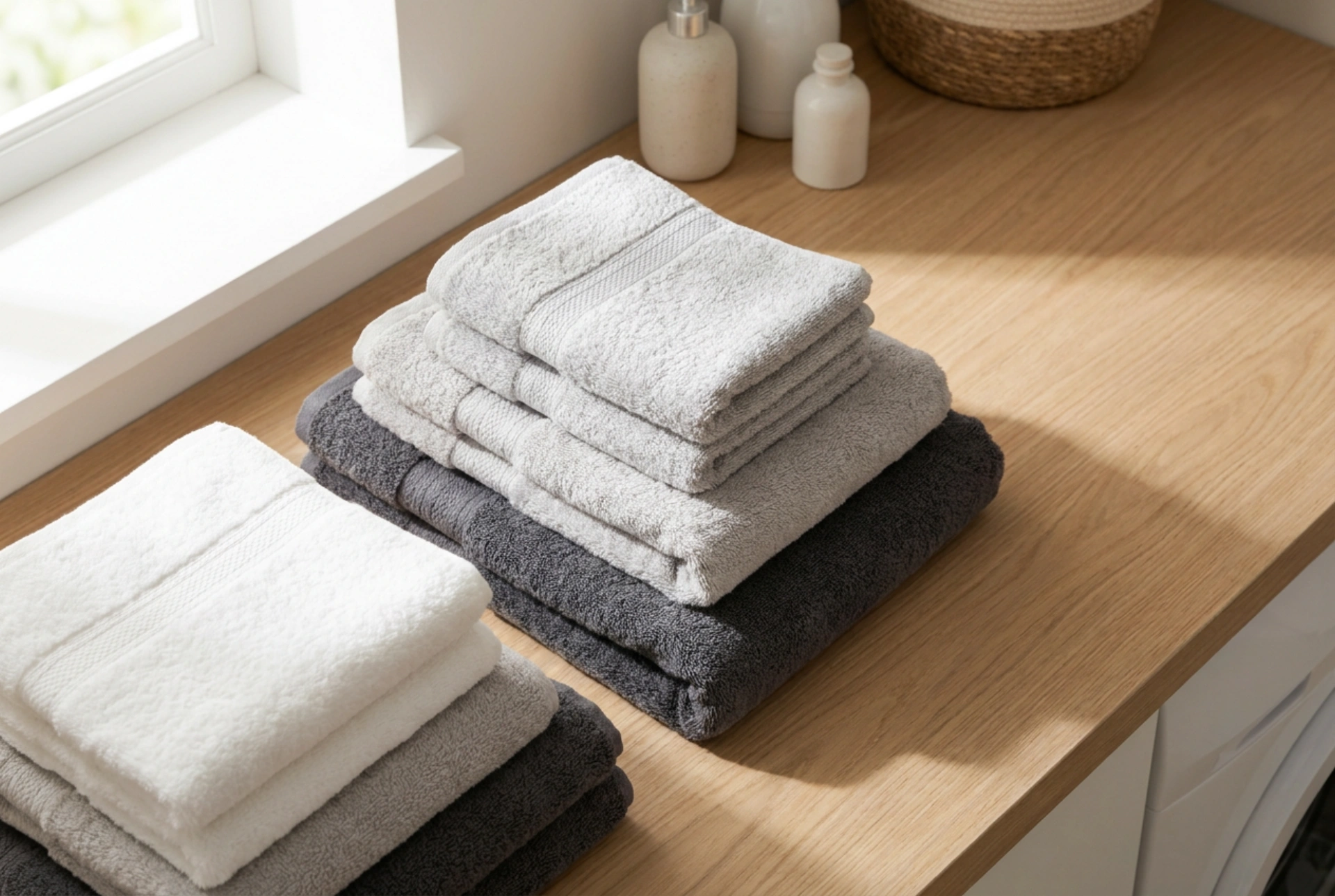


Selecting the optimal washing temperature for towels is a balancing act between thermal sanitisation and the physical preservation of cotton fibres. Understanding how water temperature interacts with fabric dyes, organic soils, and mineral deposits ensures your towels remain hygienic, soft, and vibrant over hundreds of wash cycles.
The Material Science of Cotton and Thermal Degradation
Most high-quality towels are woven from cotton, a natural polymer made of cellulose chains. These chains are held together by hydrogen bonds, which are highly receptive to water. When cotton is submerged, the water molecules penetrate the amorphous regions of the fibre, causing them to swell. While this swelling is necessary to release trapped organic matter, excessive heat can accelerate the degradation of these cellulose chains.
Washing towels at extremely high temperatures, such as 90°C, causes the physical structure of the cotton loops to weaken over time. The mechanical friction inside the washing drum, combined with thermal stress, leads to fibre shedding and a subsequent loss of absorbency. Therefore, unless dealing with extreme contamination, moderate temperatures are preferred to preserve the structural integrity of the weave.
White Towels and the Chemistry of Sanitisation
White towels do not contain synthetic dyes, making them resilient to higher wash temperatures. To achieve true hygiene and eliminate pathogens such as bacteria, fungi, and dust mites, a temperature of 60°C is the industry standard. At this temperature, the thermal energy is high enough to denature proteins in microbial cell walls, effectively sterilising the fabric.
Furthermore, 60°C is the activation threshold for oxygen-based bleaching agents (such as sodium percarbonate). When dissolved in warm water, sodium percarbonate releases hydrogen peroxide, which chemically oxidises organic stains and yellowing without damaging the base cellulose. However, using 90°C is rarely necessary; it should be reserved solely for cases of infectious illness, as the marginal sanitisation benefit does not outweigh the rapid structural wear of the cotton fibres.
Coloured Towels: Preventing Dye Bleeding and Fading
Coloured towels require a completely different thermal approach. The pigments in coloured cotton are bound to the fibres via reactive dyes. High temperatures provide the thermal energy required to break these chemical bonds, causing the dye to leach into the wash water and transfer to other garments.
To preserve the vibrancy of dark and bright towels, wash temperatures should be limited to 30°C or 40°C. Modern heavy-duty surfactants are engineered to perform efficiently at lower temperatures, utilising enzymes (like amylase, protease, and lipase) to break down organic proteins and fats without thermal assistance. When washing at lower temperatures, ensure you use a liquid detergent or a fully dissolved powder formulated for colours, as undissolved detergent particles can leave unsightly white residues on dark fabrics.
The Role of Hard Water and Mechanical Action
The temperature of your wash also dictates how minerals in hard water behave. High temperatures accelerate the precipitation of calcium and magnesium ions, leading to the formation of limescale. This chalky residue deposits directly onto the microscopic cotton loops, locking them in place and creating a stiff, scratchy texture.
To counteract this, avoid using commercial fabric softeners, which coat the cotton loops in a hydrophobic silicone layer, drastically reducing their absorbency. Instead, add a small amount of citric acid or distilled white vinegar to the fabric softener compartment. The weak acid dissolves mineral deposits, leaving the loops free to loft naturally. Additionally, ensure the washing machine drum is loaded to no more than three-quarters capacity. Cotton towels absorb vast amounts of water and need ample space to tumble, allowing the physical action of the water to flush away loosened soils and detergent residue.