

Selecting an ironing board for a high-output steam generator requires a focus on structural physics, moisture management, and material density to prevent wobbling and water pooling. Standard boards often collapse under the weight of a heavy reservoir or warp due to intense condensation.
Understanding Structural Stability and Weight Load
A steam generator station typically weighs between 4 to 6 kilograms when fully filled with water. This concentrated load demands a frame with wide-gauge steel tubing (at least 28 to 35 mm in diameter) and an asymmetrical leg geometry to lower the centre of gravity. The locking mechanism must feature mechanical notches or a heavy-duty steel teeth lever system rather than friction-based plastic clamps, ensuring the board cannot collapse under sudden downward pressure during pressing. Look for non-slip rubber feet that provide a high coefficient of friction to prevent lateral sliding on polished floors.
The Science of Steam Permeability and Condensation
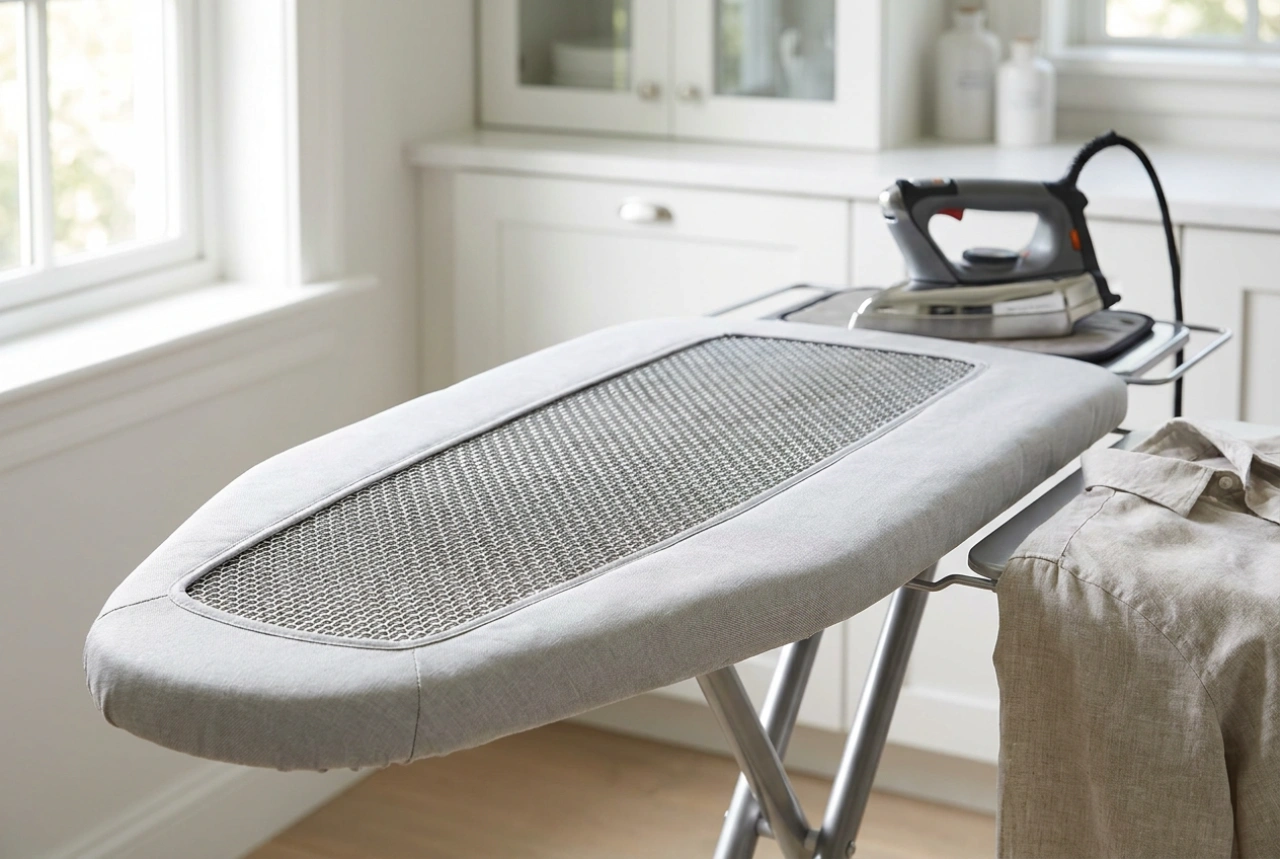
High-pressure steam generators release a high volume of moisture, often exceeding 120 grams per minute. If this steam cannot escape, it condenses back into liquid water upon contact with a cold board surface. This process of condensation quickly saturates the padding, leading to water dripping onto the floor and causing rust on the frame. To prevent this, the board platform must be constructed from an expanded metal mesh rather than solid wood or plastic. The open grid allows water vapour molecules to pass freely through the structure. Additionally, the steel mesh must undergo zinc galvanisation or electrostatic powder coating to prevent iron oxide formation when exposed to high humidity.
Padding Density and Thermal Insulation
The interaction between the hot iron soleplate, moisture, and the board surface is controlled by the cover layers. Standard polyurethane foam pads disintegrate rapidly under continuous high-temperature steam. Instead, a multi-layered cover system is required:
- Top Layer: 100% natural cotton woven tightly to withstand mechanical friction.
- Middle Layer: High-density needle-punched felt (at least 400g/m²) which absorbs transient moisture without collapsing or losing its loft.
- Base Layer: A heat-reflective metallic or aluminium membrane that bounces thermal energy back into the fabric, accelerating the drying process and reducing overall energy consumption.
Cradle Engineering and Ergonomics
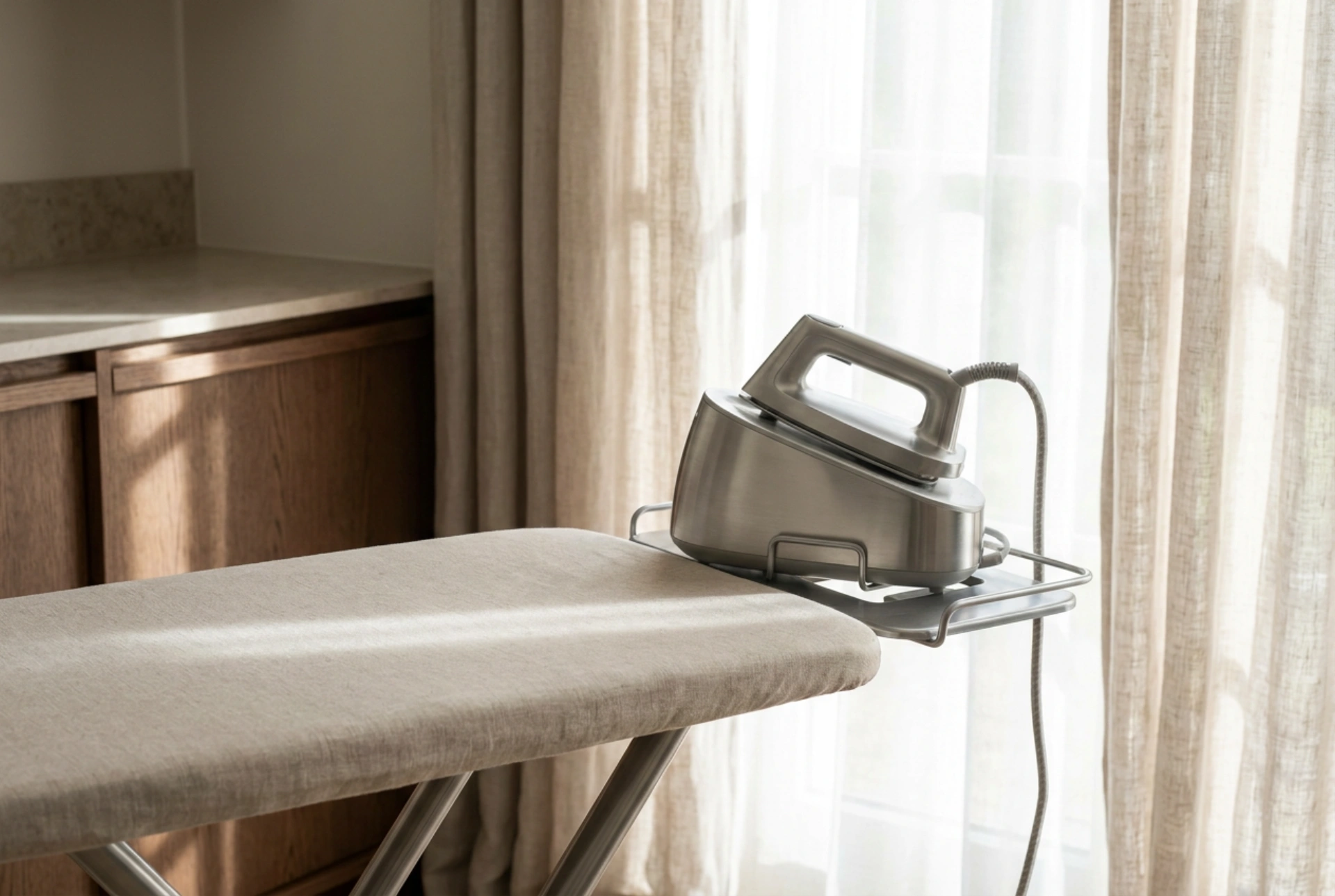
The resting platform must be specifically engineered to accommodate the footprint of a heavy boiler unit. Universal, pull-out wire rests are insufficient and present a severe tipping hazard. The cradle should be integrated directly into the main steel frame, featuring a recessed lip to secure the generator unit. Heat-resistant silicone strips on the cradle serve a dual purpose: they dampen the vibrations caused by the internal water pump and thermally isolate the boiler casing, preventing heat transfer that could degrade the structural integrity of the frame over time.
Final Selection Checklist
- Frame tubing: Minimum 30 mm diameter, powder-coated steel.
- Platform top: Expanded steel mesh with rust-resistant coating.
- Padding: Minimum 8 mm thick felt, avoiding cheap synthetic foam.
- Weight capacity: Rated for at least 15 kg of static load.
- Cradle size: Fully matching or exceeding the base dimensions of the steam generator.