

Optimising laundry space requires a balance between mechanical convenience and structural efficiency, particularly when integrating bulky tools like ironing boards. Selecting, mounting, and maintaining a folding ironing board relies on understanding structural stability, thermal physics, and moisture control to ensure long-term functionality without clutter.
The Mechanical Advantages of Wall-Mounted Folding Boards
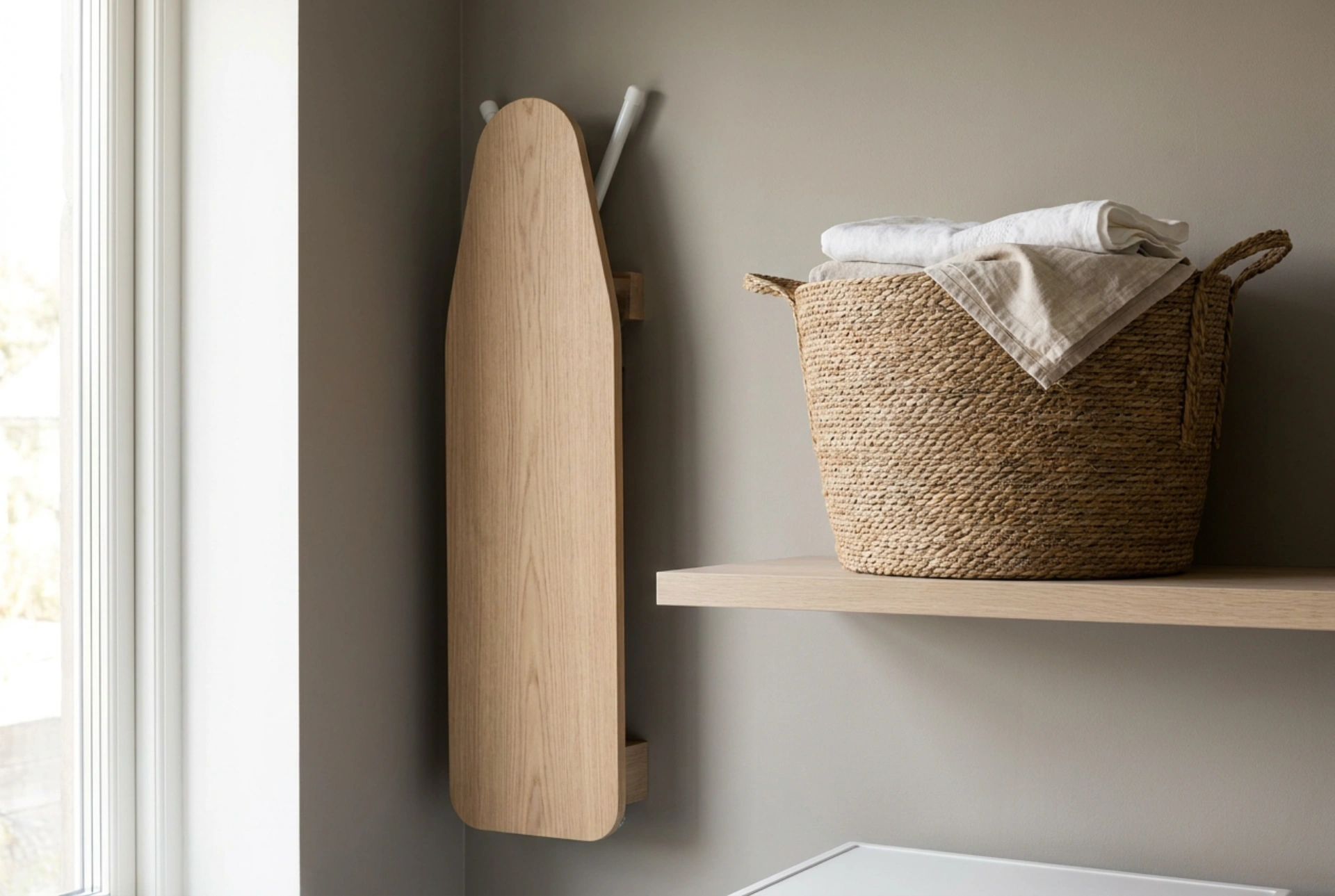
Traditional freestanding ironing boards often introduce unnecessary physical strain during setup and require a significant storage footprint. A wall-mounted folding board leverages fixed pivot hinges to distribute physical load directly into wall studs or solid masonry, reducing the kinetic effort required to deploy the workstation. When selecting a mounting location, identifying the structural support is critical: plasterboard requires heavy-duty hollow-wall anchors, while brick or concrete requires expanding nylon plugs. This secure anchoring prevents vertical sag and lateral wobble during the high-pressure strokes required for smoothing heavy fabrics like denim or linen.
Thermal Dynamics and Material Science of Board Covers
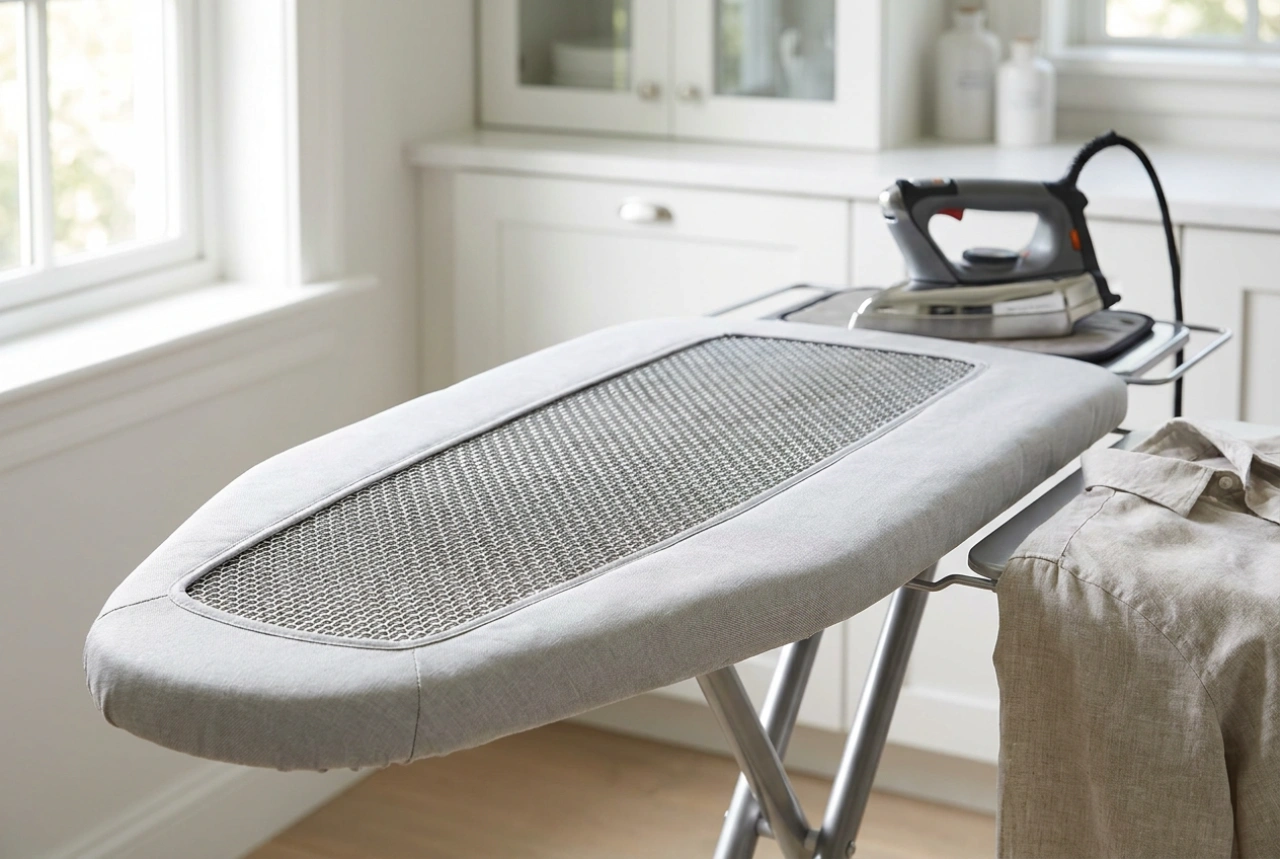
The efficiency of the ironing process is heavily dictated by how heat and moisture interact with the board surface. Standard ironing boards utilize a multi-layer system that must balance thermal reflection and vapour permeability:
- The Outer Textile Cover: Usually constructed from densely woven cotton, often treated with metallised particles. The metal coating reflects thermal energy back into the underside of the fabric, effectively ironing both sides of the garment simultaneously and reducing energy expenditure.
- The Underlay Padding: A thick layer of needle-punched polyester felt or high-density foam. Felt is superior for moisture absorption, drawing steam away from the garment to prevent condensation pooling, which can cause rust on the metal mesh frame.
- The Perforated Steel Base: Provides structural integrity while allowing excess steam to escape downwards, preventing fabric saturation and mildew development within the stored unit.
Moisture Management in Confined Storage
Because ironing relies on vaporising water to break intermolecular polymer chains in fabric fibres, significant moisture is introduced into the immediate environment. When a folding board is stored immediately after use, trapped steam can lead to musty odours and oxidisation of metal joints. To prevent this, always allow the board to cool and dry in an open position for at least fifteen minutes post-ironing. If storing inside a shallow cabinet or wardrobe recess, ensure the enclosure features passive ventilation slates or moisture-absorbing silica media to control relative humidity levels.
Ergonomics, Height Calibration, and Safety
An often overlooked aspect of folding installations is the ergonomic pivot height. The board should ideally sit at hip level—typically between 85 and 95 centimetres from the floor—to allow the operator's shoulder and elbow joint to work at a natural angle. For pull-out drawer models or rotating vertical wall units, ensure the clearance path is free of physical obstructions. The locking mechanism should utilize a counterbalanced spring or hydraulic damper, which prevents sudden drops and minimises wear on the mounting screws over time.
Preventative Maintenance and System Longevity
To maintain smooth mechanical operation, the pivot points and locking levers should be inspected biannually. Applying a dry PTFE (polytetrafluoroethylene) lubricant to the metal hinges prevents friction wear without attracting dust or lint, which wet oils tend to do. Periodically wash the cotton cover in lukewarm water without fabric softeners, as softeners deposit hydrophobic silicone coatings that impair steam permeability and heat distribution.