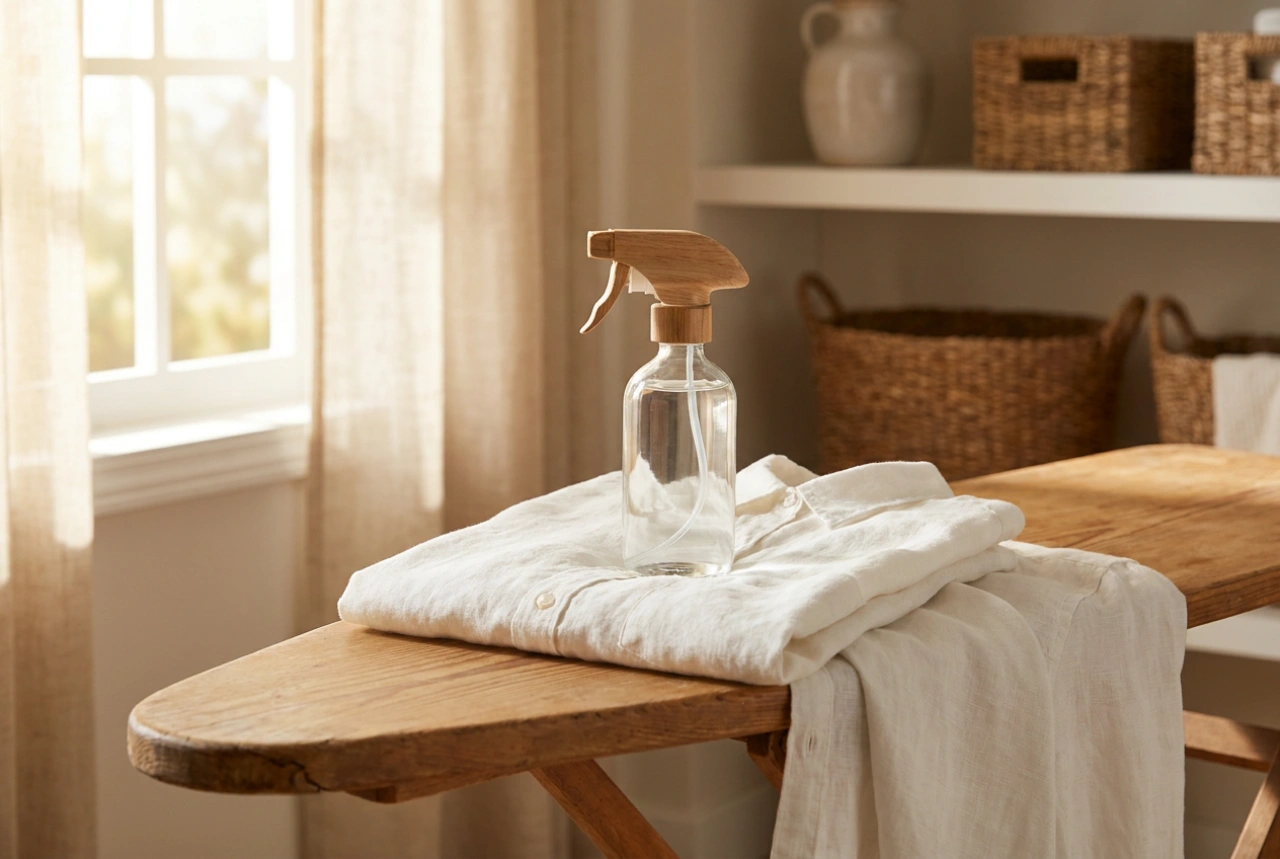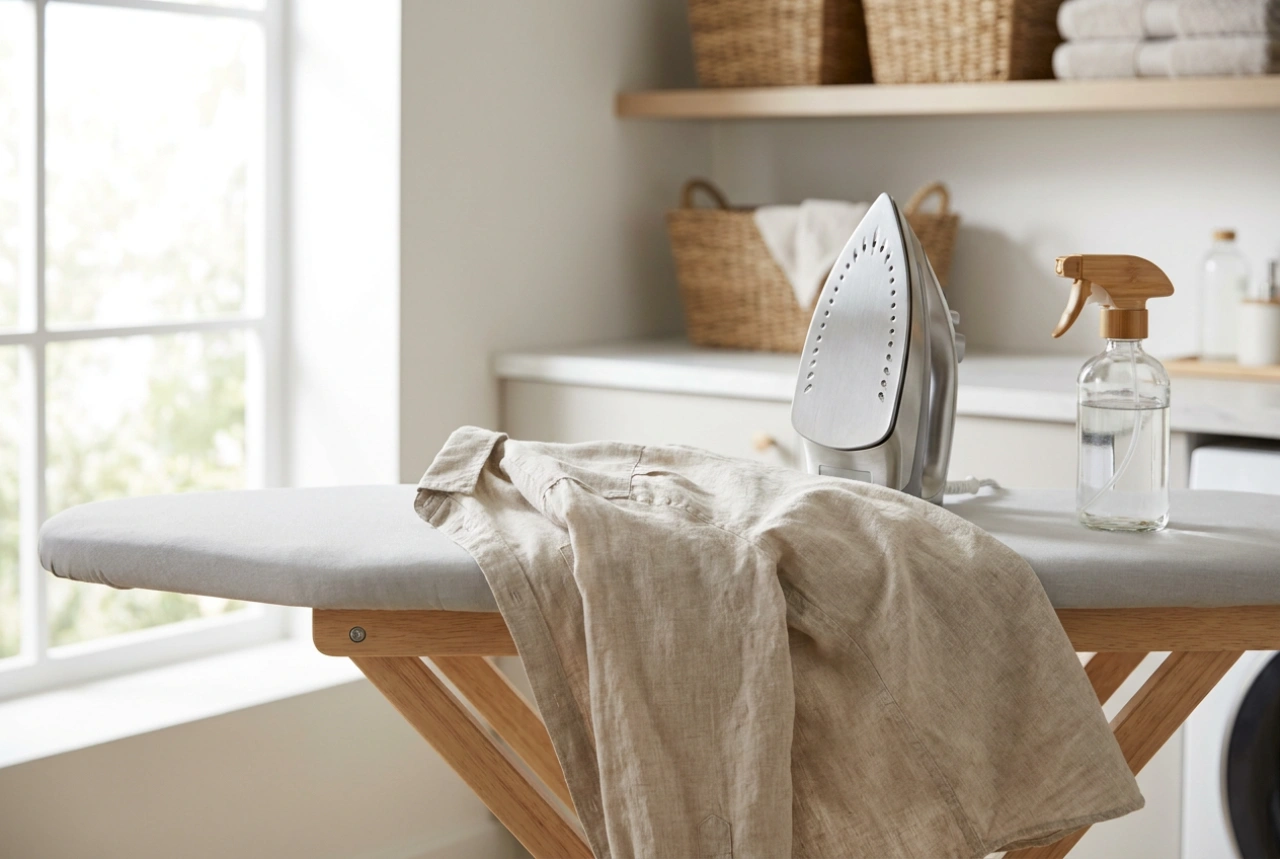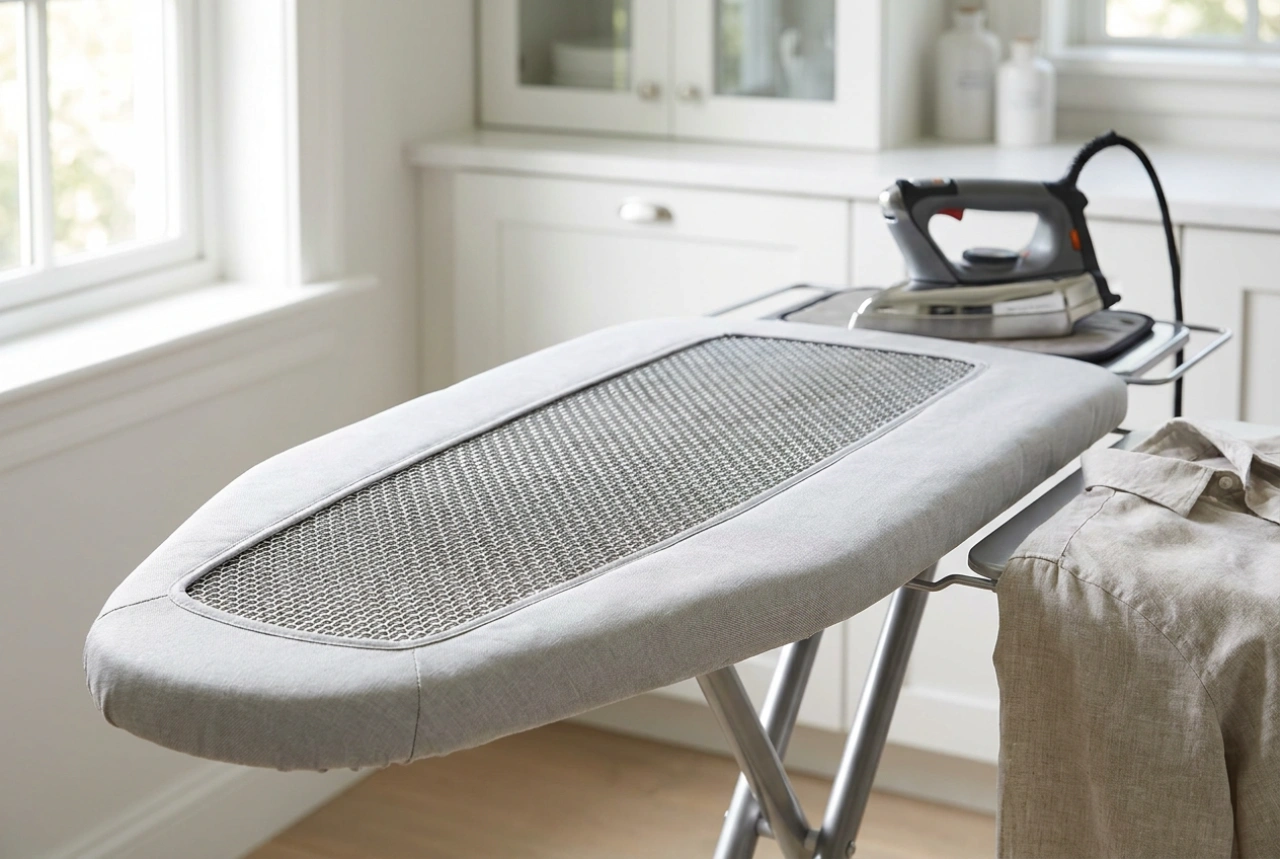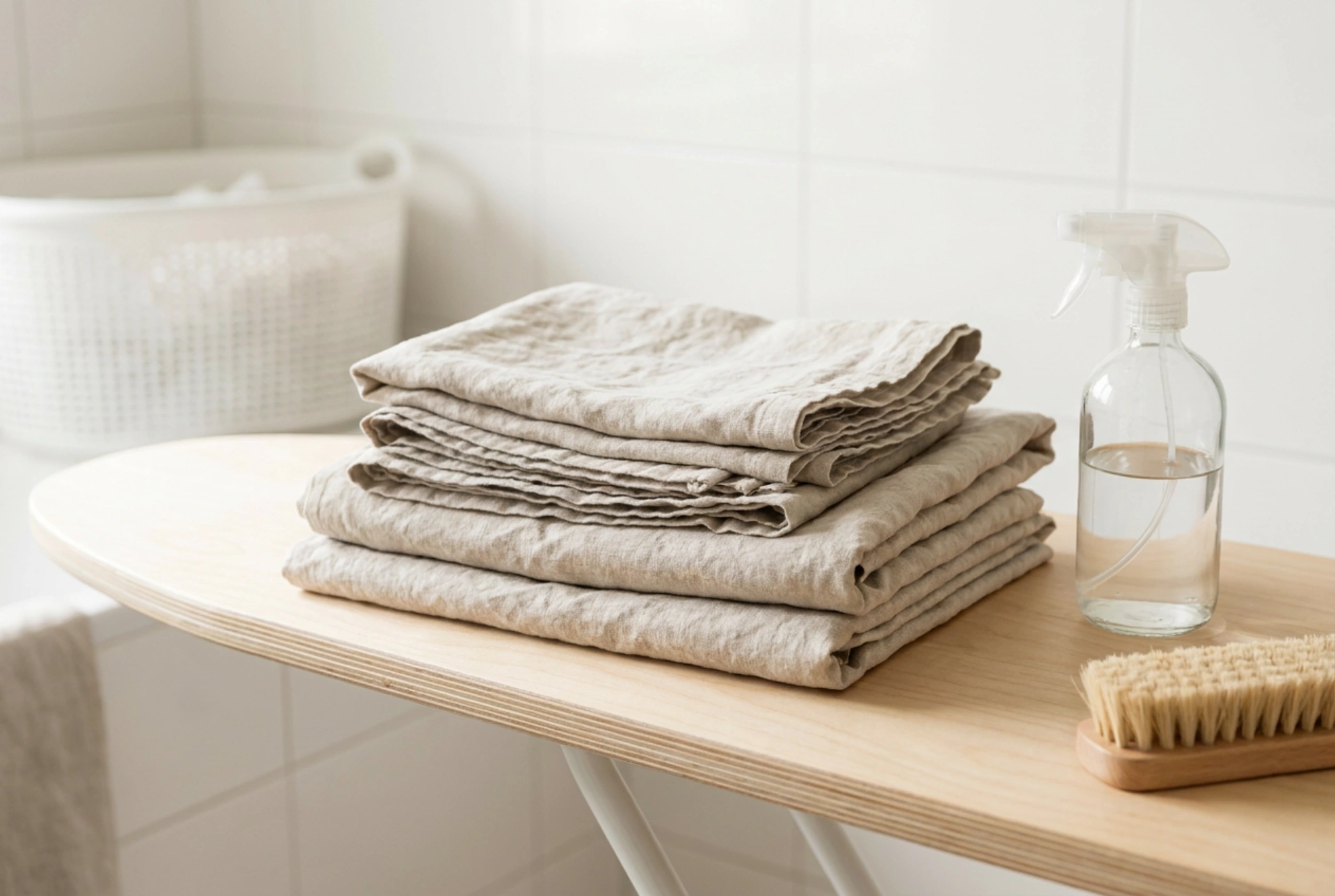


Wooden ironing boards provide an exceptionally stable and aesthetic surface, but the high-pressure steam from modern irons poses a serious threat to their structural integrity. Without proper protection, wood fibers absorb moisture, leading to warping, adhesive failure, and mold growth.
The Material Science of Wood and Water Vapor
Wood is a hygroscopic material, meaning it naturally absorbs and releases water vapor to equilibrate with its surrounding environment. When you use a steam iron, you are releasing hot, high-pressure water vapor directly onto the ironing surface. This vapor easily penetrates standard fabric covers and reaches the wooden core.
Once inside, the water molecules bind to the cellulose, hemicellulose, and lignin within the wood cell walls. This causes the wood fibers to swell. Because the top surface of the board receives more heat and moisture than the underside, uneven expansion occurs. This gradient of swelling forces the board to warp, cup, or bow. Furthermore, repetitive cycles of wetting and drying weaken the cellular bonds and can degrade any adhesives used to join the wooden segments together.
Constructing a Multi-Layer Moisture Barrier
To shield the wood from steam damage, you must establish a multi-layer barrier that manages heat, reflects moisture, and allows residual vapor to escape. The layers must be arranged in a specific sequence to optimize physical performance.
- The Heat-Reflective Layer: Directly above the wooden surface, place a specialized metallic or aluminised cotton pad. This layer reflects radiant heat back upward, which increases ironing efficiency while preventing the wood beneath from reaching extreme temperatures. It also acts as the primary physical barrier to descending water droplets.
- The Absorption and Cushioning Layer: Above the reflective layer, use a thick pad made of dense natural wool felt or heavy needle-punched polyester. This layer absorbs the immediate dampness of the steam, preventing it from pooling, and provides the necessary resilience for smooth ironing.
- The Breathable Top Cover: The outermost layer should be a high-density, unbleached cotton or linen cover. This material must be highly permeable to allow steam to pass through during the initial press, facilitating efficient wrinkle removal without trapping water within the upper layers.
Ironing Techniques to Reduce Condensation
Adjusting your ironing habits can significantly lower the volume of moisture that reaches the wooden board. The goal is to maximize thermodynamic efficiency while keeping the surface dry.
Always alternate between steam passes and dry passes. Begin with a short burst of steam to relax the textile fibers, then follow immediately with one or two dry strokes of the iron. This dry heat evaporates the residual moisture trapped in both the garment and the ironing board cover before it can migrate deeper into the wooden structure. Additionally, avoid continuous steam settings; manual steam triggers allow for precise application only when necessary.
Temperature control is equally critical. Matching the iron’s temperature to the fabric type ensures that the steam remains in a gaseous state long enough to escape into the room air rather than condensing instantly into liquid water on a cool board surface.
Post-Ironing Evaporation and Storage
The process of protecting your wooden ironing board does not end when the iron is switched off. Residual heat and moisture trapped within the layers must be allowed to dissipate completely before storage.
Never fold and store a damp wooden ironing board in a closed closet. Doing so traps moisture in a dark, stagnant environment, which is highly conducive to fungal growth and wood rot. Instead, leave the board open in a well-ventilated room for at least thirty minutes after you finish. If possible, position it near a window or in a gentle draft. Remove the top cover periodically to inspect the wooden base for any damp spots, allowing the wood to air out completely. This simple maintenance routine ensures the wood remains flat and structurally sound for decades.