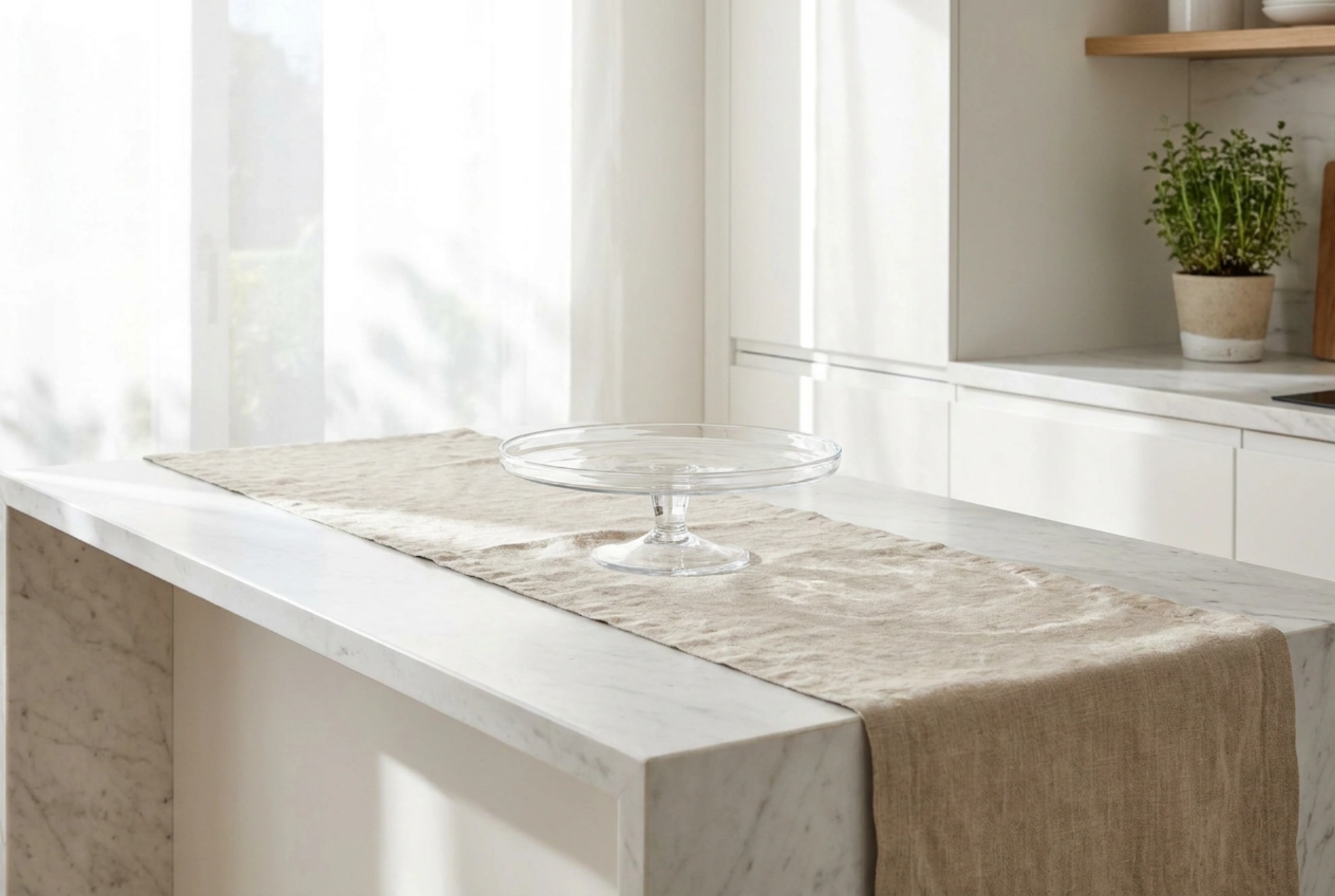


Integrating a modern cake stand into your kitchen or dining area requires more than mere aesthetic placement; it demands an understanding of structural stability, thermal dynamics, and material science. Proper spatial organization ensures your serving ware remains secure while preserving the delicate texture of your baked goods.
Structural Physics and Load Distribution
A cake stand, especially one made of heavy glass, marble, or ceramic, alters the center of gravity of whatever surface it occupies. When organizing space on a kitchen island or dining table, the foundation must be perfectly level. Even a minor incline of one to two degrees introduces lateral shear stress, which can cause taller cakes to slide or tilt over time. If you are placing a heavy marble pedestal on a wooden table, the load must be distributed directly over the table's primary support legs rather than on cantilevered edges where micro-flexing occurs.
To prevent slipping and protect high-end surfaces, use a natural linen or heavy cotton runner. These materials provide a high coefficient of friction, securing the base of the stand in place. Additionally, the fibers act as a microscopic shock absorber, dampening the vibrations generated by daily kitchen activity, such as footsteps or the operation of heavy appliances like blenders and dishwashers.
Thermal Dynamics and Sunlight Mitigation
The placement of your cake stand must account for local thermal environments. Glass and acrylic domes can act as magnifying lenses when exposed to direct sunlight. This refraction focuses light waves, creating concentrated heat zones beneath the dome. This rapid temperature spike accelerates the melting of fats (such as buttercreams) and promotes condensation, which compromises the structural integrity of pastry crusts and starches.
Keep the stand away from active heat sources, including ovens, refrigerators (which vent warm air from their compressors), and direct solar paths. Ideally, position the stand in a shaded, well-ventilated zone where the ambient temperature remains constant between 18°C and 21°C. If your kitchen utilizes radiant floor heating, avoid placing the stand on low-standing sideboards, as rising heat can warm the pedestal from the bottom up, melting gelatin-based fillings or chocolate glazes.
Ergonomic Clearance and Serving Angles
Slicing a cake on an elevated platform introduces distinct mechanical challenges. Unlike cutting on a standard flat cutting board, a cake stand elevates the working plane by 10 to 20 centimeters. This elevation changes the angle of your wrist and forearm, reducing your downward mechanical advantage. To compensate for this, you must organize the surrounding space to allow for free physical movement.
Maintain a clear radius of at least 30 centimeters around the cake stand. This boundary prevents accidental collisions with glassware or cutlery while slicing. When applying downward force with a cake knife, the stand experiences a tipping moment. To counteract this, always stabilize the base of the stand with one hand (using a clean cloth) while cutting with the other. Ensure the stand is positioned at a height between your waist and elbow level to maintain optimal control and prevent uneven cuts.
Material Care and Hygienic Organization
Modern cake stands are crafted from diverse materials, each requiring specific environmental conditions. Glass and crystal are non-porous and highly hygienic but are susceptible to thermal shock if washed or used at extreme temperature differentials. Marble pedestals, being highly porous calcium carbonate, must never come into contact with acidic foods (like citrus slices or berry glazes) directly; always utilize a barrier of parchment paper or a glass insert to prevent chemical etching of the stone.
When storing the stand when not in use, allocate dedicated vertical cabinet space. Stacking other heavy items on top of a delicate glass dome or pedestal can cause micro-fractures in the material, which may lead to sudden structural failure under the weight of a heavy cake. Store the dome and the base side-by-side on non-slip silicone mats to prevent chipping.