

Storage boxes do more than simply hide household clutter; they actively manage the microclimates, structural integrity, and acoustic properties of your living spaces. Selecting the right combination of materials and organizing techniques preserves your belongings from degradation while establishing a calm, visually balanced environment.
The Material Science of Storage: Fabric vs. Rigid Containers
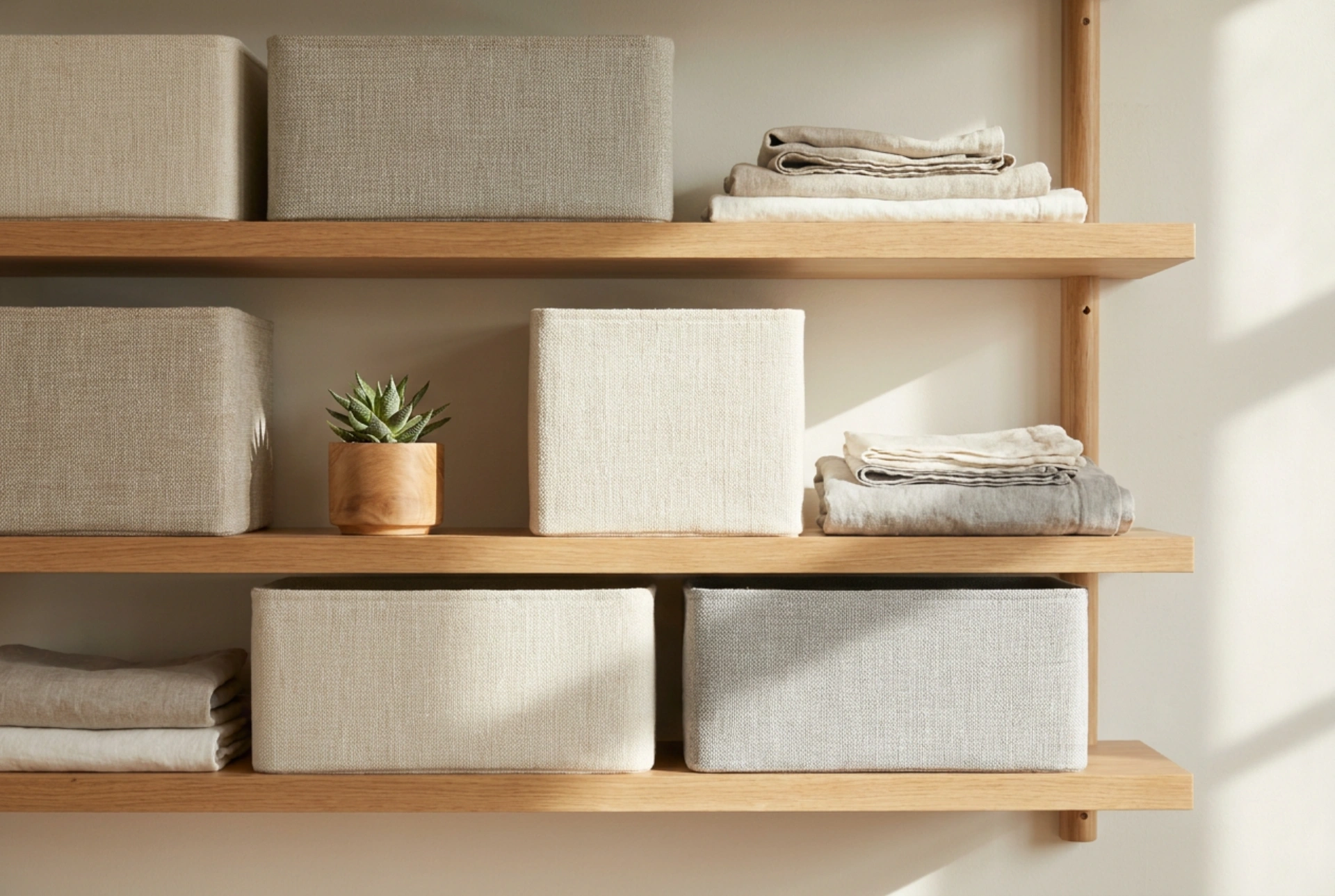
Every material used in storage boxes interacts differently with the surrounding environment. Understanding these physical properties is essential for choosing the right container for your specific items. Textured fabric bins, often constructed from cotton, linen, or synthetic polymer blends, offer excellent breathability. This permeability prevents the accumulation of stagnant air and trapped moisture, making them ideal for storing natural fibers like wool, silk, and cotton. Without adequate air circulation, organic fibers can succumb to mildew and fiber rot over time.
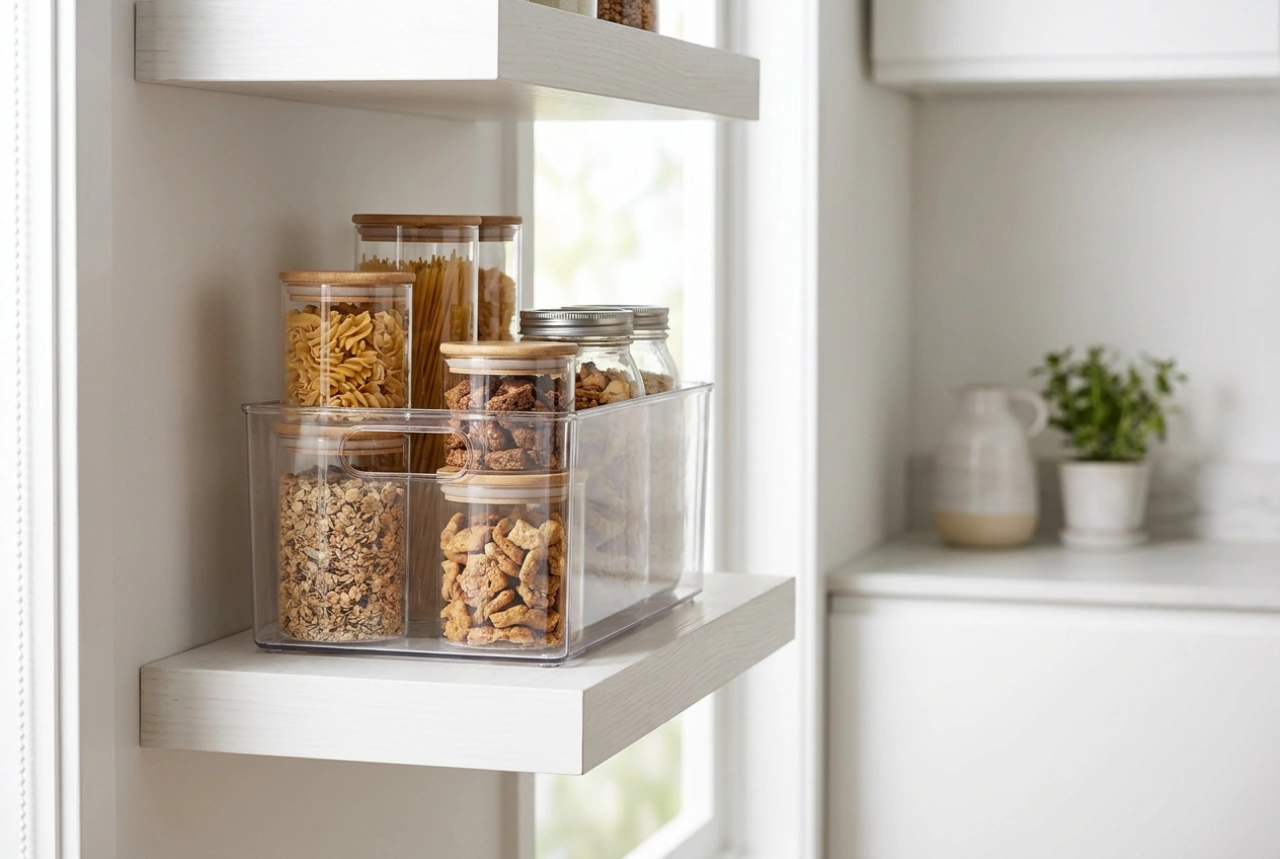
In contrast, high-density cardboard boxes provide structural rigidity but are sensitive to relative humidity. Standard cardboard contains lignin, an organic polymer that releases acidic compounds as it breaks down, causing paper and photographs to yellow and deteriorate. For archival storage, acid-free cardboard is required. Non-porous materials like sealed plastic protect against external water ingress but trap internal moisture. If items are packed even slightly damp, a closed plastic environment creates a high-humidity greenhouse effect, accelerating mold growth.
Visual Weight and Physical Stability in Shelving Systems
Arranging storage units requires an understanding of both physics and visual ergonomics. From a structural standpoint, heavier items must always occupy the lowest shelves. This lowers the center of gravity of the entire shelving unit, reducing the risk of tipping. Heavily textured or darker-toned boxes should also be placed at the bottom, as they carry more visual weight. Placing lighter, neutral-colored containers at eye level and above creates an open, airy atmosphere that makes small rooms feel more spacious.
Furthermore, air circulation should not be blocked. When sliding fabric boxes onto shelves, leave at least a two-centimeter gap at the back and sides. This space allows natural convection currents to flow, preventing micro-pockets of cold, stagnant air from forming against exterior walls, which is a primary cause of wall condensation and localized mold spores.
Preserving Textiles: Folding, Compression, and UV Protection
How items are placed inside decorative boxes dictates their lifespan. Folding fabrics creates sharp creases that, under the weight of gravity, compress and weaken textile fibers over time. For long-term preservation, rolling textiles or using soft, rounded folds is superior because it distributes tension evenly across the weave. This is especially true for delicate materials like cashmere or heavy linen.
Light exposure is another critical factor. While natural sunlight creates a welcoming aesthetic, ultraviolet (UV) radiation breaks down chemical bonds in fabric dyes and natural fibers, leading to fading and brittleness. Opaque fabric bins in neutral tones act as highly effective UV shields, protecting stored items from indirect sunlight while keeping them easily accessible on open shelving units.
Managing Microclimates and Acoustic Dampening
The interior of a storage box can develop its own microclimate. To control humidity, especially in seasonal storage, incorporate passive moisture regulators. Pure silica gel packets absorb excess moisture, maintaining a stable relative humidity inside the box. For a natural alternative, dried lavender or cedar blocks can be used; these not only absorb minor moisture but also release natural volatile organic compounds that repel fabric-damaging pests like silverfish and moths without the need for harsh chemicals.
Beyond material preservation, a room filled with open fabric storage boxes experiences significant acoustic benefits. Hard surfaces like plasterboard, wood, and glass reflect sound waves, creating echoes and high ambient noise levels. Soft, textured fabric bins act as acoustic dampeners. The porous surfaces of woven cotton or felt absorb sound waves rather than reflecting them, contributing to a quieter, more peaceful home environment.