

Mineral deposits and scorched synthetic fibers on a steam iron soleplate reduce heat transfer, clog steam vents, and risk ruining delicate garments. Restoring your appliance to optimal thermal and mechanical performance requires a targeted chemical and physical approach tailored to the materials of your iron.
Understanding and Dissolving Internal Limescale
When tap water is heated inside the steam chamber, dissolved calcium and magnesium hydrogencarbonates undergo thermal decomposition. This reaction precipitates insoluble calcium carbonate (limescale) and releases carbon dioxide. Over time, these mineral deposits coat the heating elements and clog the narrow steam passages, reducing heat efficiency and causing spitting.
To safely dissolve these alkaline deposits without corroding the aluminum or stainless steel alloy steam chamber, a mild organic acid is required. Citric acid is highly effective for this process. Prepare a descaling solution by dissolving two teaspoons of pure citric acid powder in 250 milliliters of warm distilled water. Fill the water reservoir with this solution, plug in the iron, and set it to the maximum steam temperature.
Once heated, hold the iron horizontally over an appropriate heat-resistant basin and press the steam boost button repeatedly. The acid reacts with the calcium carbonate, converting it into highly soluble calcium citrate and carbon dioxide gas, which forces the loosened scale out through the vents. Once the reservoir is empty, repeat the entire cycle with pure distilled water to thoroughly flush any residual acid and dissolved minerals from the internal components.
Chemical Dissolution of Scorched Fabric Residues
Burn marks on a soleplate usually consist of melted and carbonized synthetic polymers, such as polyester or nylon, which have bonded to the metal or ceramic coating. Standard cleaning agents fail to break down these high-molecular-weight polymers, but physical scraping with metal tools will scratch the delicate surface of the soleplate, permanently ruining its glide.
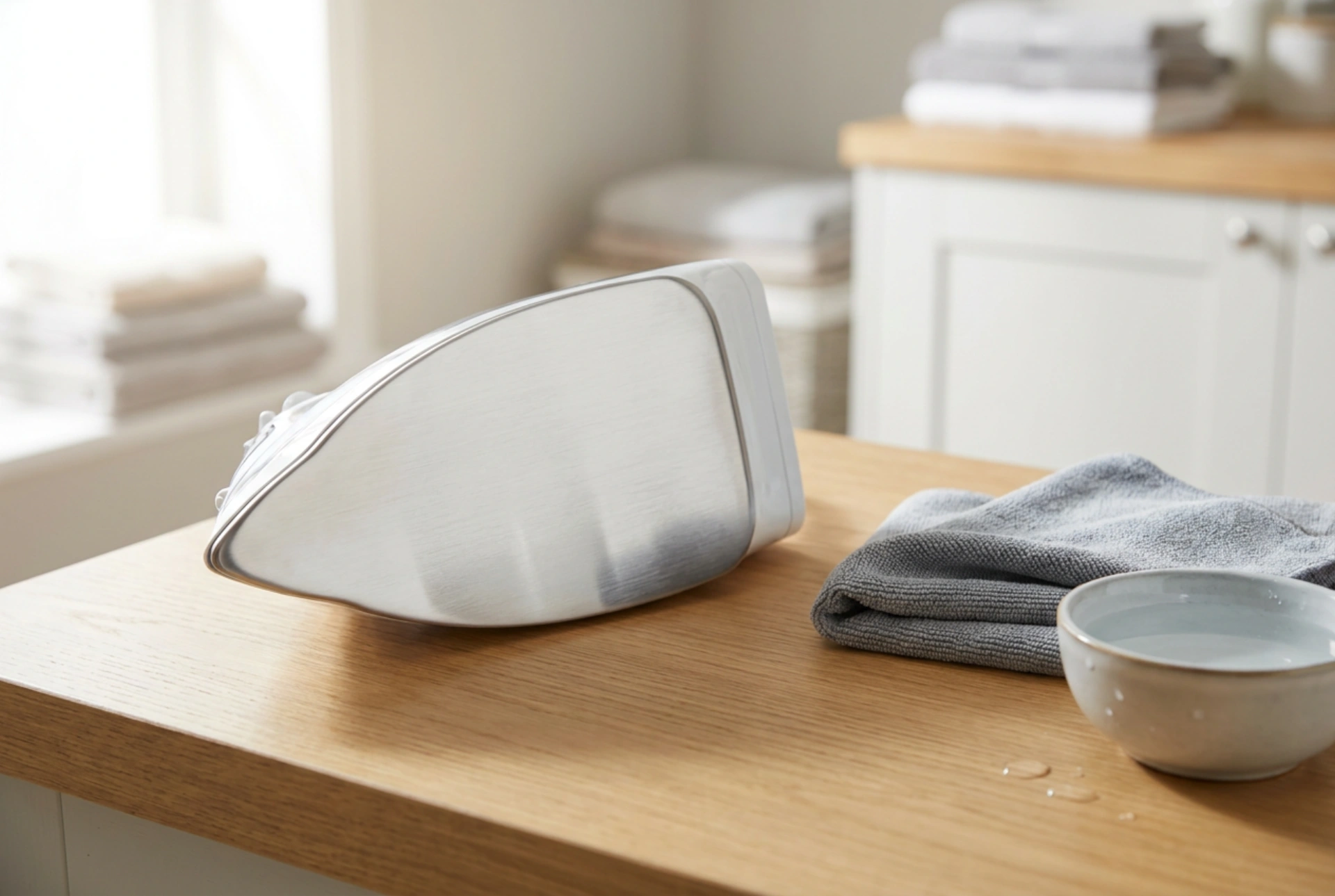
The safest removal method combines mild thermal softening with a low-hardness physical abrasive. Heat the iron slightly to its lowest setting (around 60 to 70 degrees Celsius) to soften the polymer chains. Unplug the device to eliminate electrical hazards. Prepare a thick paste using sodium bicarbonate (baking soda) and a small amount of water. Sodium bicarbonate has a Mohs hardness rating of approximately 2.5, which is significantly softer than stainless steel, chrome plating, or anodized aluminum, ensuring it will not scratch the soleplate.
Apply the paste to a soft microfiber cloth and gently rub the warm soleplate in circular motions. The mild abrasive physical action mechanically lifts the softened plastic residues, while the alkaline nature of the baking soda helps break down organic deposits. Wipe the soleplate clean with a damp, cool cloth to remove all paste residues before they dry.
Unclogging Blocked Steam Nozzles
Sometimes, loosened mineral fragments become physically lodged in the exit nozzles of the soleplate, obstructing the steam flow. To clear these mechanical blockages, use a wooden toothpick or a cotton swab saturated with the citric acid solution. Avoid using metal needles, paperclips, or wire brushes, as these can easily scratch the protective coating of the soleplate or damage the precision-engineered interior of the steam nozzles, leading to uneven steam distribution or water dripping.
Gently insert the wooden tool into each nozzle to break apart the calcified crust. Once cleared, perform a final steam flush to blow out any remaining particulate matter from the internal channels.
Preventing Future Buildup and Fiber Melting
- Optimize Water Quality: Always use demineralized or distilled water to fill your iron. This eliminates the mineral ions responsible for scale formation, keeping the steam chamber pristine.
- Respect Textile Melting Points: Always adjust the iron temperature to match the specific fiber structure of the garment. Iron synthetics like nylon and polyester on low heat settings to prevent polymer melting and subsequent bonding to the soleplate.
- Purge Post-Ironing: Empty the water reservoir after every use. Residual water left in a cooling iron leads to slow mineral precipitation and encourages bacterial biofilm growth.