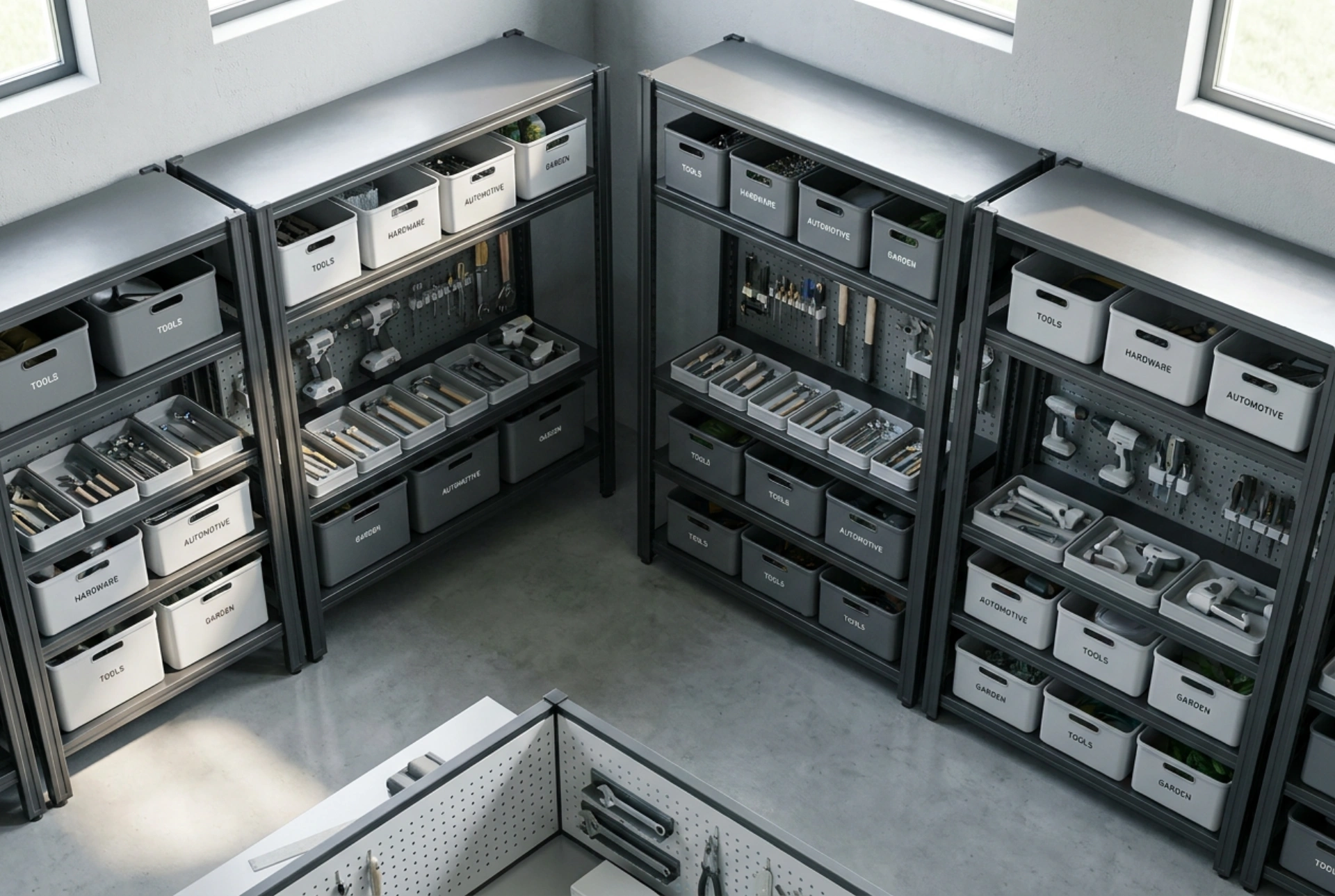


Planning garage storage using heavy-duty metal shelving requires a strategic understanding of spatial logistics, ergonomics, and structural physics. By categorising your garage into dedicated activity zones, you can streamline your workflow, prevent accidents, and protect your tools from moisture-induced degradation.
The Physics of Load Distribution and Material Selection
When setting up metal shelving, the primary structural consideration is the centre of gravity. Placing heavy objects, such as spare tyres, hydraulic jacks, or dense toolboxes, on upper shelves raises the system’s centre of gravity, significantly increasing the risk of structural failure or tipping. Always allocate the bottommost shelves for your heaviest items to anchor the unit securely to the floor. Additionally, ensure the shelving units are physically anchored to the masonry wall using heavy-duty expansion anchors to counteract lateral forces.
From a material science perspective, garages are prone to high humidity and temperature fluctuations, which accelerate oxidation. Powder-coated steel offers excellent resistance against mechanical impacts and chemical spills, whereas galvanised steel provides sacrificial zinc protection, making it ideal for damp or unheated environments. To prevent galvanic corrosion, avoid direct contact between dissimilar metals on the shelves; use non-conductive plastic or composite liners to isolate steel shelf surfaces from copper or aluminium tools.
Mapping the Garage into Ergonomic Zones
An efficient workspace relies on minimising wasted movement. Dividing your metal shelving into three vertical zones based on ergonomics will optimise your physical workflow.
- The Primary Zone (Waist to Shoulder Height): This is your high-frequency access area. Store tools and equipment you use during almost every project here, such as hand tools, frequently used fasteners, and safety gear. Keeping these items within this ergonomic window minimises spinal strain from bending or reaching.
- The Secondary Zone (Below Waist Height): This area requires bending but is highly stable. Use it for mid-weight items, including portable power tools in their cases, cleaning buckets, and specialised automotive fluids.
- The Tertiary Zone (Above Shoulder Height): This zone requires reaching or a step stool. Reserve it exclusively for lightweight, seasonal, or rarely used items, such as camping gear, holiday decorations, or spare plastic storage tubs. Never store heavy fluids or bulky tools here, as lifting them down poses a severe drop hazard.
Establishing Horizontal Workflows and Safety Clearance
Your shelving layout must complement the physical movement of vehicles and people. Position your shelving units to respect the dynamic clearances required in a functional garage. Standard vehicle doors require at least 90 centimetres of unobstructed swing space to allow comfortable entry and exit without risking impact against rigid steel shelves.
Design a logical workflow from your workshop bench outward. Tools should flow from storage to the workspace in a sequential manner. For example, place your primary tool shelf directly adjacent to the workbench, while dedicating the shelving furthest from the work area to long-term storage or waste sorting. This reduces foot traffic and keeps the immediate working zone clear of trip hazards.
Preventing Environmental Degradation and Moisture Build-up
Concrete walls constantly absorb and release moisture, a process known as capillary action. If metal shelving is pushed flush against a concrete wall, moisture can become trapped in the microscopic gap, creating a microclimate that accelerates rust formation on both the shelving and your stored steel tools. Always maintain a clearance gap of at least 5 centimetres between the shelving frame and the wall to facilitate continuous air convection.
To protect delicate items from dust and ambient humidity, store them in airtight, semi-transparent polymer bins rather than cardboard boxes. Cardboard absorbs atmospheric moisture, creating a damp environment that encourages mould growth and rusts metal components stored inside.