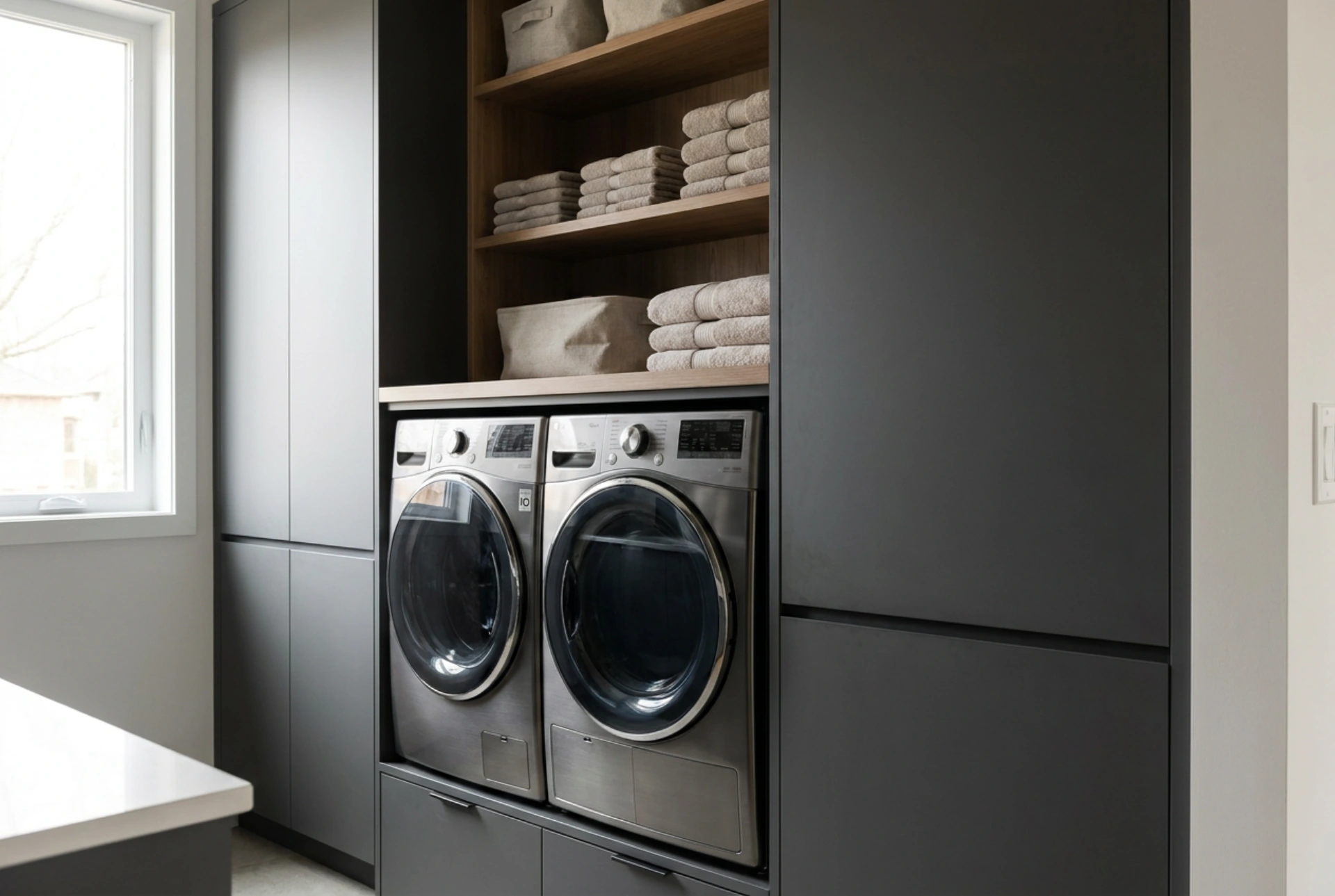


Integrating laundry appliances into bespoke cabinetry creates a seamless aesthetic, but without careful planning, routine maintenance can become a highly destructive process. Designing with serviceability in mind ensures you can access hoses, filters, and electrical connections instantly without dismantling your joinery.
The Physics of Appliance Movement and Vibration
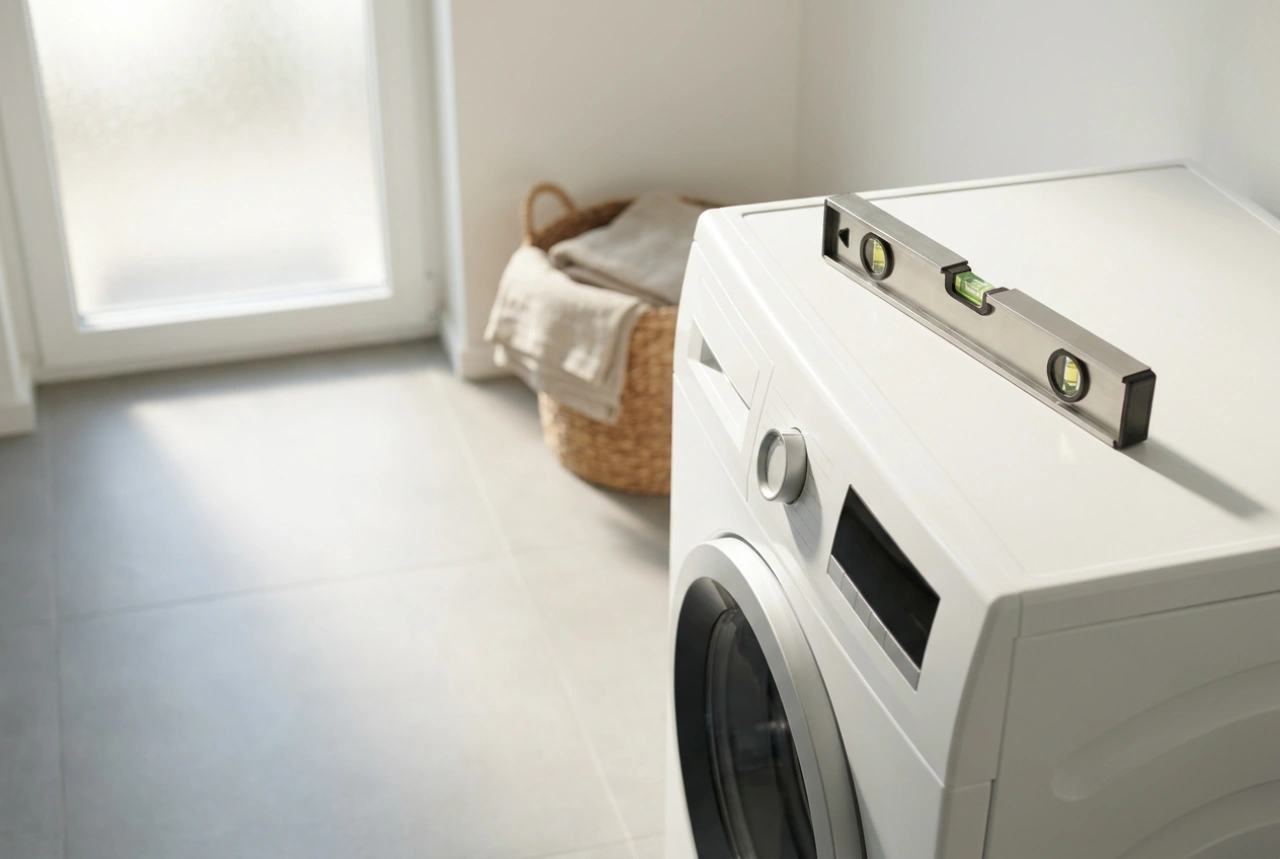
Washing machines and tumble dryers are dynamic appliances. During the spin cycle, a washing machine subjected to unbalanced loads generates significant kinetic energy. If the appliance is fitted too tightly within a cabinet, this energy transfers directly to the wooden carcass, leading to joint fatigue, structural damage, and excessive noise. To mitigate this, a minimum clearance of 20 millimetres on each side and 50 millimetres at the top is essential. This gap prevents physical contact during high-speed spinning and allows for the natural oscillation of the appliance drum. Furthermore, the floor beneath the appliances must be perfectly level and reinforced; any structural flex will amplify vibrations and cause the machines to 'walk', potentially trapping them against the cabinet walls.
Accessing Utility Connections Without Demolition
Placing water inlets, waste drainage pipes, and electrical sockets directly behind a built-in washer or dryer is a critical design flaw. If a hose bursts or an electrical fault occurs, you cannot reach the shut-off valves or plugs without pulling out a heavy, water-logged machine. The optimal solution is to house all utility connections in an adjacent cupboard. By drilling neat feed-through holes in the dividing carcass wall, you can route the inlet hoses, drain pipe, and power cables sideways. This configuration allows you to isolate the water supply or cut the power instantly in an emergency, while also keeping the depth of the appliance niche to a minimum, as no extra space is consumed by bulky plugs and brass valves behind the units.
Designing Removable Plinths and Service Hatches
Every washing machine features a debris filter located at the bottom front of the unit. This filter requires clearing every few months to prevent drainage failures and foul odours. If your cabinetry features a continuous, fixed kickplate or plinth, accessing this filter becomes impossible. Cabinetry must be designed with a split, magnetic, or clip-on plinth section directly beneath the appliances. This allows for rapid removal without tools. Additionally, because draining the filter inevitably releases a small amount of residual water, the floor protection beneath the machine should feature a shallow, water-resistant tray or a slight forward slope to guide water out onto the tiled floor rather than letting it pool and rot the cabinet base.
Airflow and Heat Dissipation Requirements
Condenser and heat pump dryers extract moisture from clothing and release warm air into their surroundings. In a closed cabinet, this heat accumulates rapidly, forcing the compressor to work harder, increasing cycle times, and drastically shortening the lifespan of the appliance. A built-in dryer requires constant air circulation. This is achieved by integrating ventilation grilles into the bottom plinth and the top of the cabinet column, creating a natural chimney effect. Cold air is drawn in from the floor level, passes around the appliance, and escapes through the top. For fully integrated setups with cabinet doors, these doors must feature open slatted designs or be left open during operation to prevent condensation from warping the timber panels.
Key Dimensions Checklist for Serviceable Cabinets
- Lateral Clearance: Always leave at least 20 mm on either side of the chassis to absorb mechanical vibration.
- Depth Allowance: Allow an extra 100 mm of depth beyond the appliance chassis dimension to accommodate hose bends without pinching.
- Service Niche: Dedicate an adjacent 300 mm wide cupboard for water meters, stopcocks, and electrical sockets.
- Removable Plinth: Use magnetic catches for the lower decorative panel to ensure instant access to the pump filter.