

Integrating a foldable ironing board directly into your wardrobe optimizes spatial efficiency while streamlining your laundry workflow through physics-based design and ergonomic placement.
The Mechanics of Space-Saving Board Systems
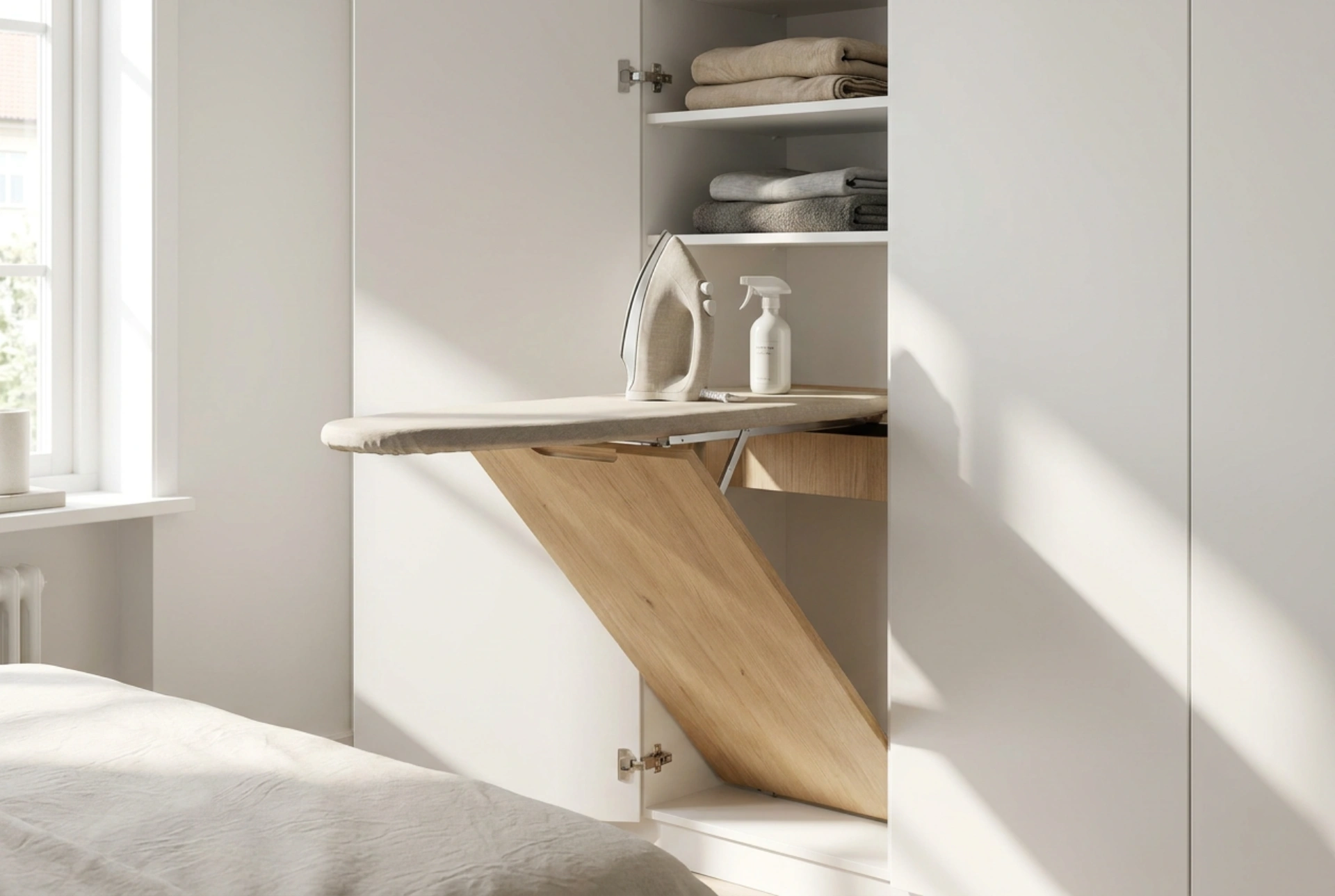
Traditional freestanding ironing boards are notoriously cumbersome, requiring significant physical effort to set up, fold down, and store. In contrast, built-in wardrobe systems utilize precise mechanical linkages to minimize human effort and maximize space. The most common designs rely on telescopic ball-bearing slides or heavy-duty pivoting hinges. Telescopic slides operate on a linear path, smoothly extracting the board from a dedicated drawer compartment. Once fully extended, a secondary hinge mechanism allows the board to drop or raise into its horizontal working position.
To ensure smooth operation, these systems utilize high-tensile steel or anodized aluminum runners. The physics of these mechanisms relies on cantilevered support. Because the board extends outward without vertical legs reaching the floor, the entire downward force applied during ironing is transferred directly to the cabinet's internal frame. High-quality ball-bearing glides distribute this torque evenly along the horizontal tracks, preventing structural deformation of the wardrobe side panels over years of repeated cycles.
Material Science: Heat Reflection and Steam Dissipation
The efficiency of your ironing process depends heavily on the thermodynamic properties of the board’s surface materials. Built-in boards must combat two main physical challenges: high thermal energy and moisture accumulation within a confined wardrobe space.
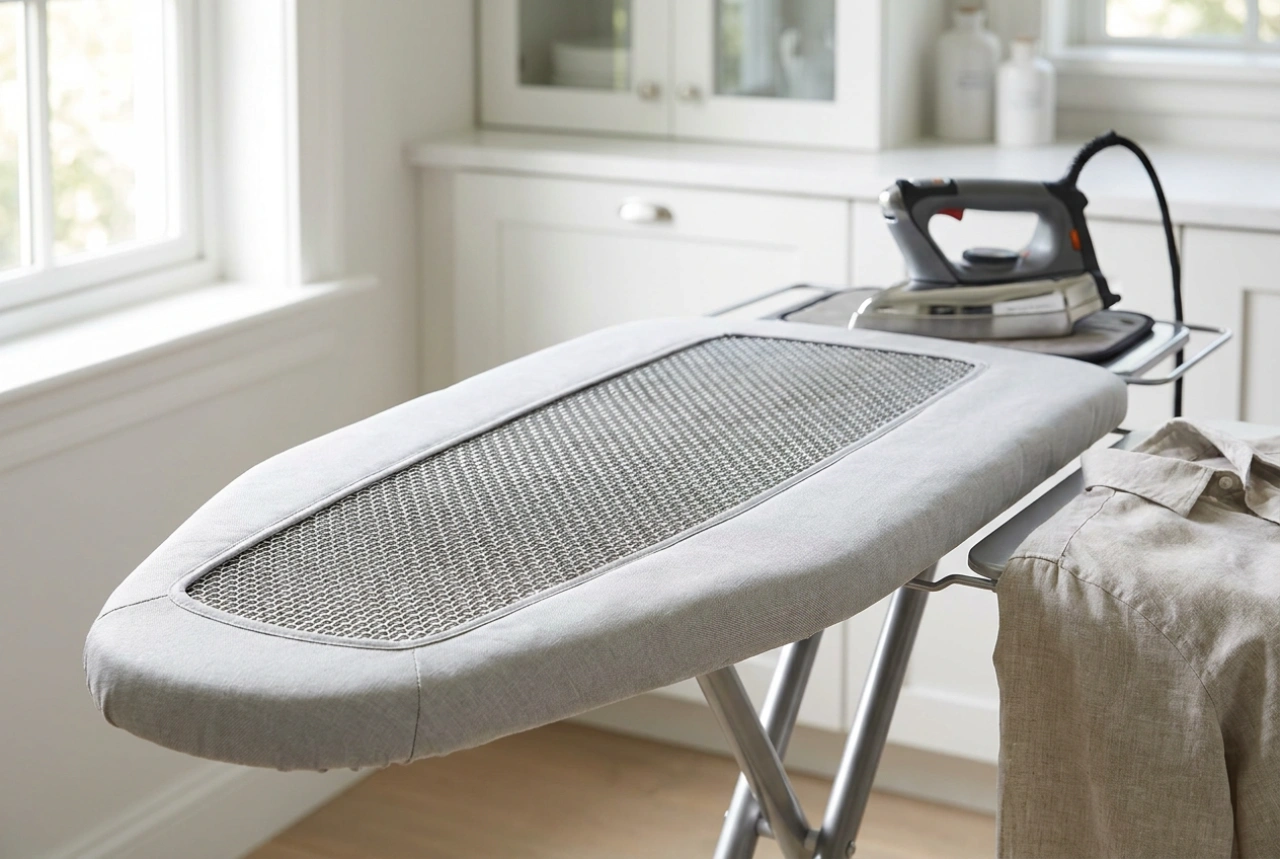
- Reflective Covers: Premium covers incorporate microscopic metallic particles, such as aluminum, woven directly into the cotton fibers. This metallic barrier reflects heat back upward through the fabric of your garment. This creates a double-sided heating effect, significantly reducing the time and passes required to smooth out stubborn wrinkles.
- Condensation Control: When steam irons vaporize water, they release high-velocity moisture into the clothing. A thick, highly permeable underlay—ideally made of dense needle-punched polyester felt rather than cheap polyurethane foam—is crucial. Felt absorbs and rapidly dissipates moisture, preventing steam from condensing back into liquid water, which could rot the wooden components of your wardrobe.
Ergonomics, Height Calibration, and Rotational Physics
To prevent musculoskeletal strain during extended ironing sessions, the installation height of your built-in board must be calibrated precisely. The optimal working height is approximately 10 to 15 centimeters below the level of your bent elbow. If the board is installed too high, your shoulders will remain perpetually elevated, causing rapid fatigue in the trapezius muscles; too low, and you will bend your thoracic spine, leading to lower back pain.
Many advanced built-in boards feature a 180-degree rotational swivel. This pivoting action operates on a central heavy-duty steel spindle. The ability to rotate the board allows you to adjust your working angle relative to the light source and the wardrobe door, ensuring that you can utilize natural light to spot remaining creases. It also accommodates both left- and right-handed users seamlessly within tight architectural footprints.
Installation Physics: Ensuring Cabinet Integrity
Mounting a folding ironing board requires a deep understanding of structural load distribution. Standard wardrobe panels are frequently constructed from medium-density fibreboard (MDF) or particle board, which have lower screw-holding capacities than solid timber. Because ironing involves downward physical pressure combined with the heavy static weight of a steam generator, the mounting screws undergo intense shear and pull-out forces.
To prevent cabinet failure, always distribute the mechanical load. This is achieved by using wide mounting plates that cover a larger surface area on the cabinet walls, dispersing the torque. Using Euro-screws or through-bolts with backing plates is highly recommended over standard wood screws, as they grip a larger volume of the composite wood core, guaranteeing that your space-saving solution remains structurally sound and safe for decades.