

Steam washing cycles in modern washing machines utilise the high thermal energy of water vapour to penetrate fabrics, offering a highly targeted method for odour elimination, allergen reduction, and wrinkle relaxation without the mechanical wear of a full wash cycle.
The Molecular Physics of Steam and Fabrics
To understand why steam is highly effective for specific laundry tasks, one must look at the physical state of water. In its gaseous state, water molecules possess significantly higher kinetic energy than in liquid form. When steam is injected into the washing machine drum, these fast-moving, microscopic water vapour molecules easily penetrate the tiny interstitial spaces between textile threads. This is a level of penetration that liquid water, constrained by surface tension, cannot achieve as rapidly.
As the steam hits the cooler fabric, it undergoes a phase change back into liquid, releasing its latent heat of vaporisation directly into the fibres. This thermal energy breaks the weak hydrogen bonds holding the polymer chains of the textile in place. When these bonds relax, the fabric loses its "memory" of wrinkles and creases, allowing gravity or gentle drum rotation to smooth out the material.
When Steam Treatment Is Highly Effective
Steam is not a universal replacement for water and detergent, but it excels in distinct scenarios governed by household chemistry and microbiology:
- Odour Neutralisation: Most unpleasant smells on clothing are caused by volatile organic compounds (VOCs) trapped in the fabric matrix. The high temperature of steam increases the vapour pressure of these compounds, causing them to detach from the fibres and carry away with the venting air.
- Allergen Denaturation: House dust mites, pollen, and pet dander are highly sensitive to heat. Sustained exposure to steam temperatures (typically above 60°C) denatures the proteins in these allergens, neutralising their biological activity without requiring harsh chemical additives.
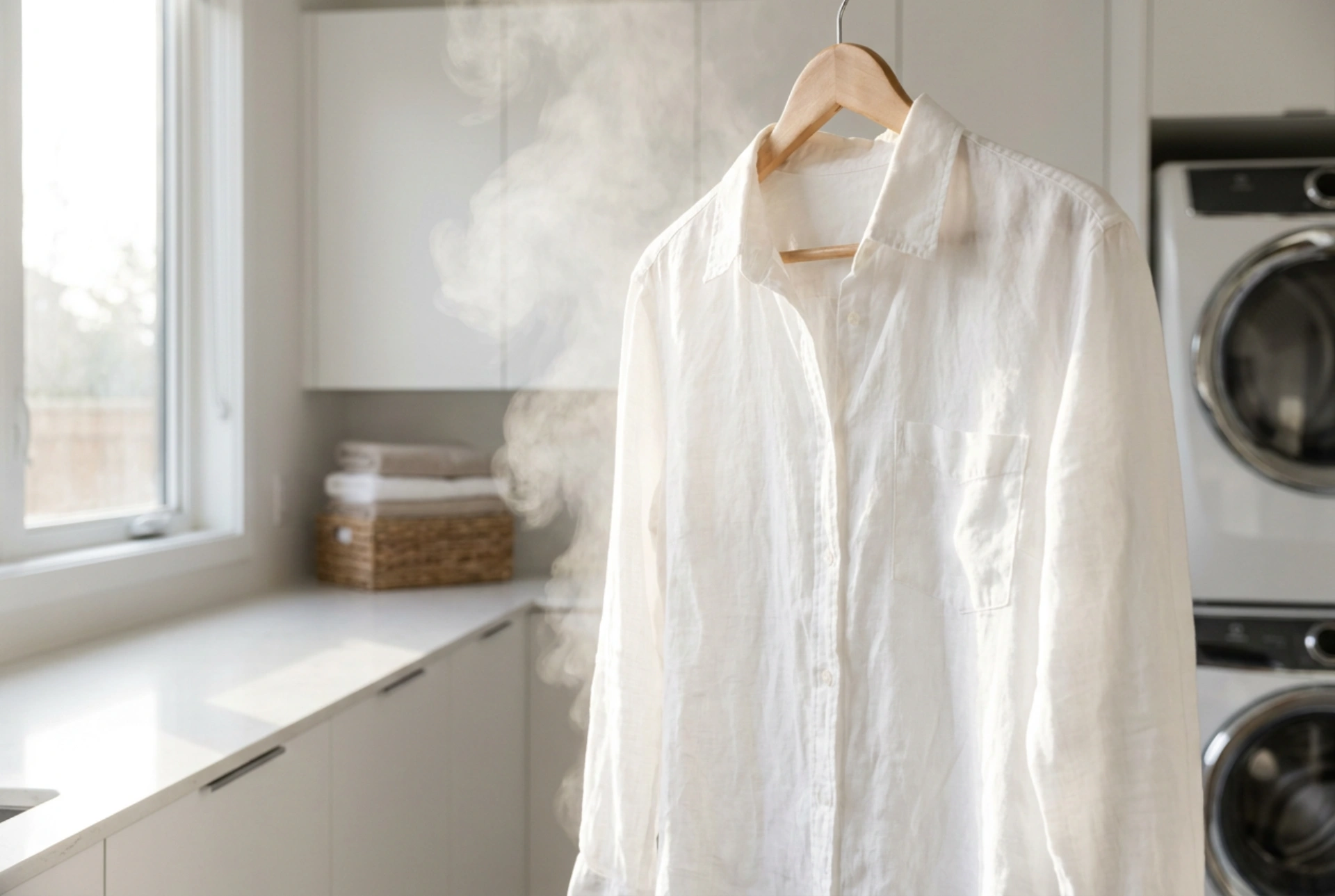
- Wrinkle Relaxation: For garments made of natural cellulose fibres like cotton and linen, steam acts as a natural plasticiser, temporarily softening the fibre structure to release wear lines and packing creases.
Where Steam Fails: The Danger of Heat-Setting Stains
While steam is excellent for refreshing lightly worn garments, using it on soiled clothing can lead to permanent damage. The primary chemical risk involves protein-based stains, such as blood, dairy, egg, or sweat. High temperatures coagulate proteins, essentially "cooking" them into the textile fibres and binding them permanently to the dye sites. Once a protein stain is exposed to steam, removing it becomes nearly impossible.
Furthermore, steam lacks the mechanical action and surfactant chemistry required to lift particulate dirt and lipids. Greasy stains require micelles formed by detergent molecules to encapsulate and suspend oils in liquid water. Without these surfactants, steam will only melt the fats, allowing them to spread further across the fabric surface.
Material Guide: Which Fibres Benefit Most?
Different textiles react uniquely to the combination of heat and moisture introduced by a steam cycle:
Natural Cellulose Fibres (Cotton, Linen)
These materials have a high thermal tolerance and benefit immensely from steam. The moisture breaks the rigid hydrogen bonds characteristic of cellulose, restoring flexibility and softness to the fabric structure.
Synthetics (Polyester, Nylon, Acrylic)
Synthetic fibres are thermoplastic, meaning they soften when heated and harden as they cool. Steam can effectively de-wrinkle synthetics, but the cycle temperature must be carefully controlled. Excessive heat can permanently glaze or melt delicate synthetic blends.
Protein Fibres (Wool, Silk)
Wool and silk are highly sensitive to heat and moisture. In wool, steam combined with drum friction can cause the microscopic scales of the fibres to interlock, leading to irreversible felting and shrinkage. Only use steam cycles specifically calibrated with low drum movement for these delicate materials.
Steps to Maximise Your Steam Cycle
To get the best results from a steam refresh cycle, follow a precise sequence of actions. First, ensure the load is highly limited; steam requires ample physical space to circulate freely around each garment. Second, inspect all items for pre-existing stains, treating any organic or oily spots manually before loading. Finally, remove garments immediately once the cycle ends. Because they will contain residual moisture, hang them on wide-shouldered hangers in a well-ventilated space. This allows the newly relaxed fibres to dry in a straight, smooth shape, locking in the wrinkle-free finish.