

Removing a stubborn ballpoint pen stain requires a precise application of solvent chemistry and capillary action to dissolve the ink pigments without stripping the original fabric dye.
Understanding the Chemistry of Ballpoint Ink
Ballpoint pen ink is formulated to dry almost instantly upon contact with paper. To achieve this, manufacturers mix synthetic dyes or pigments with a heavy carrier solvent, usually benzyl alcohol, phenoxyethanol, or various glycols, along with synthetic resins that bind the pigment to the surface. This mixture is highly hydrophobic, meaning it does not dissolve in water. Attempting to wash a fresh ink stain with water alone will only cause the hydrophobic binder to lock the pigments deeper into the textile matrix, making the stain permanent.
To break this bond, you must introduce a solvent with a similar chemical polarity to the ink carrier. This is where the principle of "like dissolves like" applies. Solvents such as isopropyl alcohol (isopropanol) or high-purity ethanol disrupt the polymer resins holding the pigments together, liquefying the ink so it can be extracted from the fibers. Because these alcohols evaporate quickly and do not chemically react with the covalent bonds of high-quality textile dyes, they are highly effective at removing the ink without causing discolouration or colour bleeding.
The Mechanics of Extraction: Blotting vs. Rubbing
The physical technique used to remove the dissolved ink is just as critical as the chemical solvent. Rubbing a stain is the most common mistake; friction applies mechanical force that drives the liquefied pigment laterally into adjacent, clean fibers, creating a large, permanent blue or black halo. It can also fray the delicate cotton or synthetic fibers, altering how light reflects off the fabric and leaving a permanent "scuffed" mark that looks like a faded spot.
Instead, the process must rely entirely on capillary action and blotting. By placing a thick, highly absorbent material—such as several layers of clean paper towels or a white cotton cloth—directly beneath the stained fabric, you create a sink for the dissolved ink. When you apply the solvent to the stain, the liquid carrying the dissolved pigment is naturally drawn downward into the absorbent backing material. Always apply the solvent from the reverse side of the garment when possible, pushing the stain out of the fabric structure rather than deeper into it.
Step-by-Step Safe Ink Removal Protocol
Before beginning, always perform a quick patch test on an inconspicuous area of the garment (such as an inside seam) to ensure the fabric dye is stable. Once confirmed, follow this sequence:
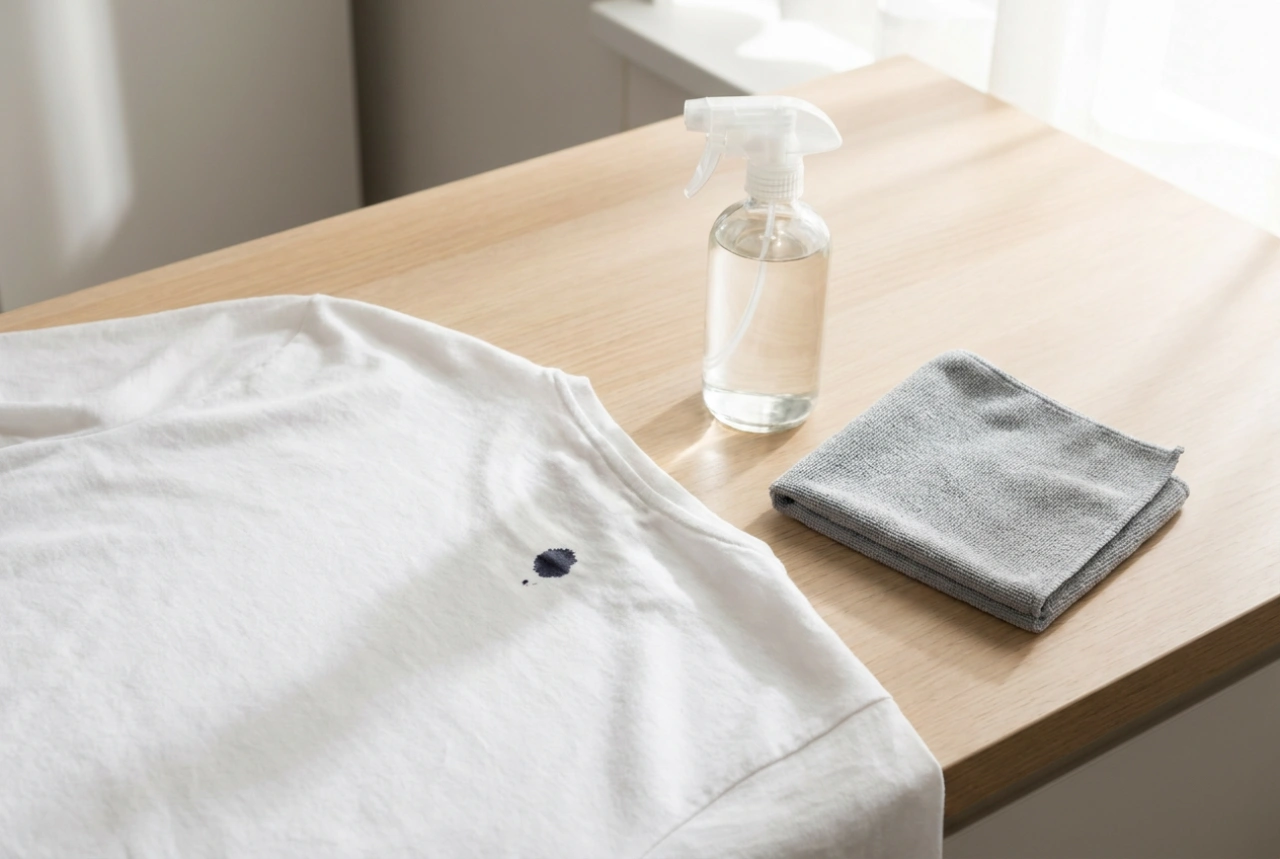
- Prepare the backing: Lay the garment flat on a hard, non-porous surface, placing a clean, white absorbent pad directly under the ink spot to prevent the stain from transferring to the back of the garment.
- Apply the solvent: Saturate a cotton bud or the corner of a white microfiber cloth with isopropyl alcohol (90% or higher). Gently press it onto the stain. Do not rub; simply press and hold for several seconds to allow the solvent to penetrate and liquefy the resin.
- Blot and transfer: Use a clean section of the microfiber cloth to press down firmly on the stain. You will see the ink transfer onto the cloth and the backing pad. Repeat this process, always switching to a clean, dry area of your cloth to avoid retransferring the ink back onto the garment.
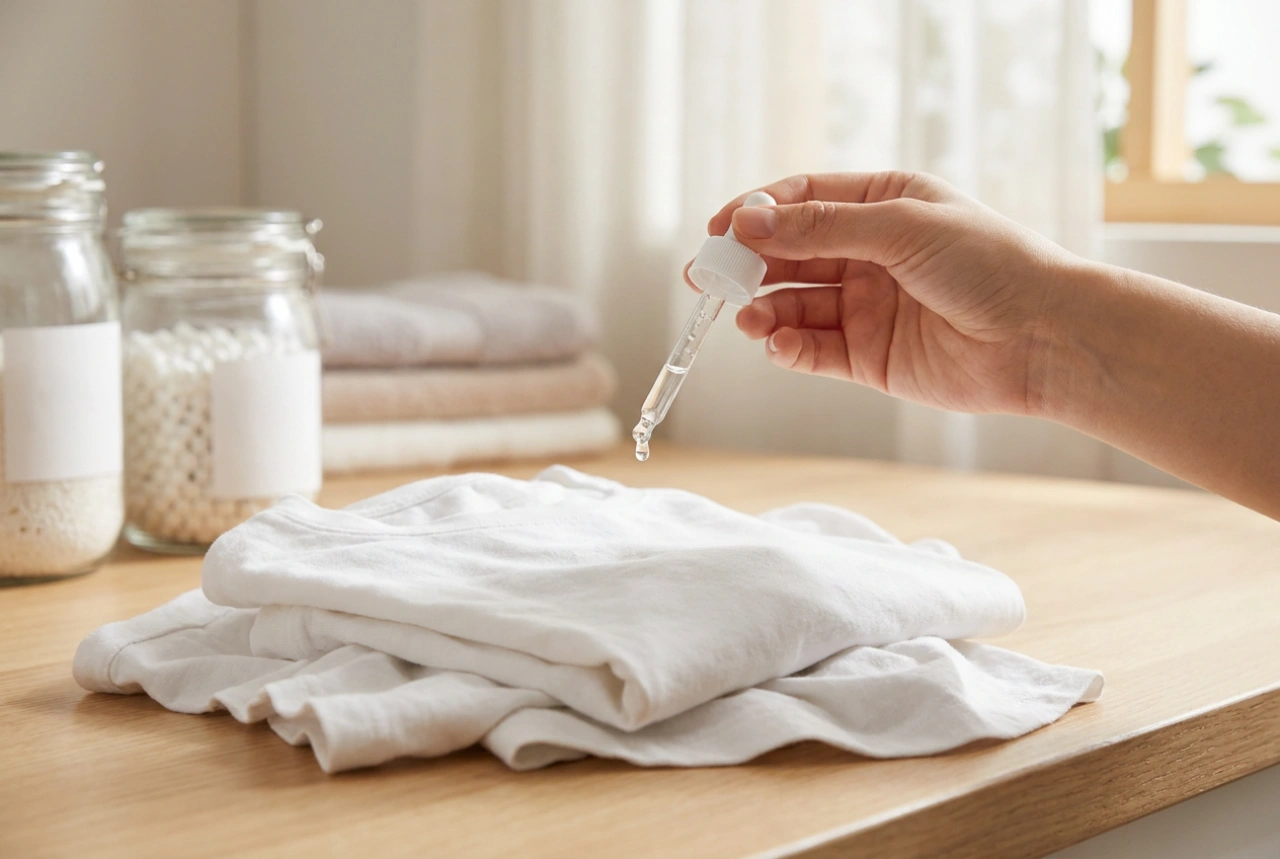
- Neutralise and rinse: Once the pigment is gone, a faint ring of solvent or oily carrier residue may remain. Apply a drop of neutral, colour-free liquid detergent to the area. Work it gently into the fibers with your fingertip to emulsify the remaining oils, then rinse thoroughly with cold water.
Emulsifying Residual Resins and Washing
After the physical extraction of the pigments, any remaining resins or solvent traces must be fully emulsified before the garment is placed in the washing machine. Standard laundry detergents contain surfactants with hydrophilic heads and lipophilic tails. These molecules surround the remaining ink residues, suspending them in water so they can be rinsed away during the cycle. Wash the garment at a maximum of 30°C or 40°C. High heat (such as a 60°C wash or machine drying) will thermally set any microscopic traces of ink pigment left in the fibers, making them virtually impossible to remove later. Always inspect the area after washing and before tumble drying.