

Keeping leather furniture pristine requires an understanding of the material's organic structure and how specific chemical agents interact with its porous surface. Proper maintenance prevents premature cracking, fading, and chemical degradation of the finish.
Understanding Leather Chemistry and Surface Types
Leather is an organic material composed of collagen fibres that have undergone a tanning process to prevent decomposition. This process leaves the material slightly acidic, typically with a pH between 4.5 and 5.5. Using alkaline household cleaners or harsh detergents can disrupt this delicate balance, leading to the extraction of natural tanning agents and eventual structural failure, which manifests as cracking or peeling.
Before applying any cleaning agent, you must identify the type of leather finish on your furniture. Protected or pigmented leather features a thin polymer topcoat that resists moisture and stains, making it more resilient to liquid cleaners. Unprotected leather, such as aniline or nubuck, lacks this protective layer, making it highly absorbent. Applying liquid cleaners directly to unprotected leather can cause permanent dark staining and watermarks due to rapid capillary absorption.
The Physics of Safe Application: Tools and Motion
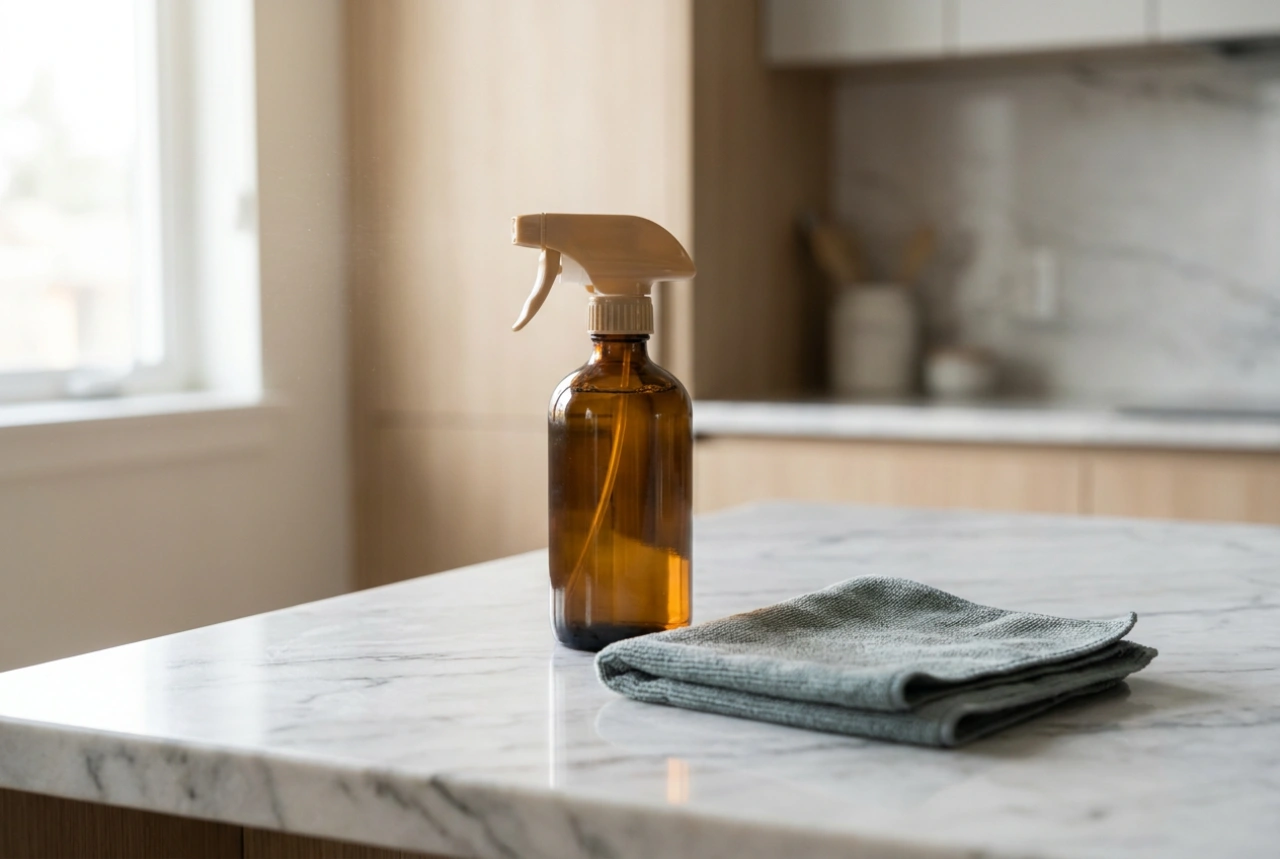
The method of application is just as critical as the chemical composition of the cleaner. You should never apply any cleaning solution directly to the leather surface. Direct spraying can saturate the material, leading to localized over-hydration, which deforms the collagen fibres and leaves dark rings as the water evaporates.
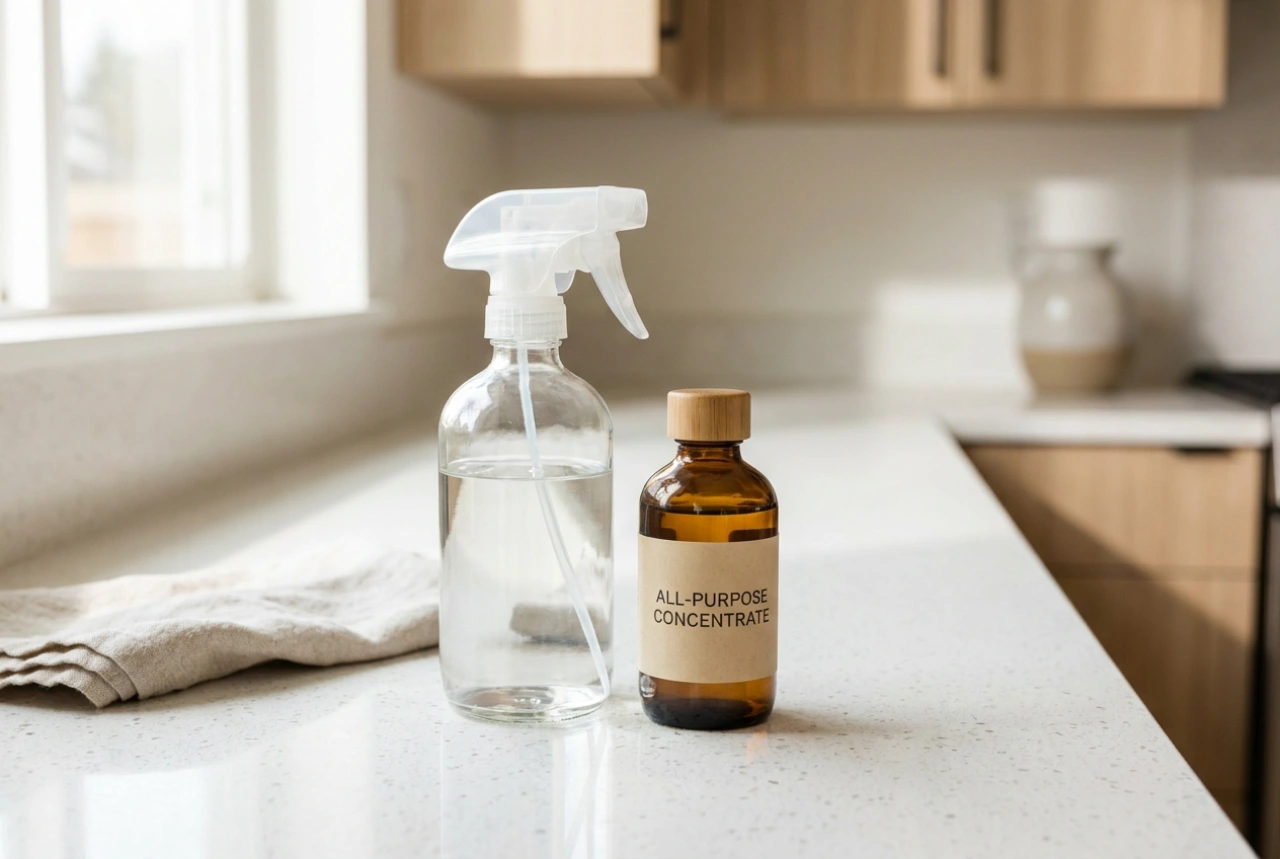
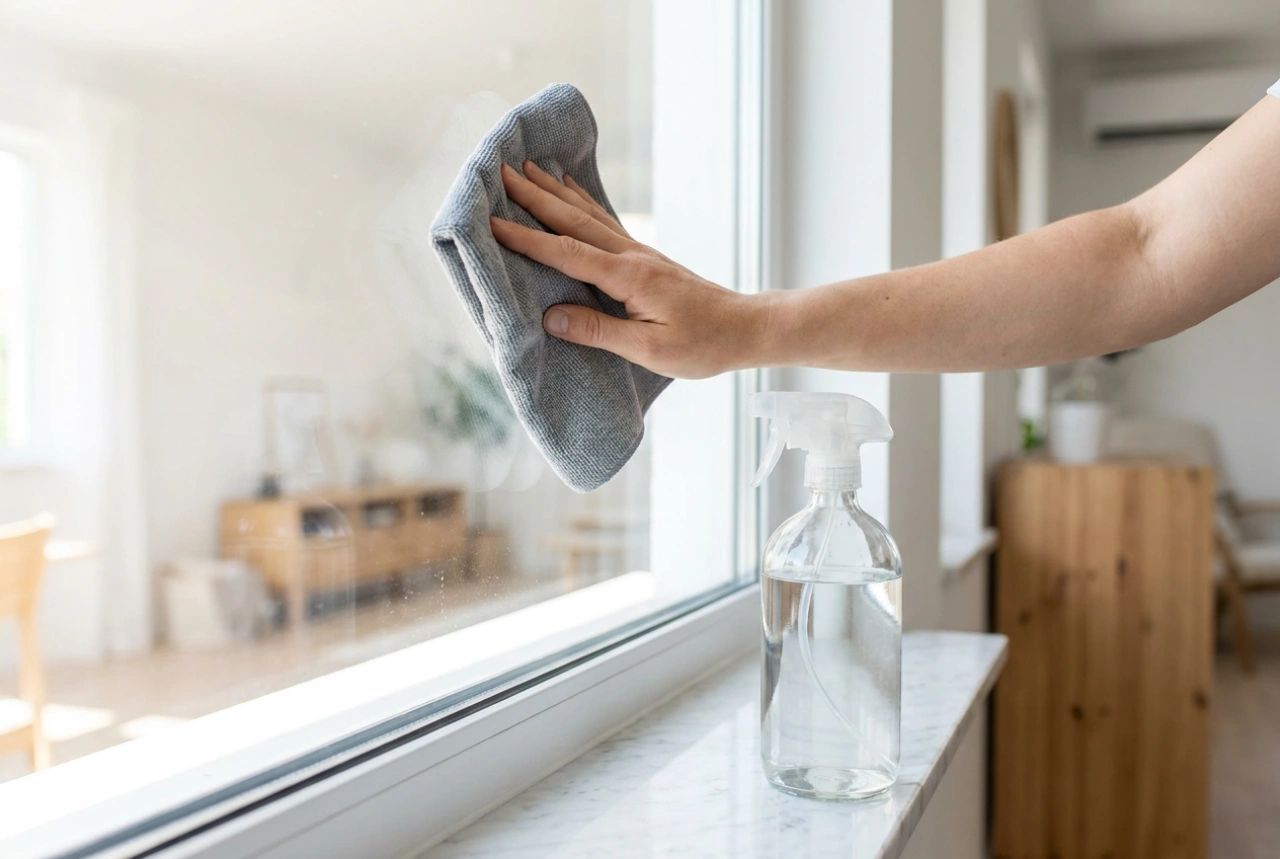
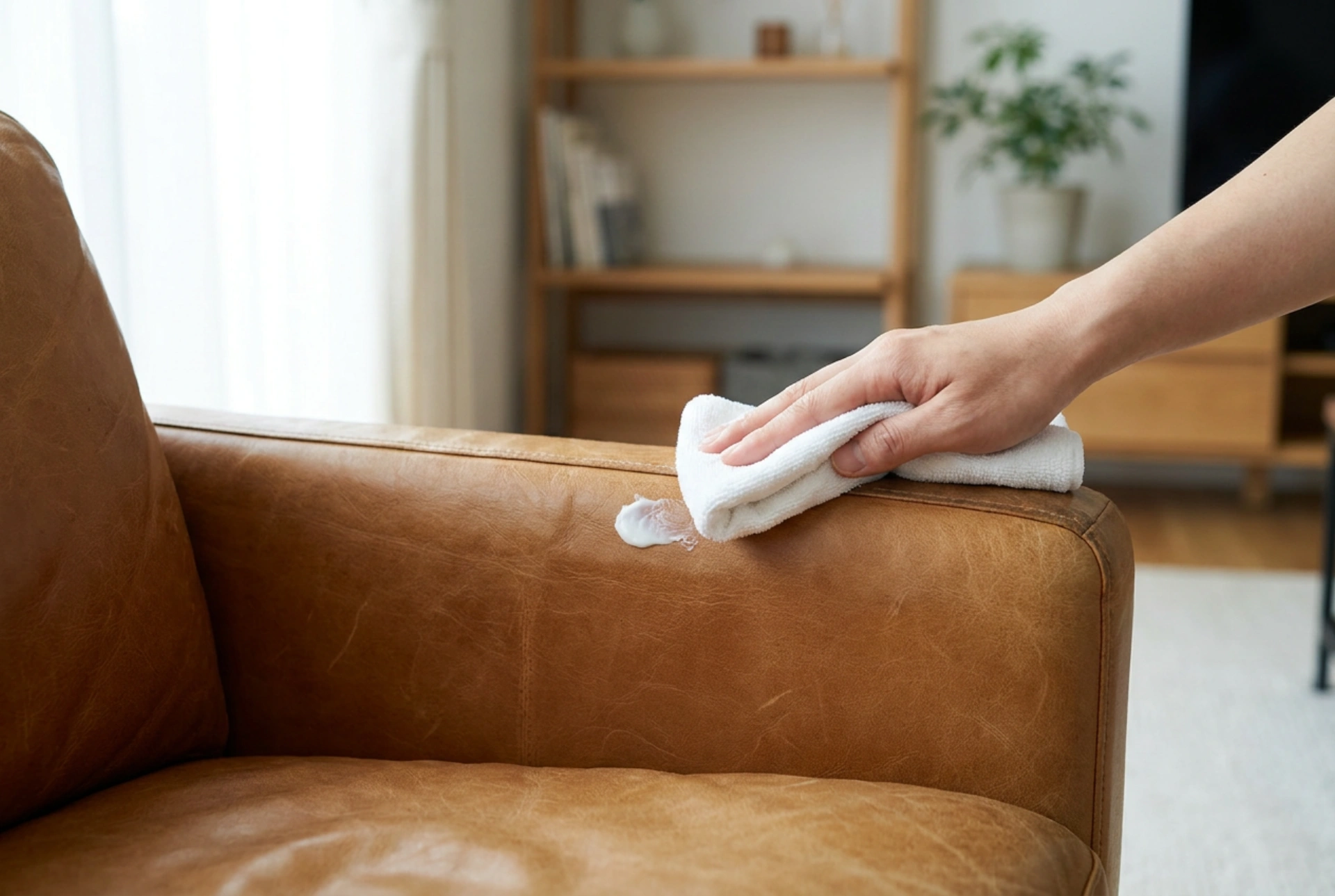
Instead, apply a small amount of the cleaning solution to a dry, white microfiber cloth or a soft-bristled horsehair brush. By applying the agent to the tool first, you control the moisture level and ensure even distribution. When cleaning, use gentle circular motions rather than harsh scrubbing. Circular motions agitate the embedded dirt and lift it out of the leather's natural grain through capillary action into the cloth, minimizing friction that could wear away the protective topcoat.
The Crucial Patch Test Protocol
Even when using dedicated, pH-balanced leather cleaners, a patch test is mandatory to prevent widespread damage. Different manufacturing processes use various dyes and finishes that may react unexpectedly to cleaning surfactants.
- Select a hidden area: Choose an inconspicuous spot, such as the lower back of the sofa, the underside of a cushion, or inside a seam.
- Apply a minimal amount: Dab a tiny droplet of the cleaner onto a white microfiber cloth and press it gently onto the test area.
- Observe for color transfer: Rub the cloth gently over the spot. If any dye transfers onto the cloth, stop immediately; the cleaner is too aggressive for that specific finish.
- Allow to dry completely: Wait at least thirty minutes for the spot to dry naturally. Inspect the area under good lighting for signs of darkening, texture alteration, or gloss changes.
Restoring Lipids: Post-Cleaning Conditioning
Cleaning agents, by their nature, are designed to emulsify lipids (fats and oils) to remove dirt. Consequently, even mild cleaners will strip away some of the essential oils that keep the leather supple. Without replacing these lipids, the leather will dry out, shrink, and crack over time under the influence of ambient heat and relative humidity changes.
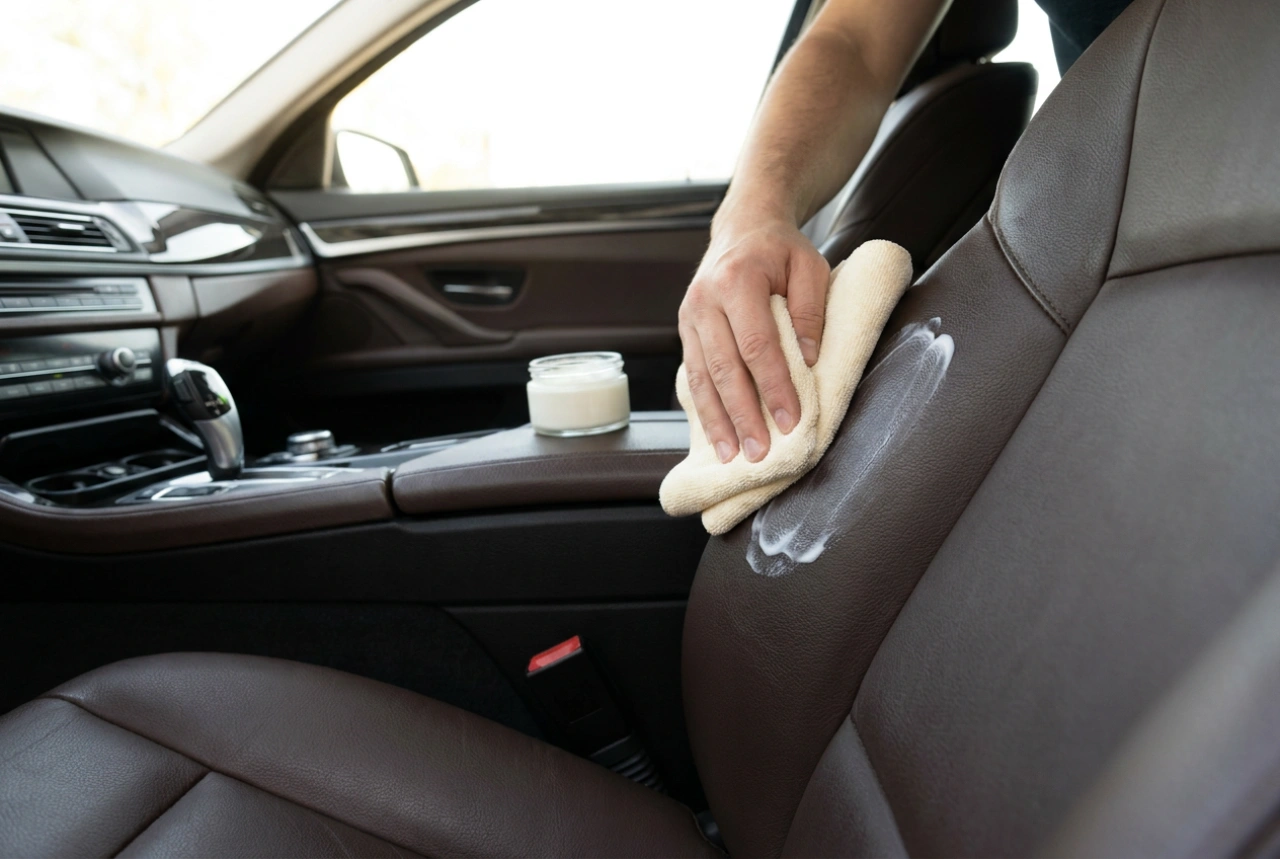
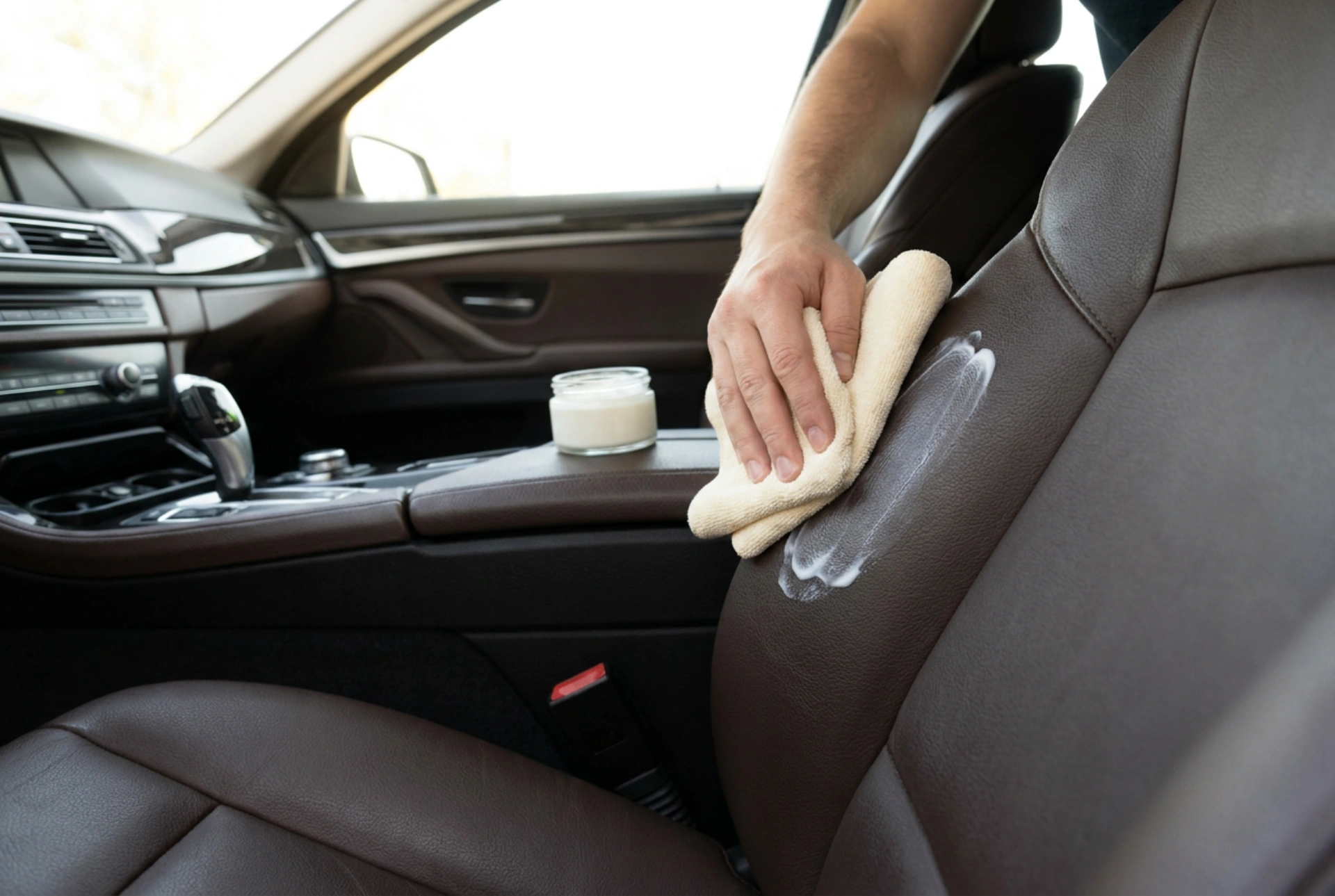
Once the leather is clean and completely dry, you must apply a high-quality leather conditioner. Choose a conditioner containing natural waxes and oils, such as beeswax or lanolin, rather than synthetic silicones, which can coat the surface and seal out necessary atmospheric moisture. Apply the conditioner sparingly using a clean cloth, allowing it to penetrate the pores, and then buff gently to restore the natural, healthy sheen of the material.
Your Essential Leather Cleaning Checklist
- Vacuum first: Remove dry dust and grit using a soft brush attachment to prevent abrasive scratching during the wet cleaning phase.
- Use pH-neutral agents: Stick to dedicated leather cleaners with a pH of 5.0 to 5.5.
- Damp, never wet: Keep cloths slightly damp with cleaner, never saturated.
- Dry naturally: Never use hair dryers or place furniture near radiators to speed up drying, as high heat denatures leather proteins.