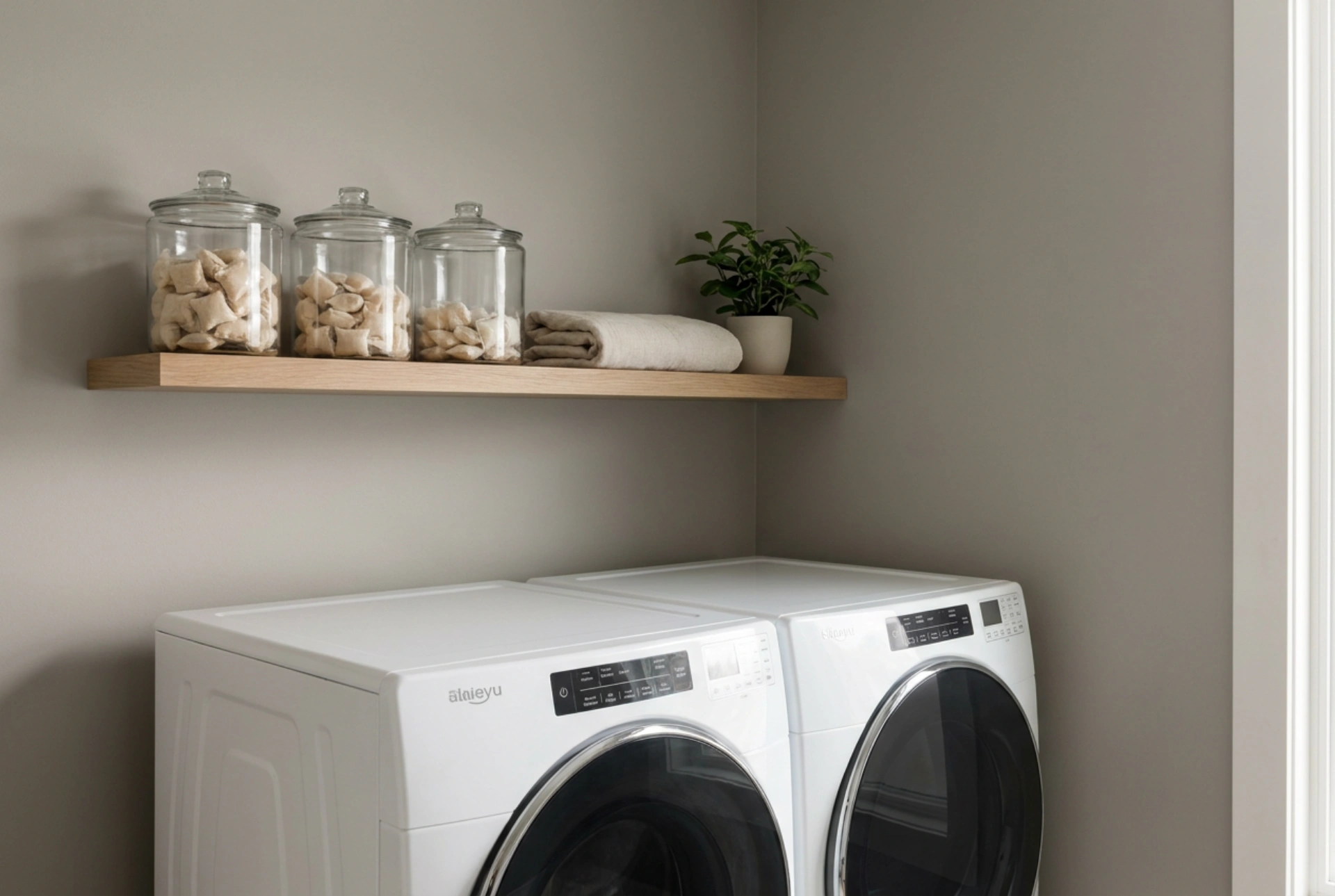


Maximising the vertical space above a washing machine and tumble dryer is one of the most effective ways to reclaim square footage in a compact bathroom. However, without a systematic approach to moisture, weight distribution, and visual weight, this open shelving can quickly devolve into a chaotic, dust-gathering clutter zone.
The Microclimate Factor: Selecting Resilient Materials
The zone directly above laundry appliances is subject to unique environmental stressors, namely localised spikes in humidity and ambient temperature. When a tumble dryer operates, it radiates heat, while washing machines introduce moisture during loading and unloading cycles. Consequently, the choice of shelving material is critical to prevent degradation and mould growth.
Unsealed wood and low-grade particle boards are highly hygroscopic; they absorb airborne water molecules, causing the fibres to swell, warp, and eventually support fungal spores. To ensure longevity, opt for chemically inert materials. Powder-coated steel, tempered glass, or high-pressure laminates are ideal. Powder coating provides a hydrophobic barrier that prevents oxygen and water from reaching the underlying metal, eliminating rust risks. Tempered glass offers a non-porous surface that is completely impervious to moisture and chemical spills from laundry concentrates, whilst also reflecting light to make the space feel larger.
Preventing Chemical Degradation: The Science of Decanting
Storing laundry detergents on an open shelf requires an understanding of their chemical vulnerability. Conventional laundry powders contain active agents such as sodium carbonate (washing soda) and sodium percarbonate (oxygen bleach). These substances are highly hygroscopic, meaning they readily absorb water vapour from the humid bathroom air. When exposed, powders clump, reducing their solubility in the wash cycle, while active oxygen bleaches can prematurely decompose and lose their stain-removing efficacy.
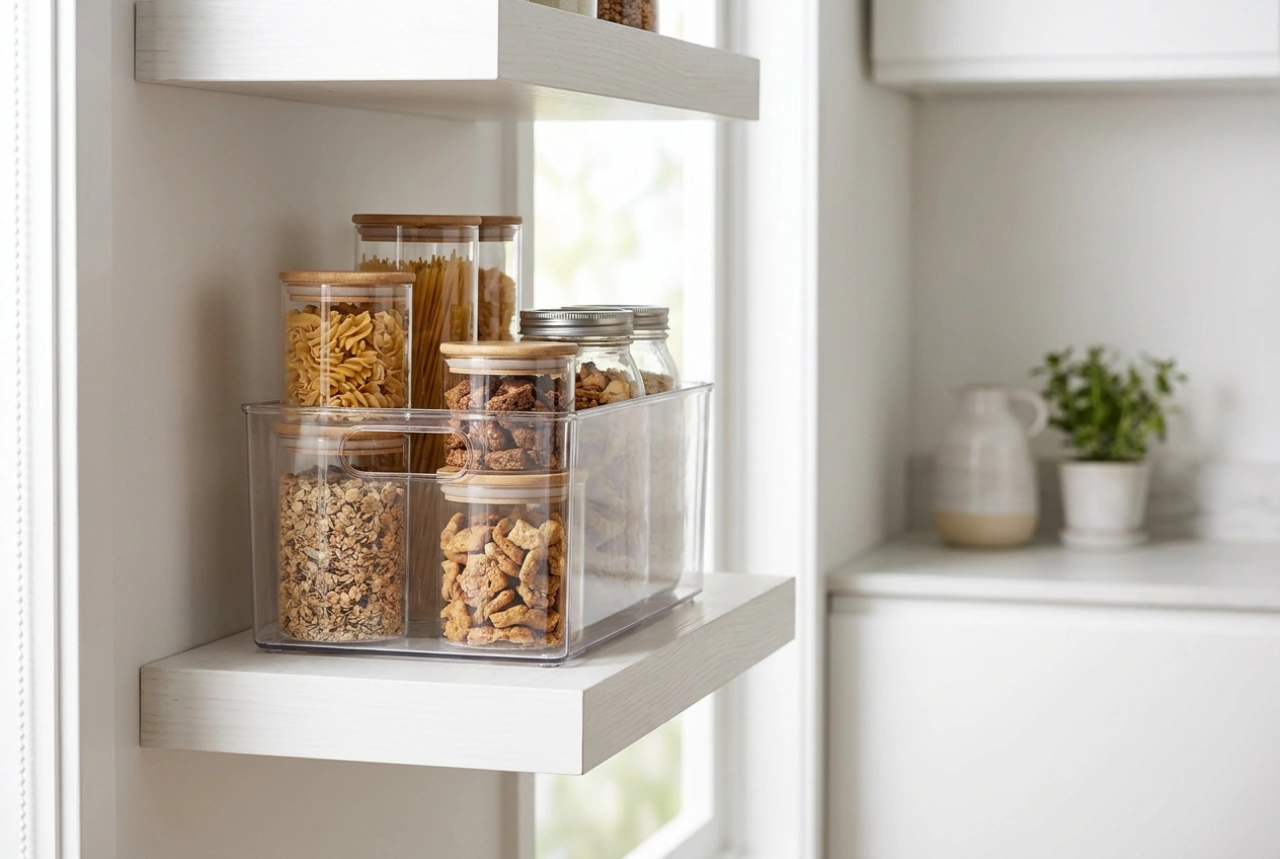
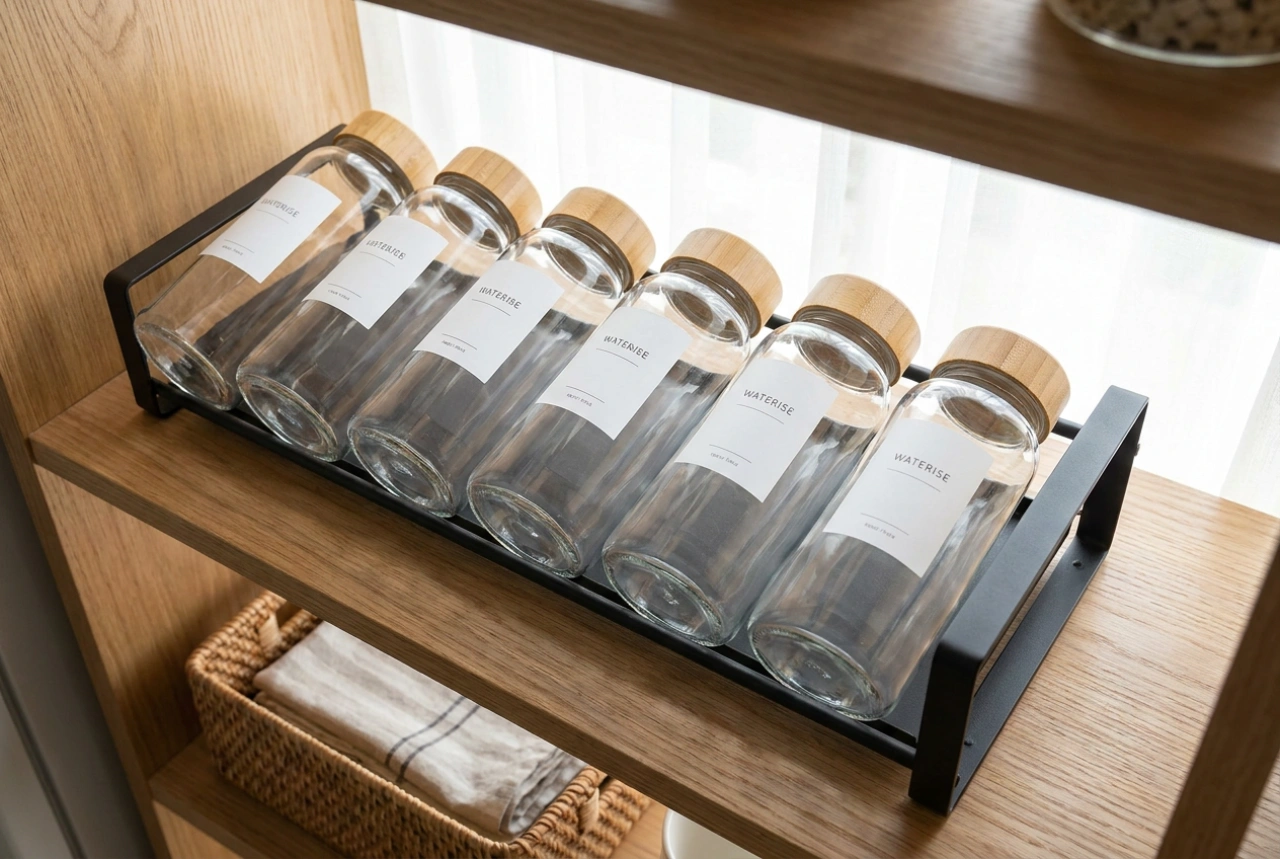
To protect these compounds, transfer bulk detergents into airtight glass or ceramic containers with silicone seals. Glass is chemically neutral and does not react with synthetic surfactants or enzymes. Beyond the chemical preservation, decanting serves a vital spatial function: it eliminates the chaotic visual noise of multi-coloured commercial packaging. By replacing mismatched cardboard boxes with uniform, transparent jars, you immediately reduce the cognitive clutter in the room, allowing you to monitor supply levels at a single glance.
Structural Ergonomics and Vibration Management
A key challenge of shelving positioned above laundry appliances is managing physical vibration. Even modern appliances equipped with automatic balance systems generate micro-vibrations during high-spin cycles. These vibrations can transfer through adjacent walls to the shelves, causing loose items to shift and potentially fall.
To mitigate this risk, employ the following structural strategies:
- Secure Wall Anchoring: Avoid floating shelves that rely on weak internal brackets. Instead, use heavy-duty wall anchors designed for your specific wall type, such as toggle bolts for plasterboard or expansion plugs for solid masonry, to ensure rigidity.
- Friction Barriers: Place thin, non-slip silicone or felt pads beneath glass jars and heavy containers. This dampens kinetic transfer and prevents sliding.
- Weight Stratification: Store heavy liquid containers on the lowest shelf or closest to the wall brackets to reduce leverage on the shelf. Keep daily-use items between waist and eye level, the ergonomic comfort zone, to prevent physical strain during repetitive laundry tasks.
Visual Physics: The Rule of Negative Space
A shelf is only successful if it maintains a sense of physical and visual order. In design science, the human eye seeks patterns and simplifies complex fields of view. When a shelf is packed to capacity, the brain registers it as a single, overwhelming mass.
To combat this, apply the rule of negative space: leave at least thirty percent of the shelf surface entirely empty. This unoccupied space serves two purposes: it allows air to circulate freely, preventing damp micro-pockets from forming behind items, and it provides a visual rest point. Group smaller items, such as clothes pegs, lint rollers, or wool dryer balls, into structured, breathable baskets made of powder-coated wire or washable synthetic felt. This contains the physical objects while preserving a clean, minimalist aesthetic.