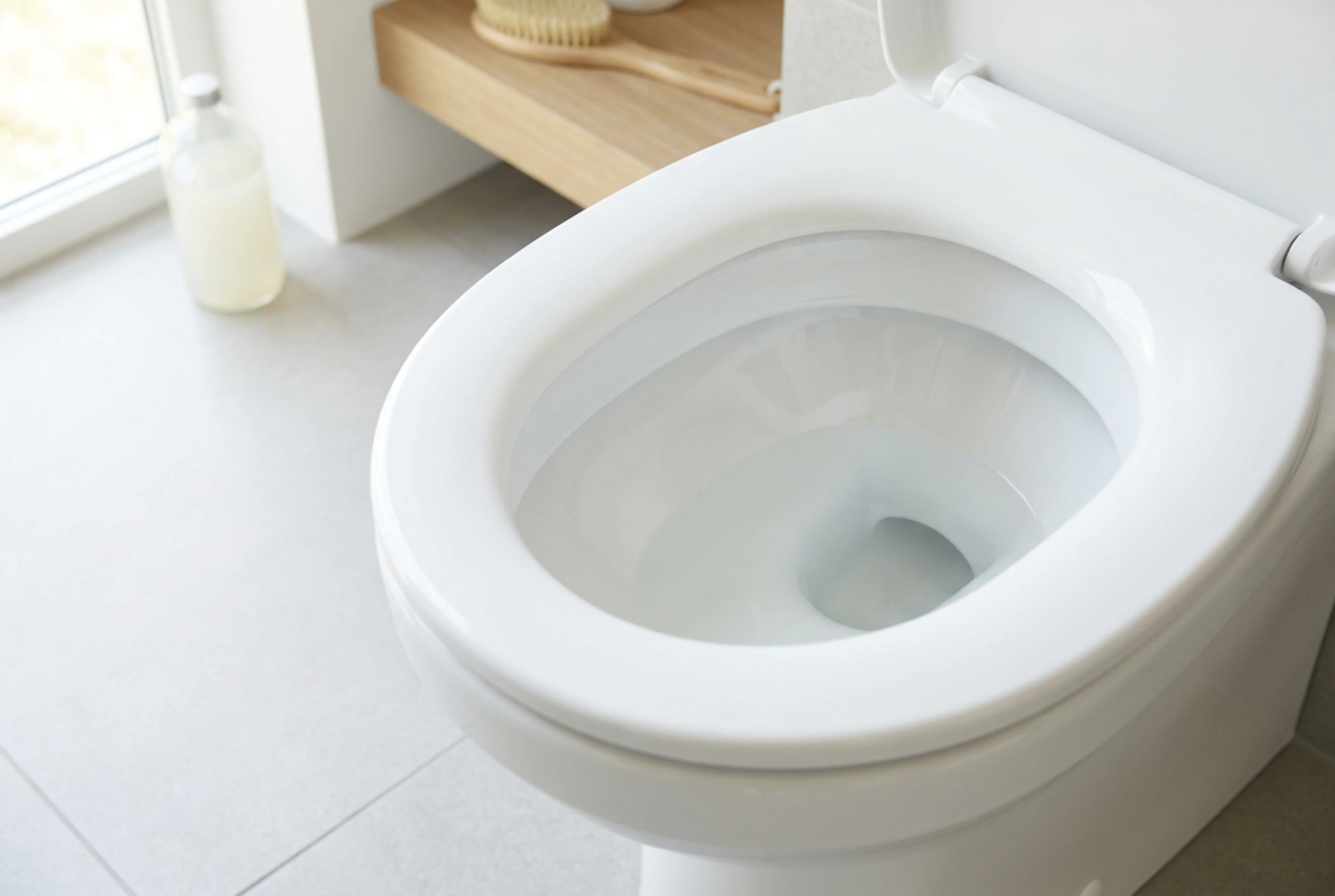


Toilet rim blocks and in-tank tablets offer a convenient way to keep a toilet smelling fresh, but relying on them entirely without manual brushing leads to a build-up of mineral deposits and biofilm. Understanding the chemistry of toilet soil and the mechanics of flushing reveals why manual scrubbing remains an irreplaceable step in bathroom sanitation.
The Chemistry Inside Toilet Cleaning Blocks
Toilet blocks, whether suspended from the rim or dissolved inside the cistern, are formulated to release active ingredients slowly into the flush water. The primary active components are anionic and non-ionic surfactants. These molecules possess a dual nature: a hydrophilic (water-attracting) head and a hydrophobic (water-repelling) tail. When flushed, they lower the surface tension of the water, allowing it to wet the ceramic surface more evenly and loosely lift light, oily soils.
Additionally, these blocks often contain water-softening agents, such as sodium carbonate or inorganic polyphosphates, which bind to calcium and magnesium ions in the water supply. By sequestering these minerals, the block attempts to prevent them from precipitating onto the porcelain as hard limescale. However, the concentration of these active agents in a single flush is highly diluted, meaning their chemical action is limited to mild prevention rather than deep removal.
Why Flushing Alone Cannot Replace Mechanical Scrubbing
To understand why brushing is essential, one must examine the physical properties of bathroom grime. The two main culprits of toilet discoloration are biofilm and limescale. Biofilm is a structured community of microorganisms embedded in a self-produced sticky matrix of extracellular polymeric substances (EPS). This matrix acts as a biological shield that is highly resistant to shear forces. The brief rush of diluted surfactant water during a flush lacks the mechanical energy required to shear this sticky matrix off the non-porous glazed porcelain surface.
Similarly, limescale (calcium carbonate) forms a crystalline structure that bonds chemically to the silicate structure of the ceramic glaze. Once these crystals seed and grow, they create a rough surface that catches more organic matter. No amount of passive flushing with low-concentration surfactants can break these crystalline mineral bonds. Only physical friction—provided by a dense-bristled brush—can generate the necessary shear stress to disrupt biofilm structures and scrape away early-stage mineral deposits.
The Limits of Chemical Contact Time
In chemical cleaning, efficacy is determined by a simple equation: chemical concentration multiplied by temperature and contact (dwell) time. Toilet blocks suffer from a severe contact time deficit. When you flush, the water containing the dissolved cleaning agents sweeps over the bowl surface in less than three seconds before disappearing down the trapway. This incredibly short duration does not allow the surfactants or mild bleaching agents to break down complex organic stains or dissolve mineral build-up.
In contrast, manual cleaning involves applying an acidic gel or oxygen-bleach paste directly to the dry porcelain, allowing it to cling and react for ten to twenty minutes. This extended dwell time allows the acid (such as citric or sulfamic acid) to chemically dissolve the calcium carbonate, making it soft enough to be easily wiped away with a brush.
The Ideal Toilet Maintenance Protocol
To maintain a sanitary and scale-free toilet, a systematic combination of chemistry and physics is required. Rim blocks should be treated solely as a preventative tool to slow down scale accumulation and maintain freshness between deep cleans. For an effective maintenance routine, follow these steps:
- Weekly Acid Treatment: Apply a thick, acidic toilet cleaner under the rim. Choose products containing citric acid, lactic acid, or formic acid to target mineral scale.
- Allow Dwell Time: Let the gel sit for at least 15 minutes to break down mineral bonds chemically.
- Manual Scrubbing: Use a firm toilet brush to scrub the entire surface, focusing on the waterline and under the rim where water exits. The friction lifts the softened scale and disrupted biofilm.
- Flush and Rinse: Flush the toilet to rinse away the suspended particulates. This is where your rim block takes over, depositing a thin layer of surfactant to inhibit immediate re-soiling.