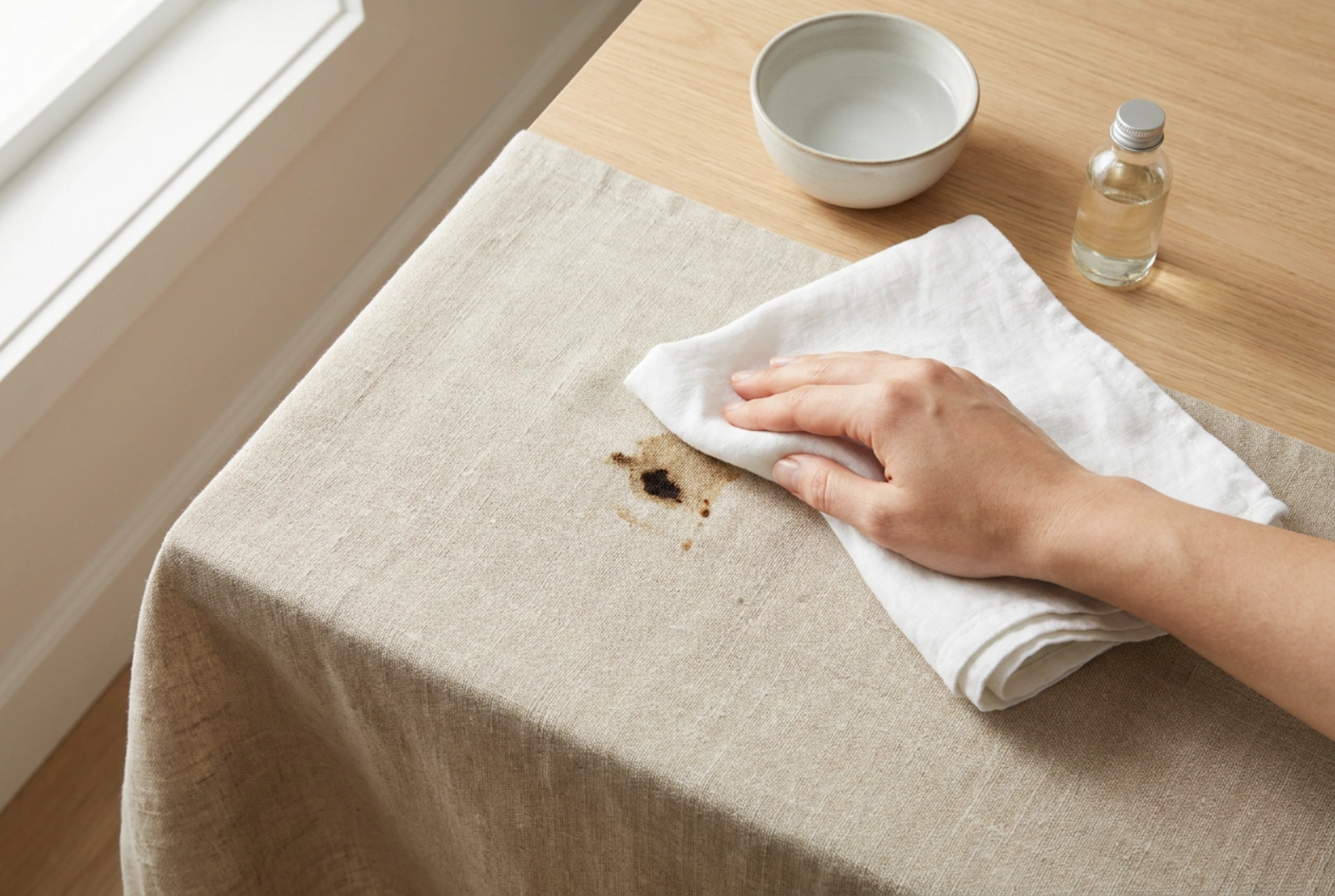


Removing grease from fabrics requires immediate, strategic action to absorb the lipids before they bind permanently with the textile fibers. Rubbing a fresh grease stain is a common mistake that forces the hydrophobic molecules deeper into the weave, spreading the blemish and making it nearly impossible to lift.
The Molecular Anatomy of a Grease Stain
To effectively remove grease, one must understand how lipids interact with fibers. Grease and oils are hydrophobic organic compounds that do not dissolve in water. When spilled onto fabric, they coat the fibers, seeking to escape moisture. If you rub the spot, the mechanical pressure forces these liquefied lipids deep into the yarn's interstitial spaces and spreads them laterally. Synthetic fibers like polyester are highly oleophilic (oil-attracting), making prompt, non-abrasive action critical to prevent permanent bonding.
The Power of Capillary Attraction: Dry Absorption
The first rule of emergency grease management is to avoid liquids and mechanical friction. Instead, leverage the physics of capillary action using fine, highly porous dry powders. Materials like cornstarch, arrowroot, sodium bicarbonate, or talcum powder possess immense surface areas relative to their volume. When gently applied to a fresh oil spot, these dry particles act as micro-sponges.
Instead of pressing, gently pat the powder onto the stain with your finger. Allow it to sit undisturbed for 15 to 30 minutes. During this period, the capillary pressure drawing the oil upward into the powder exceeds the adhesive force binding the oil to the fabric. Once the powder clumps or looks saturated, carefully brush it away with a soft card or brush, working from the edges inward to prevent spreading.
Chemical Emulsification: How Surfactants Dissolve Lipids
Once the excess surface oil is absorbed, a residual molecular layer remains bound to the fibers. To break this bond, you must introduce an emulsifier. Clear, dye-free liquid dish soaps or laundry detergents contain surfactants. A surfactant molecule features a hydrophilic (water-attracting) head and a lipophilic (fat-attracting) tail.
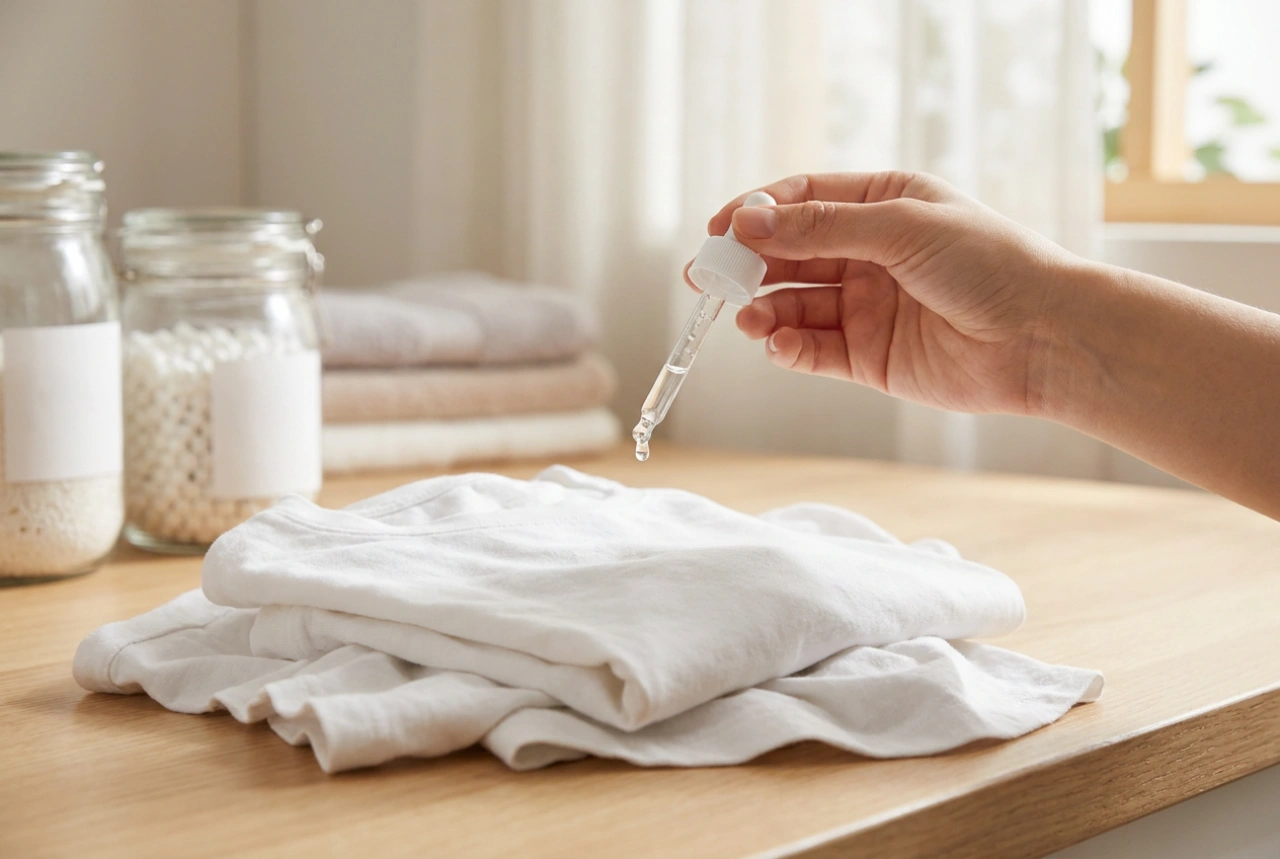
When applied to the grease spot, the lipophilic tails insert themselves into the fat molecules, while the hydrophilic heads face outward. This structure organizes the soap molecules into spherical clusters called micelles, which encapsulate the oil. To apply this chemically without rubbing, place a clean, white cotton cloth underneath the stained fabric. Apply a drop of dye-free liquid surfactant directly to the stain. Using a clean cotton swab, press down firmly with a vertical lifting motion. This vertical pressure transfers the newly formed micelles from the stained garment onto the absorbent backing cloth below.
Thermal Dynamics and Reverse Flushing
Temperature plays a crucial role in altering the viscosity of fats. Many household oils are semi-solid at room temperature. Elevating the temperature melts these lipids into a fluid state, making them easier to dislodge from the weave. However, thermal energy must be applied in the correct direction.
For pure oils, flushing the fabric with hot water from the reverse side is highly effective. Turn the garment inside out. Direct a stream of warm to hot water (matching the fabric's care label limits) directly onto the back of the stain. This reverse flow pushes the emulsified grease out of the fiber pathways through the same route it entered, rather than driving it further through the textile structure.
A Checklist for Flawless Grease Spot Removal
To ensure consistent success without damaging delicate weaves, follow this sequence of actions:
- Blot, do not rub: Remove immediate excess oil with a clean paper towel using light, vertical tapping.
- Apply powder: Heap cornstarch over the spot and allow it to draw out the bulk of the liquid via capillary action.
- Brush away gently: Use a light tool to lift the saturated powder without pressing it back down.
- Target with surfactants: Apply a drop of dye-free surfactant and press a clean backing cloth against the underside of the fabric to absorb the emulsified grease.
- Reverse flush: Wash from the inside out using the warmest water safe for the fabric to melt and expel remaining lipids.
- Air dry: Inspect the area after washing. Do not use a mechanical dryer until you are certain the stain is completely gone, as high heat will permanently set any residual oil.