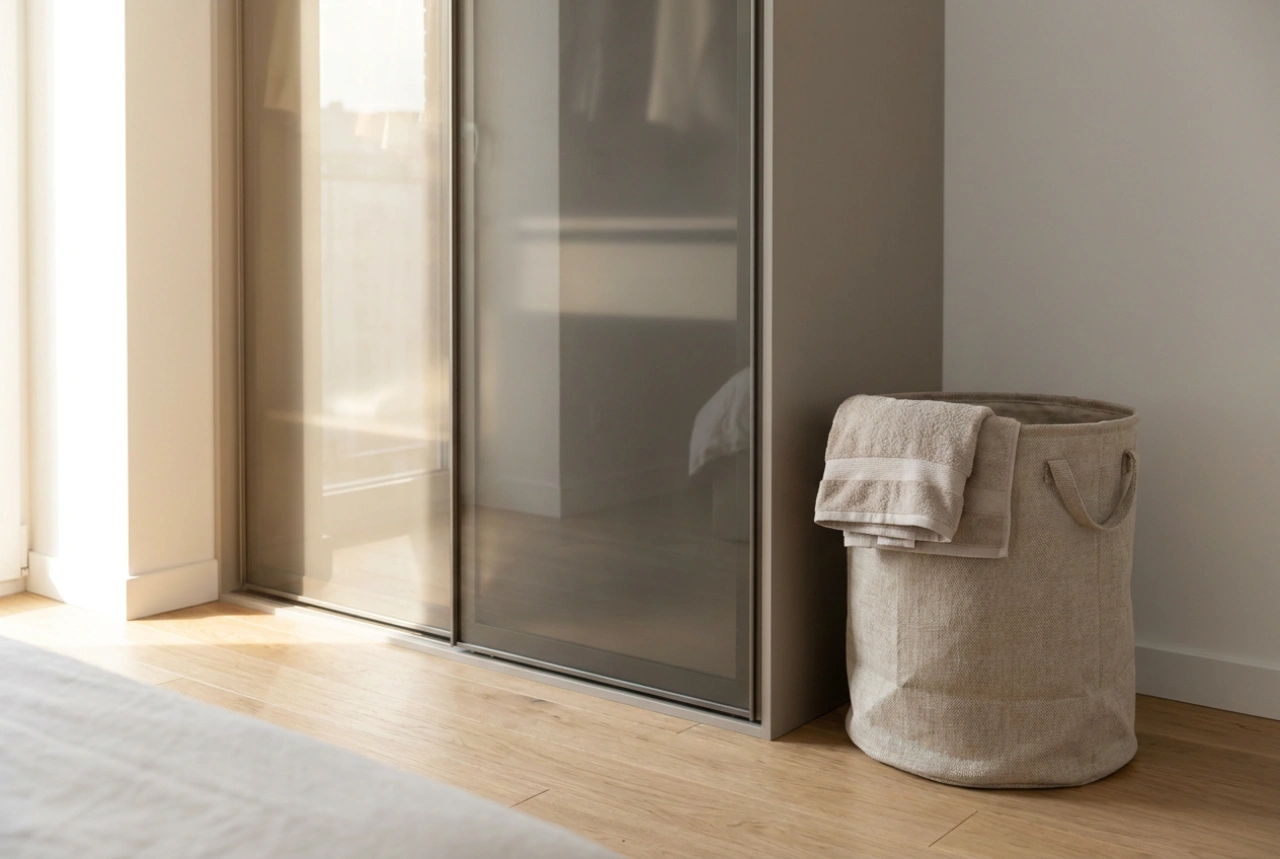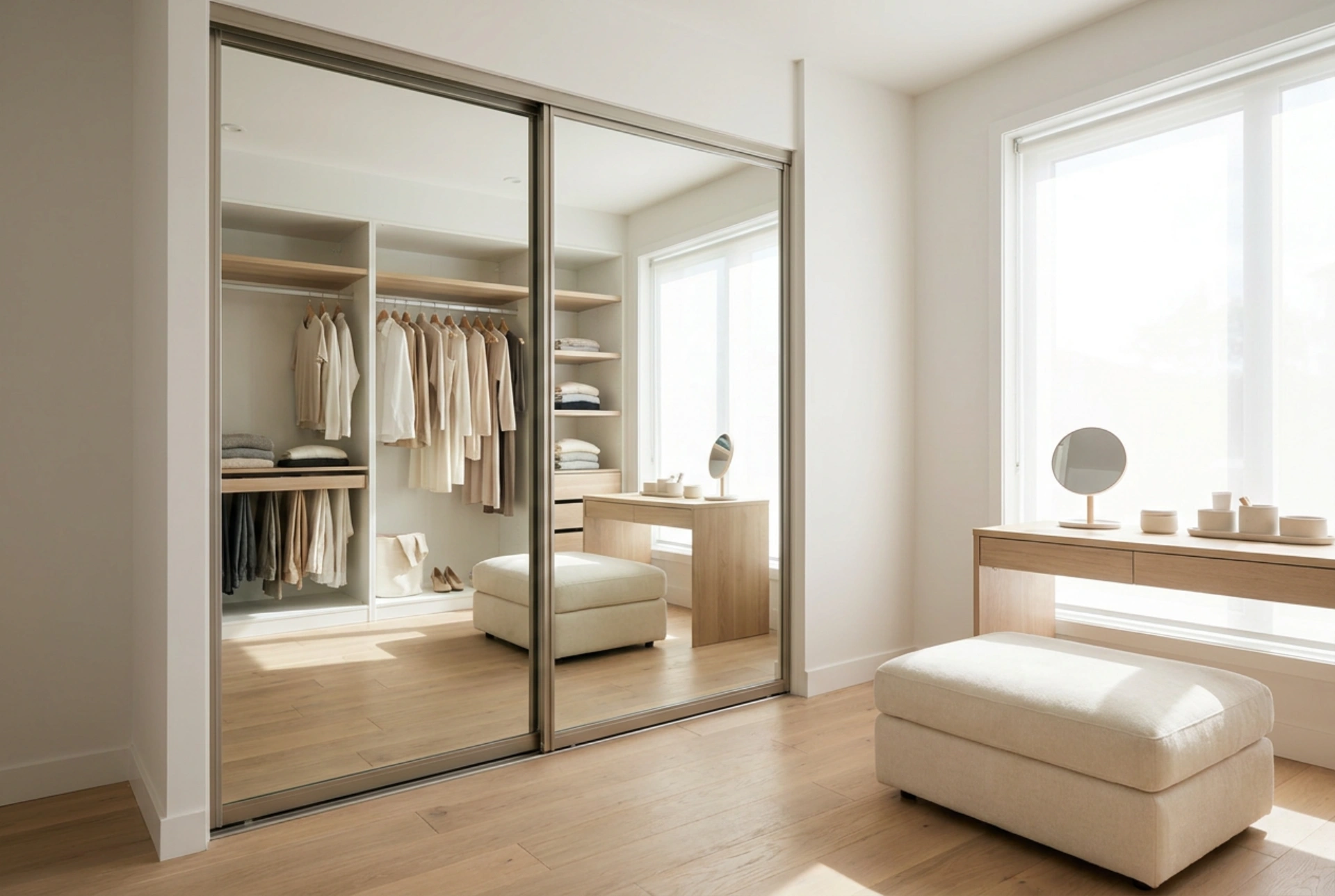


Sliding mirror doors are more than an aesthetic choice; they function as a practical tool to manipulate light, perceive depth, and streamline spatial flow in a wardrobe. By combining a high-reflection surface with a space-saving lateral sliding mechanism, these installations resolve the dual challenge of physical restriction and visual clutter.
The Physics of Reflection and Spatial Illusion
The primary mechanism by which mirrors expand a room is the reflection of light. When light photons from natural or artificial sources strike the silvered surface of the mirror, they bounce back into the room at the same angle they arrived (specular reflection). This double-bounce effect effectively doubles the perceived illuminance of the space, making dim wardrobe areas feel significantly brighter without adding extra light fixtures.
Furthermore, the human brain perceives depth through stereoscopic vision. When looking at a mirror, your eyes focus on the virtual image behind the glass plane, not on the glass surface itself. This tricks the visual cortex into registering a space that is twice as deep as the actual physical boundaries. Placing sliding mirrors opposite a window or a primary light source maximizes this effect, capturing external views and integrating them into the interior landscape.
Kinetic Efficiency: The Mechanics of Sliding Systems
Unlike traditional hinged doors that require a clear arc of swing space, sliding doors operate on a single lateral plane. This kinetic design frees up the floor area directly in front of the wardrobe, allowing for seamless movement even in narrow hallways or compact walk-in closets. The mechanical efficiency of these doors relies on high-quality rollers and tracked guides.
To maintain optimal functionality, it is crucial to understand the physics of the sliding mechanism. The weight of the heavy glass mirror is distributed along a bottom or top track. Over time, friction increases due to the accumulation of household dust, pet hair, and microscopic debris within the track channels. Periodic cleaning of the tracks using a narrow vacuum attachment, followed by wiping with a dry microfiber cloth, prevents the rollers from skipping or wearing down unevenly. If lubrication is needed, dry silicone spray is preferred over wet oils, which attract dust and create a sticky grinding paste.
Concealing Visual Noise for Mental Order
An open wardrobe, while functional, presents a high density of visual stimuli—varied clothing textures, contrasting colors, and asymmetrical folding patterns. This visual noise can trigger subtle cognitive fatigue. Sliding mirror doors act as a physical and visual barrier, instantly concealing this complexity behind a clean, uniform plane.
By replacing dozens of distinct visual inputs with a single, calm reflective surface, the room's composition becomes minimalist and structured. This structural boundary helps separate the functional chaos of storage from the resting energy of a bedroom or dressing area, establishing a clear line of domestic organization.
Scientific Maintenance of Large Mirror Surfaces
Keeping large mirror surfaces pristine requires an understanding of glass chemistry. Standard glass cleaners often contain surfactant residues that leave streak marks under direct sunlight. To achieve a streak-free finish, a simple solution of distilled water and isopropyl alcohol (in a 1:1 ratio) is highly effective. Distilled water lacks the mineral content (such as calcium and magnesium) found in tap water, which leaves behind micro-crystalline deposits upon evaporation.
The Correct Wiping Technique
- Pre-dusting: Always wipe the glass with a dry, clean microfiber cloth first to remove loose particulate matter that could scratch the surface during wet cleaning.
- Minimal moisture: Spray the cleaning solution directly onto a fresh microfiber cloth rather than soaking the glass. Excess liquid can seep behind the silvered backing at the edges, causing oxidation (black edge rot).
- S-shaped motion: Wipe the mirror using an "S" pattern from top to bottom. This technique ensures that you do not redistribute dissolved oils back onto already cleaned sections, unlike circular rubbing.