

Portable air conditioners are highly convenient for seasonal cooling, but their efficiency relies heavily on how effectively they expel hot air outdoors. Selecting the correct exhaust hose and insulating it properly is critical to prevent heat from radiating back into your living space and forcing the compressor to work twice as hard.
The Thermodynamics of Portable Air Conditioner Hoses
To understand why hose selection matters, one must look at the basic physics of refrigeration. A portable air conditioner extracts heat from indoor air using a chemical refrigerant cycle. This heat must be rejected outdoors via the exhaust duct. Standard single-duct systems operate by creating negative pressure; as they push hot air out, warm air from adjacent rooms or outdoors is pulled back into the home through tiny gaps. Furthermore, the exhaust hose itself becomes a radiant heater. As air heated to 50°C or more passes through a thin plastic duct, the material absorbs this thermal energy and radiates it back into the cooled room. Minimising this heat transfer is the key to maintaining energy efficiency.
Choosing the Right Hose: Diameter and Length Matters
When replacing or upgrading a duct, matching the exact physical specifications of your appliance is vital for maintaining proper static pressure.
- Diameter: Most portable units use either a 130 mm (5-inch) or 150 mm (6-inch) diameter hose. Never restrict the diameter with adapters; reducing the cross-sectional area increases static pressure and air velocity, which can cause the compressor to overheat and trigger a safety shutdown.
- Length: Standard hoses are designed to extend up to 1.5 metres. Keeping the hose as short and straight as possible is essential. A longer hose increases the surface area radiating heat into the room and increases air resistance, slowing down the exhaust rate.
- Material: Most stock hoses are made of thin-walled PVC or polypropylene structured with a wire helix. For improved thermal performance, look for multi-layer composite ducts that incorporate aluminium foil, which reflects radiant heat inward, or polyurethane, which offers better durability and slightly higher thermal resistance.
Insulating the Hose to Block Radiant Heat
The most effective way to eliminate the "radiator effect" of an exhaust duct is active thermal insulation. Uninsulated hoses can reach surface temperatures of over 45°C, turning them into highly efficient space heaters. You can solve this by applying a thermal sleeve or wrap.
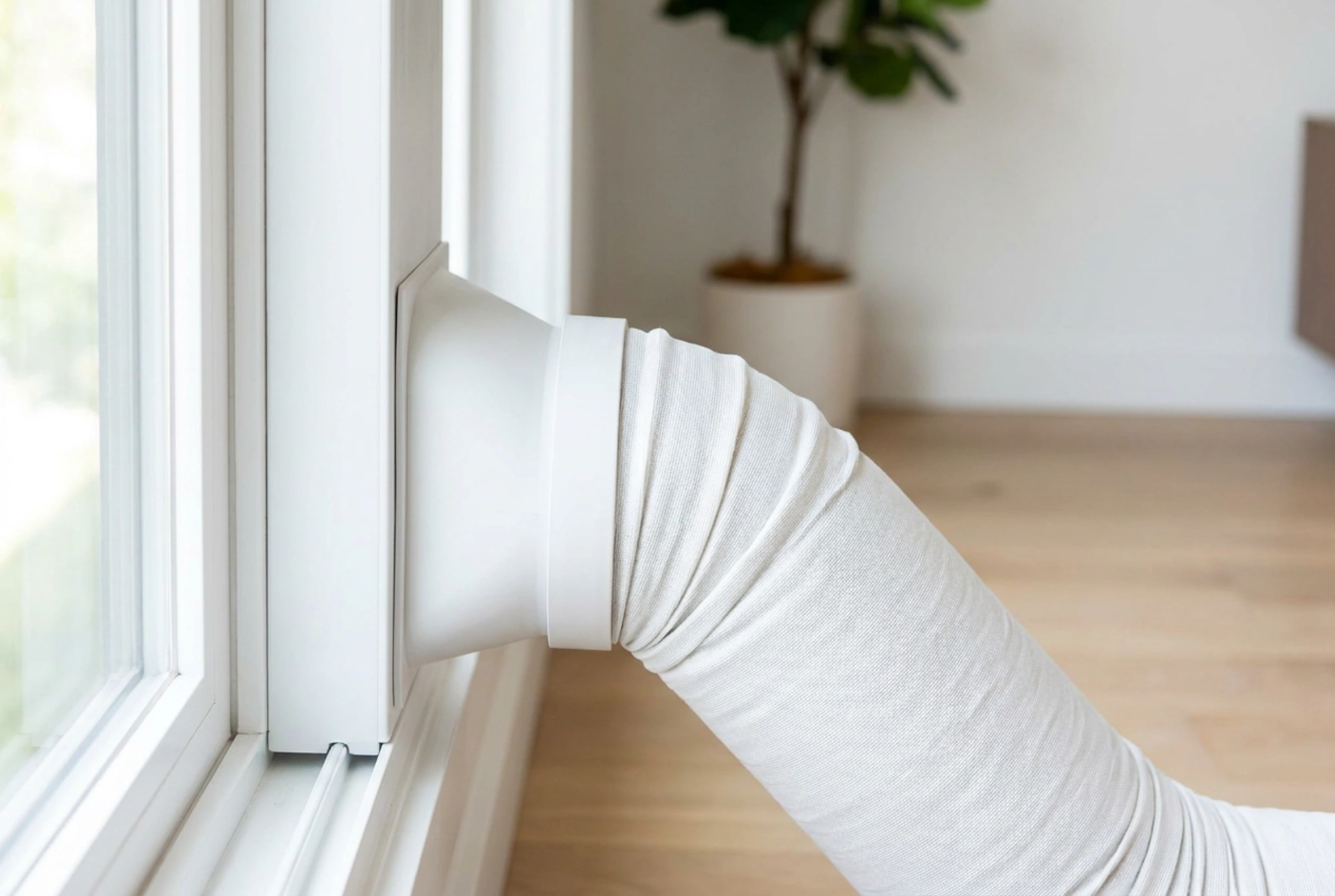
Specially designed hose sleeves made of neoprene, close-cell polyethylene foam, or quilted reflective fabric act as a thermal barrier. When installing insulation, ensure a snug fit around the hose to trap a static layer of air, which acts as an additional insulator. By reducing the surface temperature of the hose outer layer close to ambient room temperature, you can improve the cooling efficiency of your unit by up to 20-30% and significantly lower electricity consumption.
Optimising the Airflow Path and Window Seal
The route the hose takes from the back of the unit to the exterior vent determines how hard the internal exhaust fan has to work. Sharp 90-degree bends create turbulence and restriction, causing hot air to back up inside the machine. Aim for gentle curves and a gradual slope.
Additionally, the interface between the hose and the window must be completely airtight. Standard window slider kits or fabric window seals must be sealed using high-density foam tape or hook-and-loop fasteners with polyurethane backing. Any gaps around the outlet allow hot exhaust air to be sucked back inside due to the negative pressure created by the single-hose system. For optimal performance, ensure the exhaust exit point is positioned away from intake vents or windows that are opened elsewhere in the house.