

Maximising the efficiency of a walk-in wardrobe requires shifting away from fixed, rigid shelving toward modular configurations that adapt to seasonal changes and physical item dimensions. By understanding the mechanical principles of weight distribution and the environmental needs of different textile fibres, you can design a highly functional space that preserves your garments and simplifies daily access.
Structural Physics of Modular Shelving
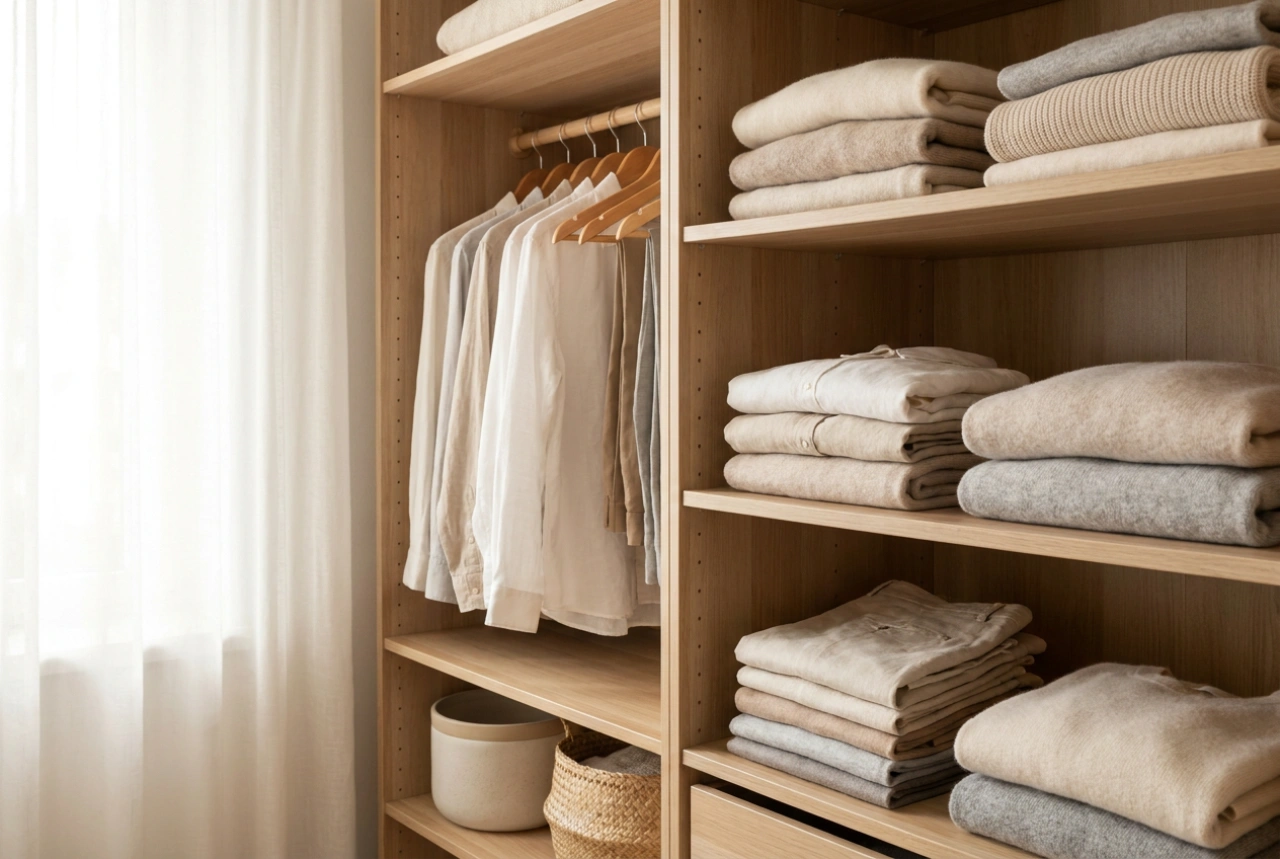
The stability and longevity of modular wardrobe systems depend entirely on load distribution and the structural integrity of the supports. Standard wardrobe uprights rely on a series of equidistant pre-drilled holes, allowing shelves to be repositioned using steel support pins. When planning these zones, it is essential to consider the bending moment of the shelf material. Solid wood and high-density fibreboard (HDF) behave differently under stress; a shelf exceeding 80 centimetres in width will sag over time if loaded with heavy items like winter coats or denim.
To prevent mechanical deformation, distribute the heaviest items at the bottom of the structure and keep shelf spans between supports under 90 centimetres. Standard steel pin supports distribute vertical shear force into the side panels. Ensuring that these pins fit flush and deep into the pre-drilled tracks prevents localised wood fibre crushing, which can cause shelves to slip or tilt under uneven loads.
Anthropometric Zoning for Daily Efficiency
An efficient wardrobe relies on human ergonomics, categorised into three distinct vertical zones based on ease of access. Designing your modular system around these zones minimises physical strain and keeps high-use items visible.
- The Active Zone (80 to 160 cm): Positioned between the hip and eye level, this is the easiest area to reach without bending or stretching. Allocate this zone to daily wear, utilising pull-out drawers and intermediate shelves.
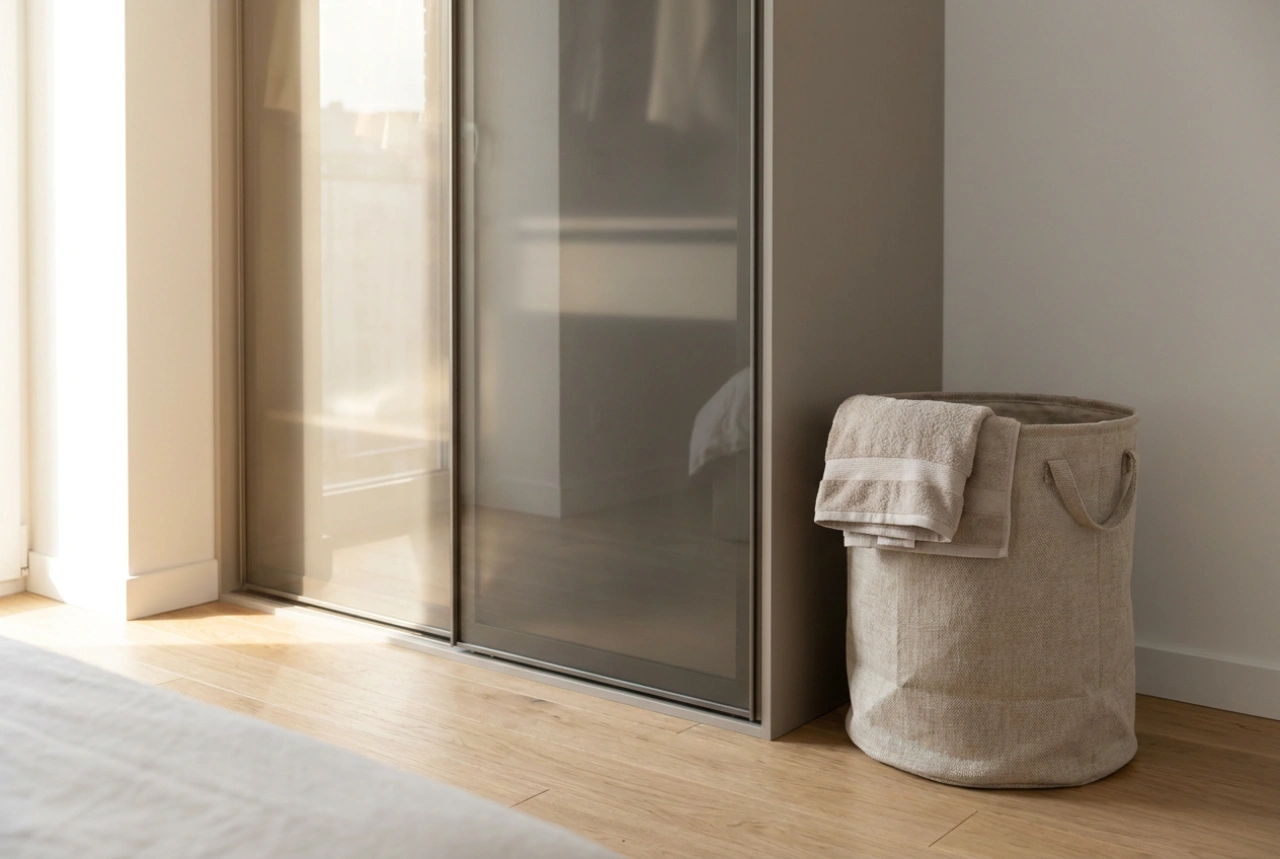
- The Low Zone (below 80 cm): Requiring bending or squatting, this area is ideal for heavy footwear, pull-out wire baskets for laundry, or storage bins containing off-season garments.
- The High Zone (above 160 cm): Best suited for long-term storage of bulky bedding, suitcases, or seasonal outerwear. Pull-down wardrobe rails can be installed here to leverage high space while allowing mechanical access when pulled forward.
Airflow Chemistry and Textile Preservation
Storing garments long-term requires careful consideration of relative humidity and air circulation to prevent mold growth and fabric degradation. Natural fibres like wool, silk, and cotton are hygroscopic, meaning they absorb moisture from the surrounding air. In stagnant, dark environments, this trapped moisture creates an ideal breeding ground for microscopic fungi.
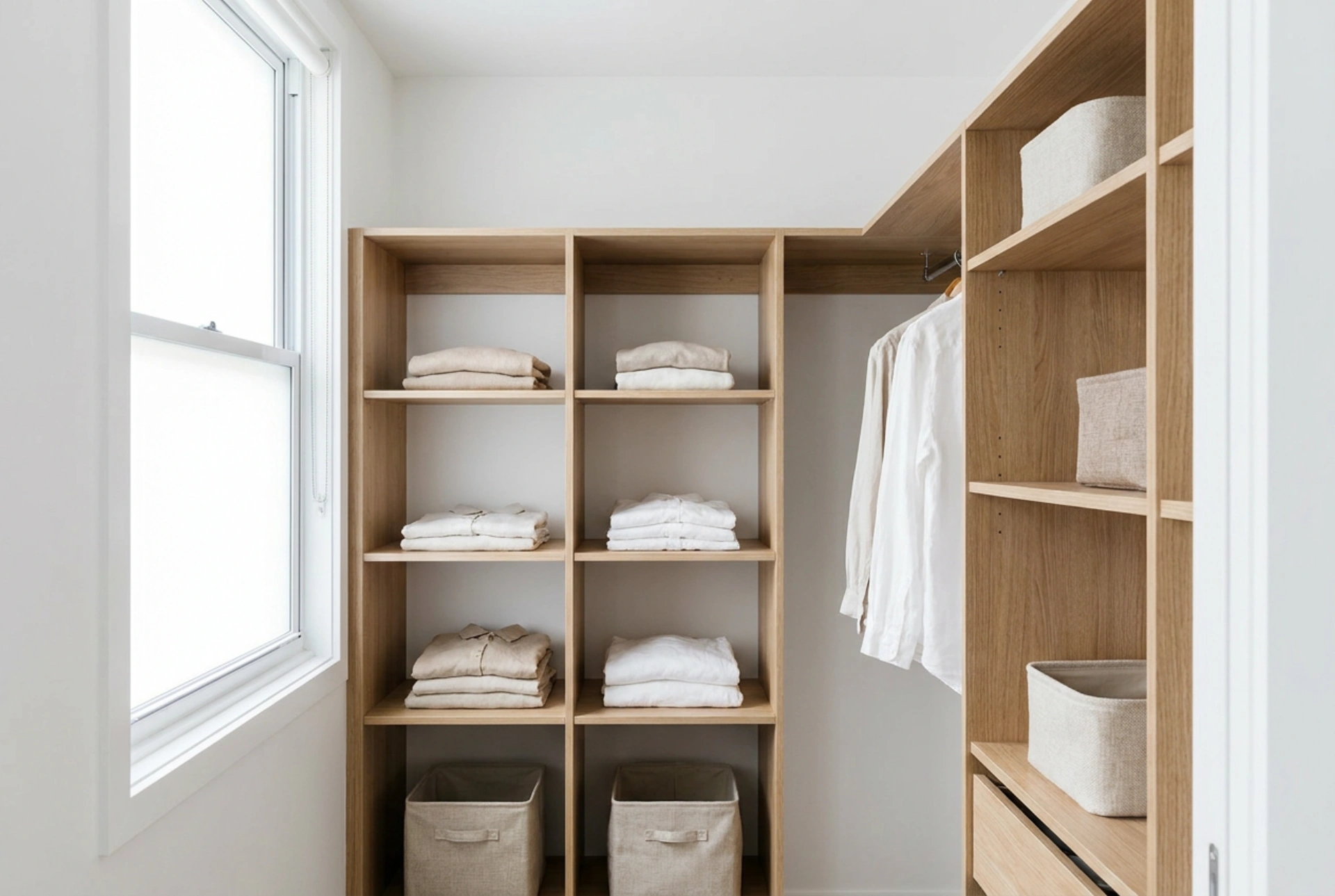
To counter this, modular designs should prioritise breathable storage solutions. Choose open-mesh wire drawers or slatted wooden shelves over solid, airtight plastic containers, which trap humidity and off-gassed chemical compounds from synthetic fabrics. When organising storage boxes, opt for unbleached cotton or linen bins. These materials allow air molecules to pass through while acting as physical barriers against dust and pests. Dust particles carry electrostatic charges that cling to synthetic materials, accelerating fibre breakdown, whereas natural fibres maintain a neutral charge, keeping garments cleaner for longer.
Optimal Order of Operations for Closet Configuration
Configuring a modular system requires a systematic approach to ensure safety and usability. Follow this precise sequence during setup:
- Level the Uprights: Use a spirit level to verify that vertical standards or side panels are perfectly plumb. Even a minor deviation of one degree will cause drawer glides to bind and shelves to sit unevenly, transferring structural stress to the wall anchors.
- Install Hanging Rods First: Hang long garments (dresses, coats) and short garments (shirts, jackets) to measure their exact vertical clearance. This ensures you do not waste space below hanging items.
- Integrate Drawers and Pull-Out Shelves: Position pull-out elements next, ensuring they clear door frames and do not collide with adjacent walls when fully extended.
- Position Adjustable Shelves: Fill the remaining gaps with shelves, adjusting the heights precisely to the dimensions of folded garment stacks to prevent unused vertical dead space.